January is a strong month for diving in several specific regions, though seasons vary widely by destination, so as with diving in general, there’s no single “best” pick that works for everyone. Some of the picks below peak specifically because of seasonal animal encounters, others because conditions are simply at their calmest and clearest for the year. Which one is right for you comes down to what you want to see and how much experience you’re bringing with you.
This guide breaks down seven destinations worth planning a January diving trip around, what to expect from conditions and marine life at each, and who they suit by experience level.
Top January Dive Destinations
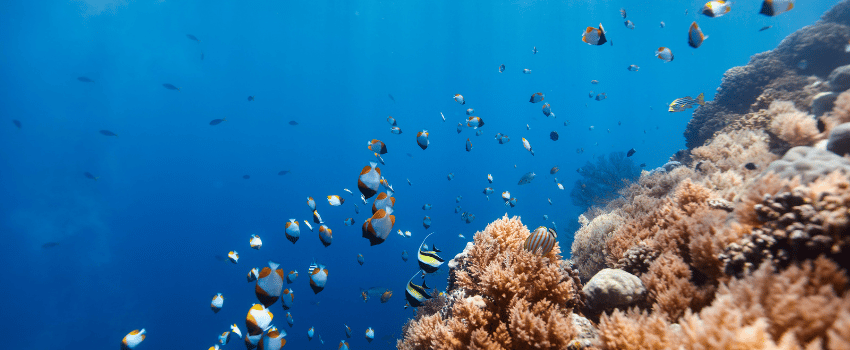
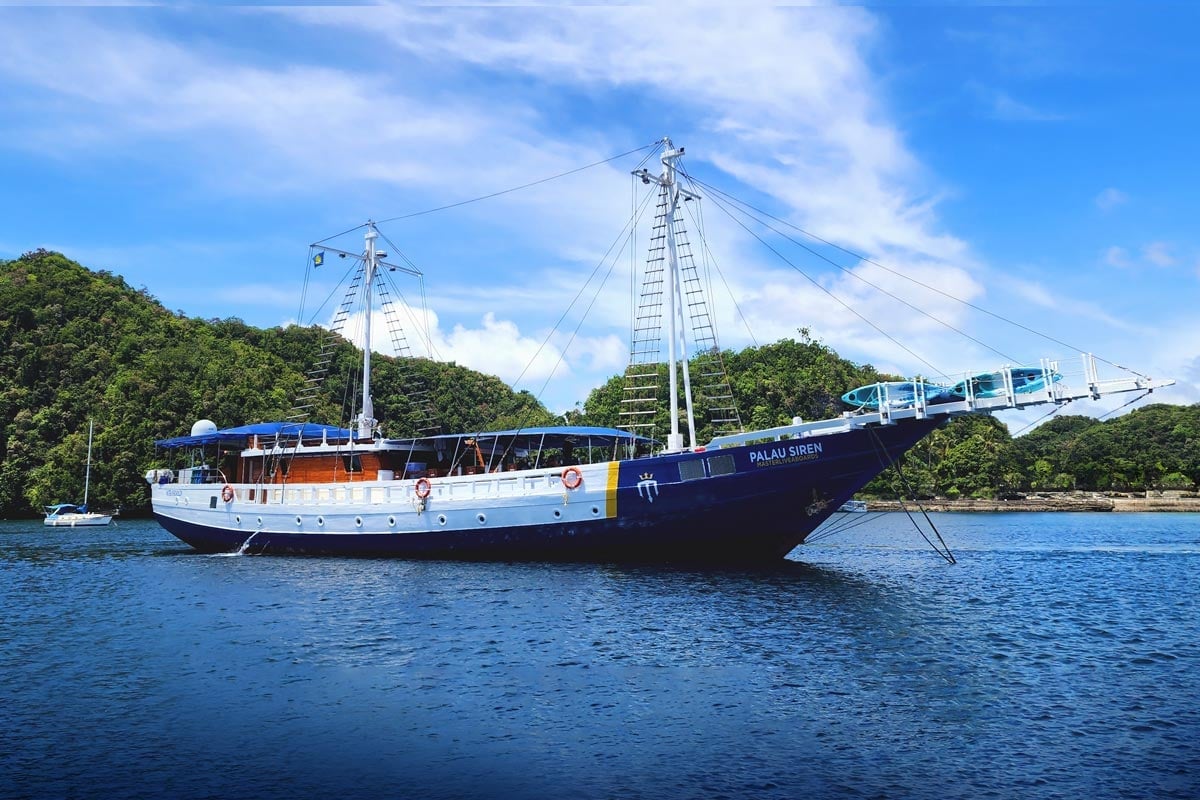
January is a comfortable month to dive Palau’s Rock Islands, with calm seas and generally good visibility. Bohar snapper and bumphead parrotfish spawn here every month: snapper gather in the thousands around the full moon, parrotfish in smaller numbers around the new moon, and both are predictable enough that operators build regular trips around them. January (and February) bring something rarer on top of that. Moorish Idols form large spawning aggregations around the full moon in these two months only, a phenomenon researchers still don’t fully understand, so treat the timing and size of any spawn as less certain than the snapper or parrotfish events. In German Channel, manta ray sightings are very common in the same period, and Jellyfish Lake has a different kind of experience entirely: a shallow, sting-free swim among an endemic population of golden and moon jellyfish, suitable for snorkelers as well as divers. Numbers vary, mainly based on water temperature, so check locally for current information.
Between the spawning aggregations, mantas, and Jellyfish Lake, Palau covers a wide range of experience levels in one trip, though the current-driven channel dives are better suited to divers with some drift-diving experience.
Quick Planning Facts:
- Water temp: ~26–29°C
- Visibility: 20–30m
- Diver level: all levels (Malakal Harbor) to advanced (channels)
-
 from$368 /day
from$484 /day
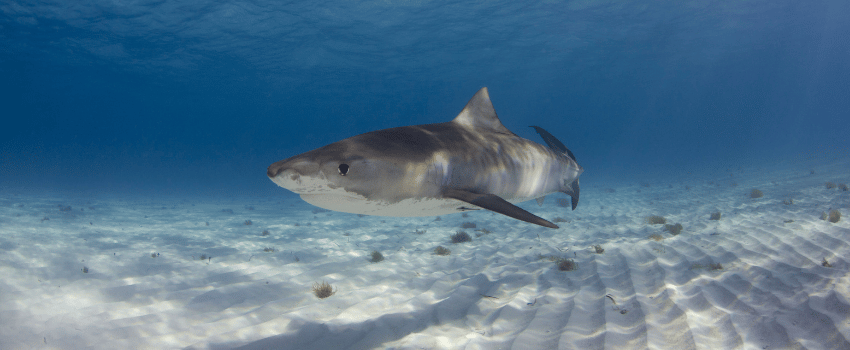
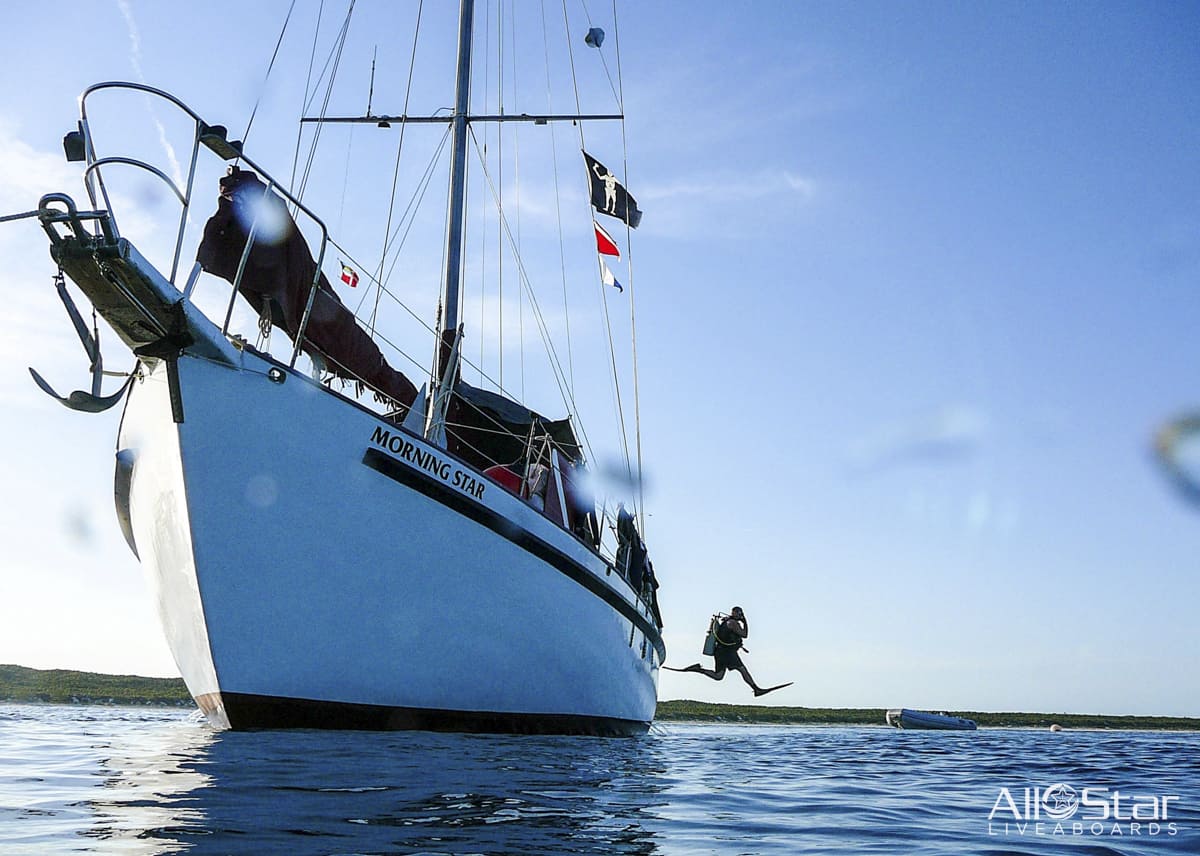
Kneel on the sand at Tiger Beach, and tiger sharks show up on most dives; that consistency is why it’s become the Caribbean’s best-known shark site. Diving here typically means kneeling on a shallow, sandy bottom without a cage while tiger sharks and, sometimes, great hammerheads circle at close range. January sits within the core season, and the shallow, low-current setting keeps the diving itself fairly straightforward, even if the encounter is somewhat intense.
This isn’t a beginner shark dive, and operators expect divers to stay calm, keep their positioning steady, and follow the dive guide’s lead closely. Make no mistake, these sharks are large and at very close range, but Tiger Beach provides close-up experiences with them that are unmatched anywhere else. If you want to see how it compares with other shark dives in the islands, our guide to shark encounters in the Bahamas covers several more.
Quick Planning Facts:
- Water temp: ~23–26°C
- Visibility: up to 30m+
- Diver level: intermediate to advanced
Best Bahamas Liveaboards-
from$170 /day
from$311 /day
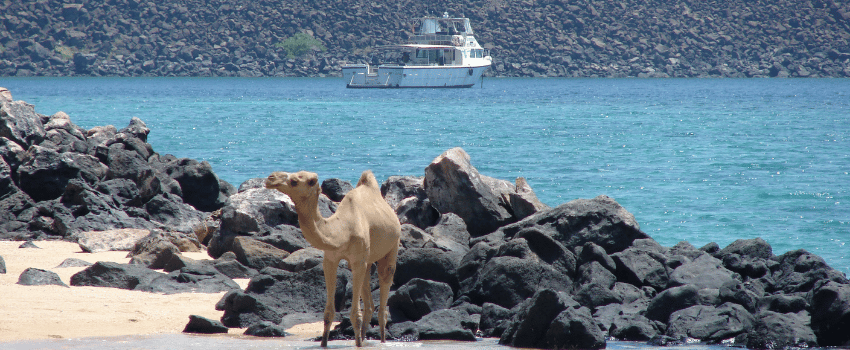
Juvenile whale sharks gather in Djibouti’s Gulf of Tadjoura most winters, and the sightings here are about as predictable as whale shark encounters get. January falls within the peak window, typically running from around November to February. As the sharks are juveniles and gather in numbers, they make for calmer, closer encounters than many other whale shark destinations, and the sheltered water keeps conditions comfortable for most of the year. For a broader look at where else to find these encounters, see our guide to swimming and diving with whale sharks.
Most operators in Djibouti run these encounters as in-water snorkels rather than scuba dives, both out of respect for the animals and because it’s simply the more practical way to keep pace with them near the surface.
Quick Planning Facts:
- Water temp: ~25–28°C
- Visibility: 20m+
- Diver level: all levels
Best Djibouti Liveaboards-
from$180 /day
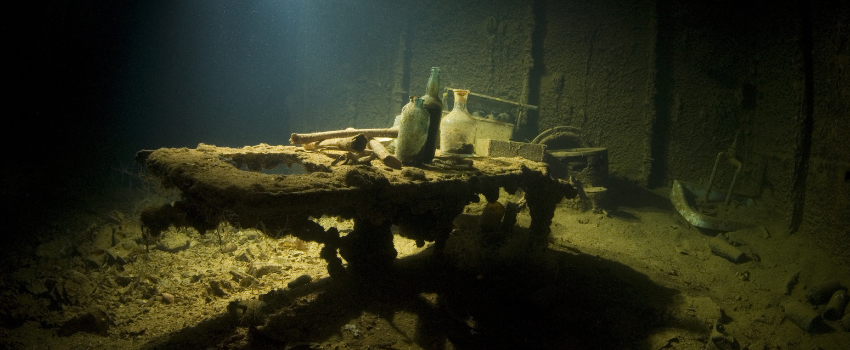
The WWII ‘Ghost Fleet’ sunk during Operation Hailstone in 1944 has made Truk Lagoon a wreck-diving name in its own right. The seasonal trade winds, which blow from December through March, don’t tend to bring rain. This leads to the clearest water of the year in the lagoon, which makes a real difference on sites where scale and visibility go hand in hand.
A lot of the wrecks here are accessible to recreational scuba divers and lie within recreational diving depths, while penetrating some of the interiors calls for additional wreck-diving training. Given the spread of sites across the lagoon, a liveaboard is generally the more practical way to reach several wrecks without long surface transits eating into bottom time. Truk Lagoon also appears in our December dive guide, and if wrecks are the main draw, our wreck-diving liveaboard roundup is worth a look too.
Quick Planning Facts:
- Water temp: ~28–29°C
- Visibility: 20–30m (best January–March)
- Diver level: intermediate to advanced for penetration
Best Micronesia (Truk Lagoon) Liveaboards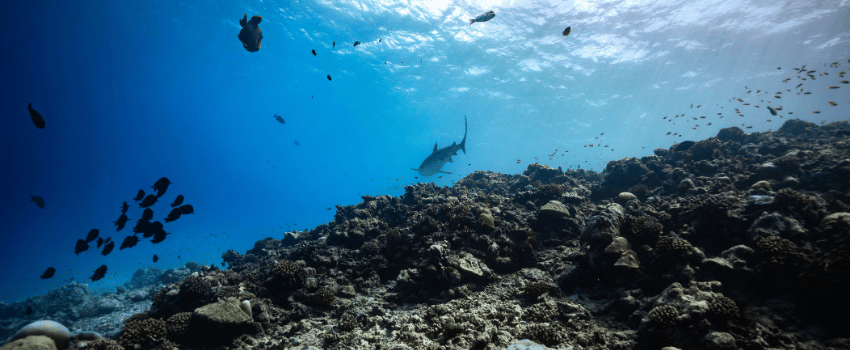
Most Maldives itineraries stay in and around the central atolls, but the Deep South, Huvadhu, Addu, and Fuvahmulah, is a quieter alternative with some of the country’s more consistent shark activity. Huvadhoo, the Maldives’ second-largest atoll, is built around a deep central lagoon ringed by roughly 40 reef segments, which spreads the diving across a wide range of drift sites and pelagic encounters. Fuvahmulah is the name most divers already know, for tiger sharks that show up close to daily year-round and silvertips and thresher sharks that are resident too, with the biggest silvertip schools historically seen between January and March. Addu, at the southern end, keeps manta rays resident year-round at sites like Maa Kandu, alongside sharks and turtles, and inside the atoll sits the 140-metre British Loyalty, a WWII fuel tanker scuttled in 1946.
This is current-driven diving, closer to drift-diving territory than the reef-hopping style found further north, so it suits divers who are comfortable being moved by the water rather than fighting it. We go into more depth on what sets this part of the Maldives apart in what makes the South Atolls so special.
Quick Planning Facts:
- Water temp: ~27–29°C
- Visibility: 20–30m+
- Diver level: advanced (current)
Best Maldives Liveaboards-
from$204 /day
from$279 /day
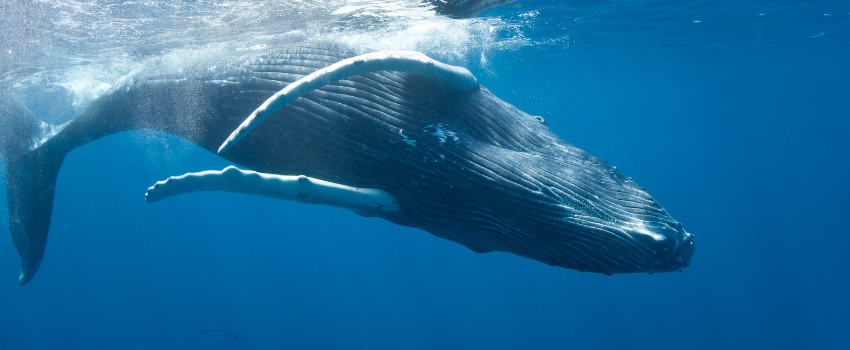
Every January, on this shallow offshore bank in the Dominican Republic, migrating humpbacks gather to mate and calve, close enough that the encounters here are about as reliable as this kind of thing gets. It’s a snorkel-only experience rather than scuba diving, both to protect the whales and because getting close enough to appreciate them doesn’t call for tanks.
Access is liveaboard-only and tightly seasonal: the same boats that run Turks & Caicos trips later in the year reposition here for the winter whale season, so a January booking in this part of the Caribbean means Silver Bank specifically.
Quick Planning Facts:
- Water temp ~25–27°C
- Visibility surface-focused (whale encounters, not reef diving)
- Diver level: all levels (snorkel only)
Best Dominican Republic (Silver Bank) LiveaboardsTenerife, Canary Islands, Spain
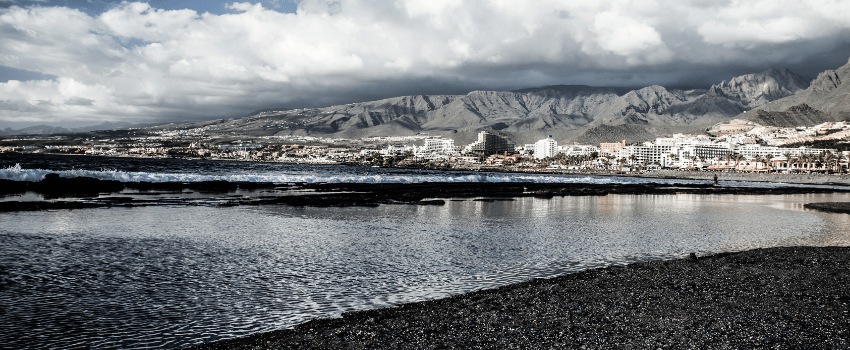
Tenerife is the coolest-water destination on this list, and that’s part of what makes January work here: cooler winter seas make it somewhat easier to spot the island’s resident Atlantic angel sharks as they move to shallower coastal water for mating. The species is critically endangered and, through warmer months, much harder to spot in deeper offshore waters. Through the winter months, they spend much of their time lounging camouflaged on sandy slopes just offshore.
It’s a slower, more deliberate style of diving than shark-aggregation sites like Tiger Beach, better suited to divers who don’t mind searching for something unusual rather than being guaranteed an encounter. The destination is generally considered accessible to a wide range of experience levels, though a thicker wetsuit is something that needs planning for given the cooler water. Tenerife also shows up in our October dive guide, when conditions are similarly mild.
Quick Planning Facts:
- Water temp: ~18–20°C (coolest month)
- Visibility: up to 30m
- Diver level: all levels
One more January add-on is worth a quick mention, though it isn’t scuba diving: the Arctic Circle might be cold, but it provides the chance of orca snorkeling and freediving in season, from late October through February. It’s a surface encounter, not a dive, but worth asking about if it fits your trip.
How to Choose Your January Dive Destination
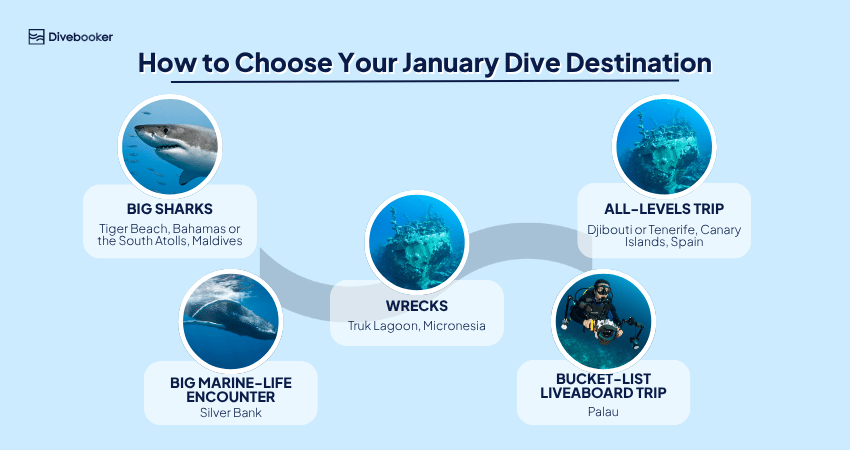
- Chasing big sharks? Tiger Beach (tiger and great hammerhead) or the Southern Atolls of the Maldives (tigers, silvertips, and threshers).
- Want a gentler, all-levels trip? Djibouti’s whale sharks are in relatively calm water, or Tenerife’s angel sharks lounging on gentle sandy slopes are both comparatively approachable options.
- Into wrecks? Truk Lagoon, timed for the clearest water of the year.
- Want a big marine-life encounter without scuba gear? Silver Bank’s humpback whales, on a snorkel-only liveaboard trip out of the Dominican Republic.
- Looking for a bucket-list liveaboard trip? Palau, ideally timed around the full moon to catch both snapper and Moorish Idol spawning in a single trip.
Insider Insight
Palau is best known for its channels and walls, but the Moorish Idol spawning aggregation around the full moon is a detail even repeat visitors sometimes miss simply because they didn’t check the lunar calendar before booking. It won’t turn a quiet reef into a guaranteed spectacle, but checking the moon phase before you go meaningfully improves your odds of seeing a truly rare event.
Planning Your January Dive Trip
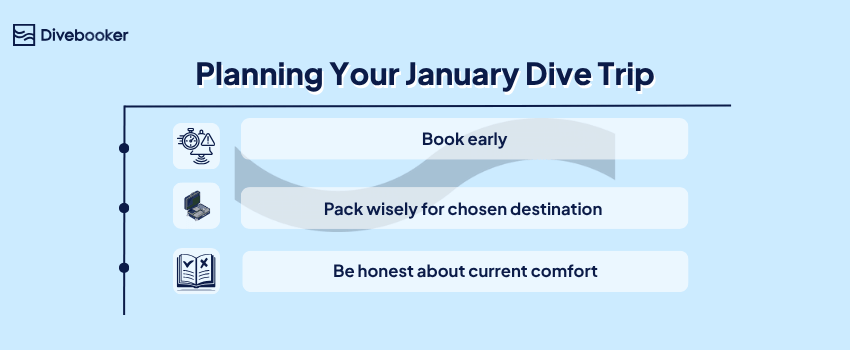
- Book early: January overlaps with peak season for several of these destinations, especially Tiger Beach, Djibouti, and Silver Bank, and liveaboard cabins can fill up months ahead.
- Pack wisely for your chosen destination: water temperatures vary significantly by region, from roughly 18°C in Tenerife to 28°C – 29°C in Djibouti and the Maldives, so check your specific destination before choosing exposure protection.
- Be honest about current comfort: destinations like Palau and the Southern Atolls of the Maldives involve real current; check requirements with your operator rather than assuming.
Conclusion
There’s no single best destination for January diving, but the choice gets easier once you know what you’re prioritizing. Tiger Beach and the Maldives Southern Atolls are the picks for big-shark encounters, Djibouti and Tenerife suit a calmer, more approachable trip, Truk Lagoon is the one for wreck divers, and Silver Bank is the pick if you want a big whale encounter without scuba gear at all. Palau remains the pick for a bigger, bucket-list liveaboard trip, especially for divers who can time it around the full moon.
Whichever destination fits, book with enough lead time. January is peak season for more than one of these at once, and cabins on the most in-demand routes go early. For more seasonal planning, see Where to Dive in October, Where to Dive in December, or the full Divebooker diving calendar
Frequently Asked Questions About January Diving
Can beginners dive any of these January destinations?Divebooker Team2026-07-21T05:10:10+00:00Yes. Djibouti and Tenerife are generally considered accessible to a wide range of experience levels for scuba diving, and Silver Bank’s snorkel-only whale encounters are open to all levels too. Tiger Beach, Palau, and the Southern Atolls of the Maldives are better suited to intermediate or advanced divers comfortable with sharks and current.
What’s the best Maldives atoll to dive in January?Divebooker Team2026-07-21T05:09:40+00:00For shark activity specifically, the Southern Atolls (Huvadhu, Addu, and Fuvahmulah) tend to outperform the busier central atolls in the early part of the year, though the trade-off is stronger current and a diving style better suited to advanced divers.
Is Tiger Beach diving safe?Divebooker Team2026-07-21T05:09:17+00:00No experience that puts you in close proximity to large sharks can be called 100% safe. Risk is real, but it’s also manageable: there’s no cage, dives take place in shallow, low-current water, and the sharks here are well studied and generally calm around divers who stay steady and follow their guide’s lead. Choosing an experienced, reputable operator and sticking closely to their briefing matters more at this site than most.
Where can I see whale sharks in January?Divebooker Team2026-07-21T05:08:51+00:00Djibouti’s Gulf of Tadjoura has one of the more reliable whale shark aggregations anywhere, with juveniles gathering close to shore through the peak window of roughly November to February. Sightings are common in season but never guaranteed on a given day.
Is January a good time to dive?Divebooker Team2026-07-21T05:08:05+00:00Yes. January overlaps with the strongest part of the season for several destinations on this list, including Tiger Beach’s sharks and Djibouti’s whale sharks, though which destination suits you best still depends on experience level and what you want to see.
Related Stories
Go to Top