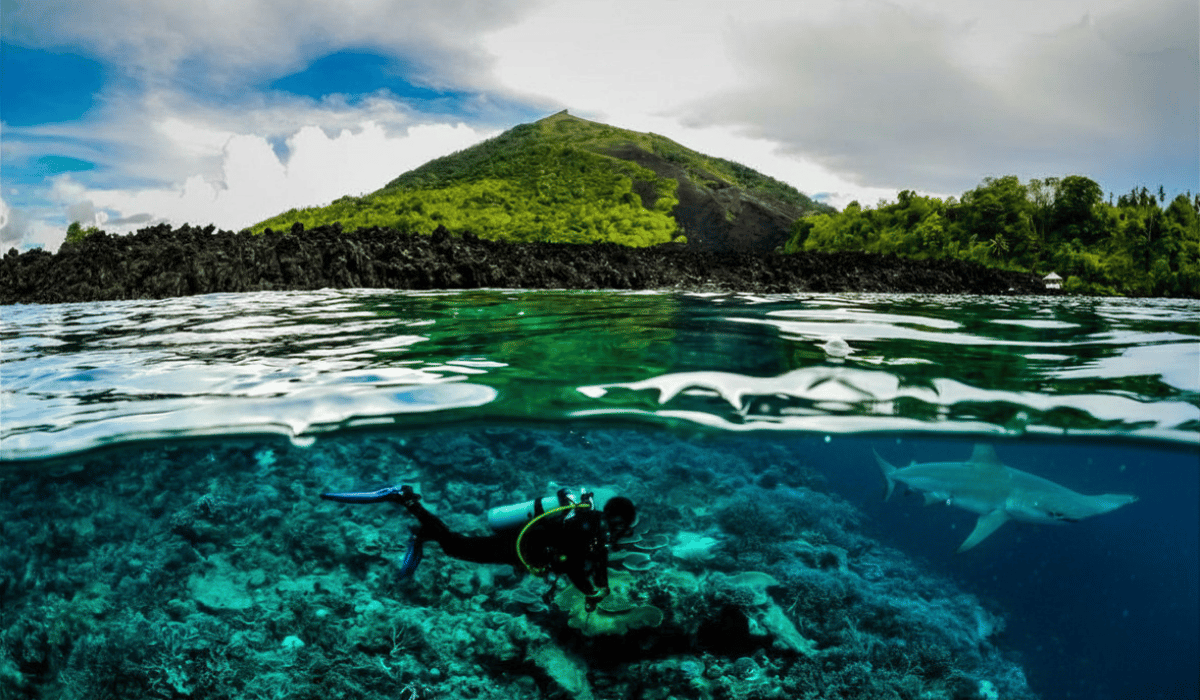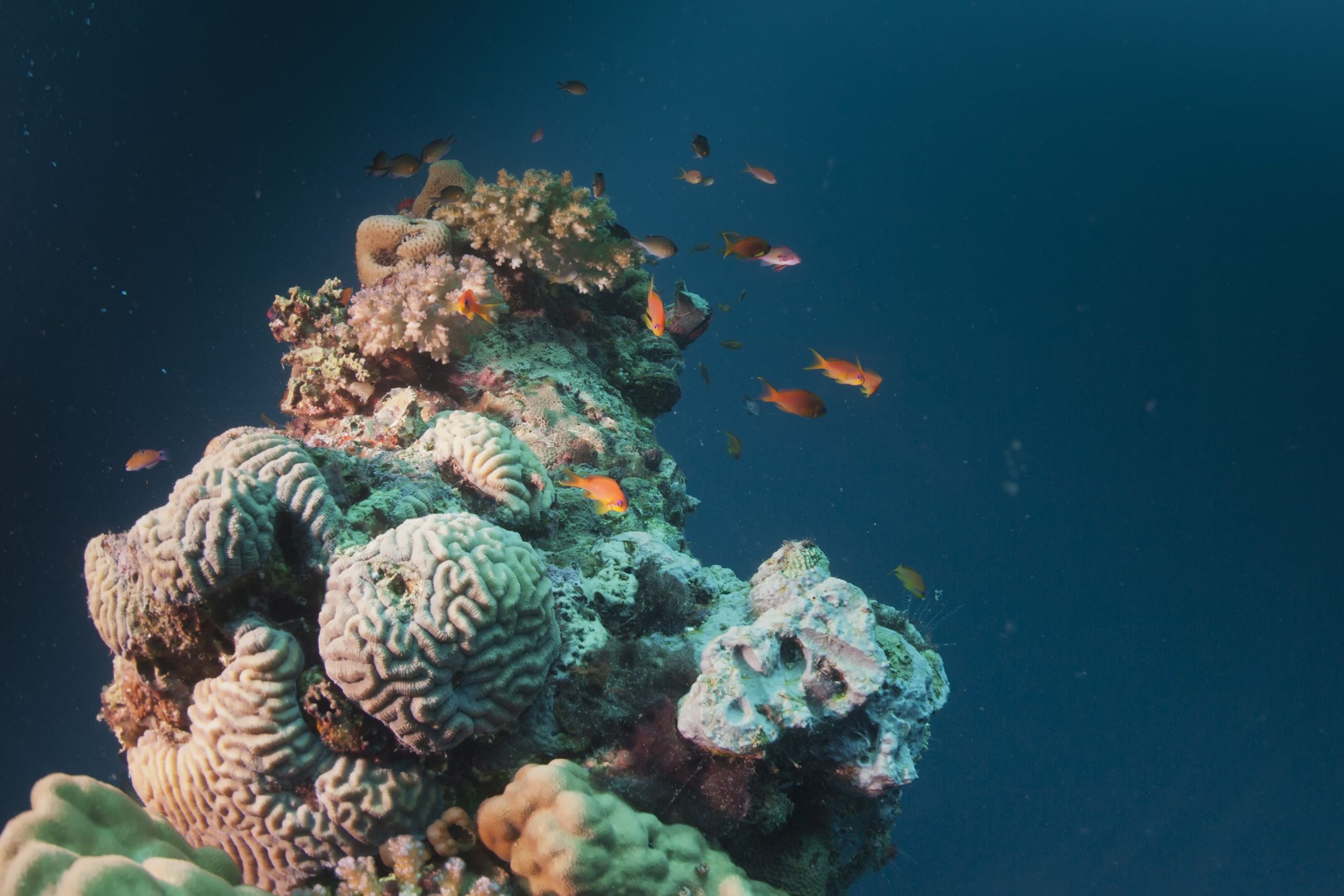
Diving in Egypt looks completely different depending on where you go. The offshore marine parks pull in shark divers, the Thistlegorm draws wreck enthusiasts, and Dahab keeps things simple with easy shore diving.
Egypt’s Red Sea stretches from the wreck-strewn Straits of Gubal in the north to remote marine parks and reef systems hundreds of kilometres south, and finding the best places to dive in Egypt starts with matching what you want to see and how much current you can handle to the right part of the country. There’s no single answer to what counts as the best diving in Egypt; with such variety, it’s all down to personal taste. It depends on whether you’re after sharks, wrecks, reefs, or an easy shore dive.
So which one fits you best? Read on to find out.
Egypt Marine Parks
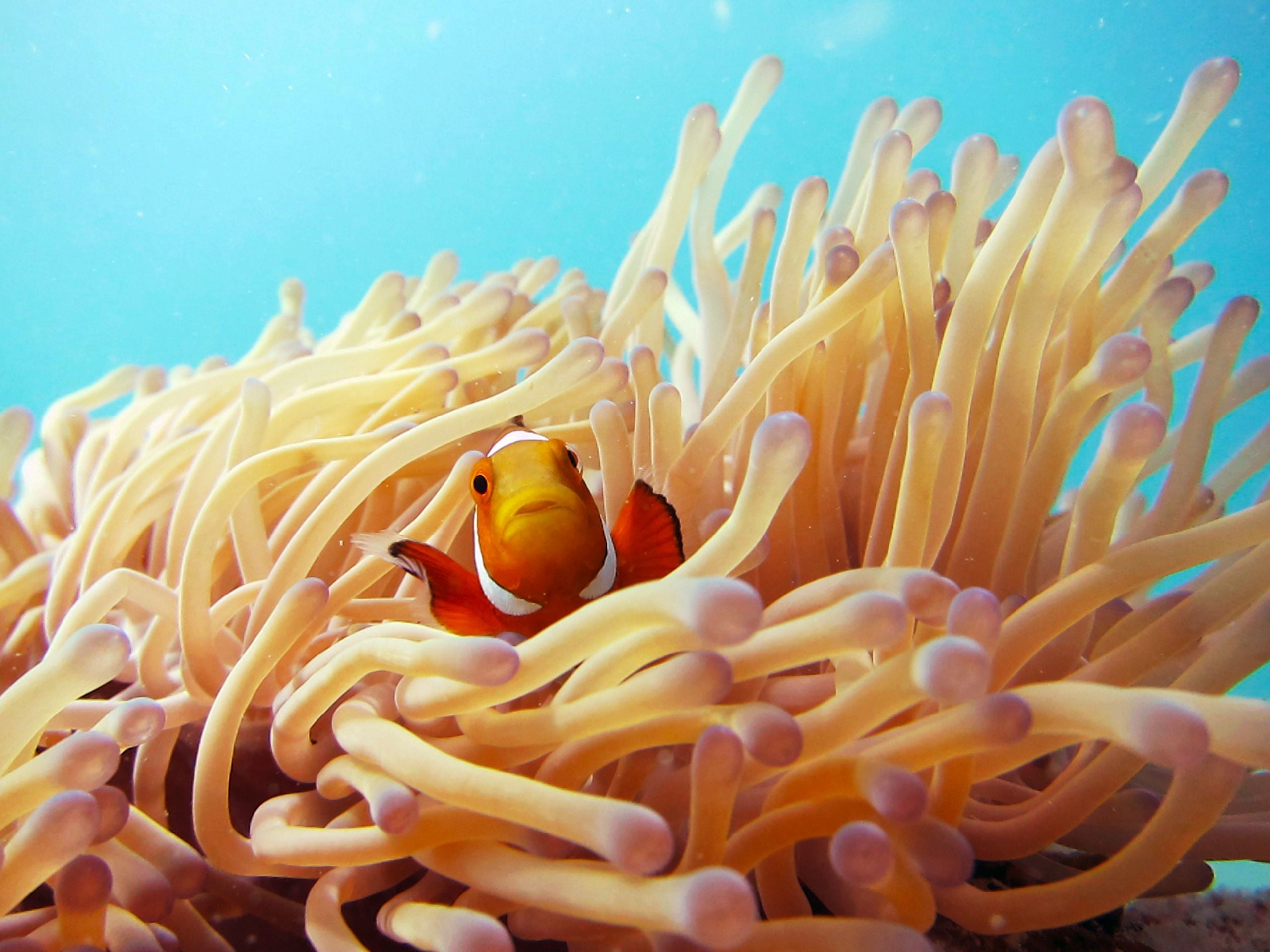
Egypt’s marine parks are dotted along the length of its Red Sea coast, from the Sinai Peninsula, all the way down beyond Marsa Alam towards the border with Sudan. Some of the parks are exposed, current-swept sites, with steep walls, plateaus, and drop-offs, and the reason most divers book them is the odds of seeing sharks that are hard to match elsewhere in Egypt. Hammerhead sightings build from May into late summer, oceanic whitetips become more consistent from September through November, and the two seasons overlap most reliably in that autumn window; see When Is the Best Time to Dive the Red Sea? for the full month-by-month breakdown. HEPCA works closely with the Egyptian Environmental Affairs Agency (EEAA), Natural Protectorates Department to ensure the laws covering the protection of all offshore islands and coral reefs are enforced, and to assist the Department in developing management and monitoring strategies. It played an instrumental role in lobbying for legislation to protect offshore reefs and islands, and was successful in promoting the inclusion of these reefs and islands under Law # 102 of 1982 through a recent Presidential Decree, designating them as protected areas.
Ras Mohammed National Park
Egypt’s first national park, established in 1983, sits at the southern tip of the Sinai Peninsula. It’s well north of the Brothers and Daedalus routes, and it’s usually dived as a day boat from Sharm El Sheikh or as an inclusion in many northern Red Sea liveaboard itineraries, rather than booked as its own marine-park route. Shark Reef and Yolanda Reef are its best-known sites, with steep walls, lots of schooling fish, and the scattered cargo of the Yolanda wreck sitting at around 15–18m. Conditions suit intermediate divers and up.
Big Brother and Little Brother are two tiny islands roughly 60km offshore, reachable almost exclusively by liveaboard. The main draws are oceanic white tips and thresher sharks, as well as hammerheads from time to time. The diving calls for an Advanced certification and solid buoyancy in blue water, as well as a legal minimum of 50 logged dives. Always check your operator’s exact requirement before booking. Our guide to diving at Brother Islands covers what a typical itinerary looks like site by site.
Quick Planning Facts:
- Water temp: ~24–29°C, varies by season
- Visibility: 20–30m+ in typical conditions
- Diver level: Advanced, due to strong currents and open-water conditions
- Note: Some operators check logged-dive counts before confirming a booking; check requirements directly
Daedalus Reef
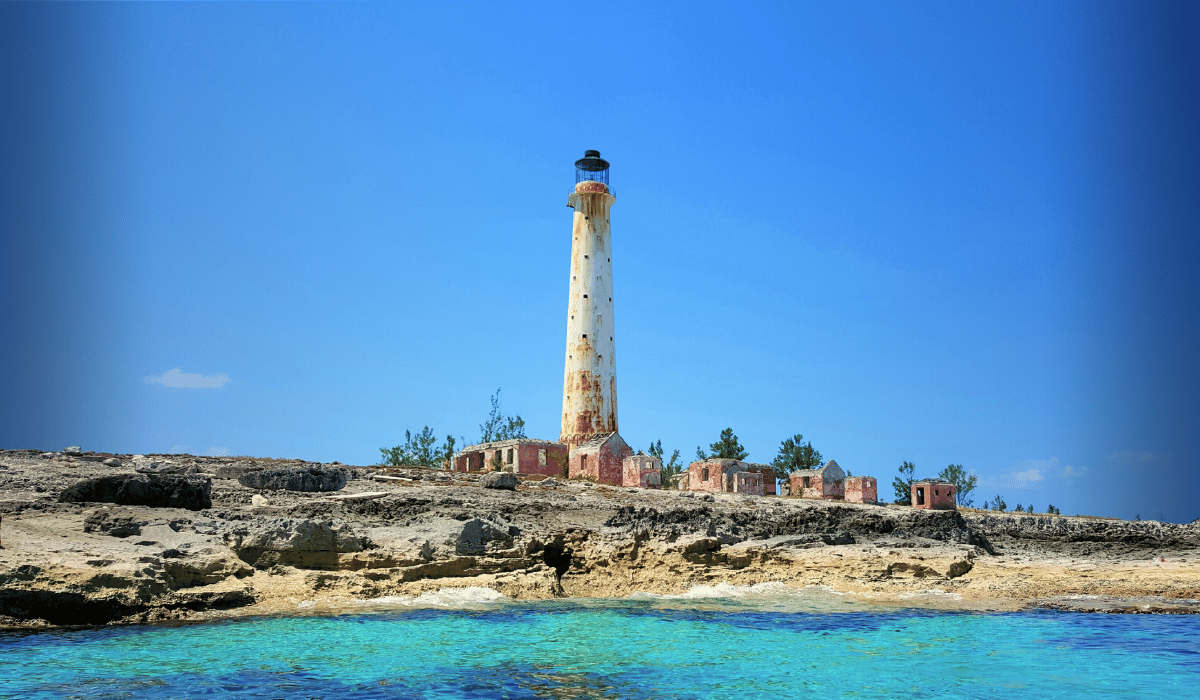
Daedalus Reef is a remote, lighthouse-marked island south of Brothers, known for hammerhead sightings and steep drop-offs on every side. It’s often reached as part of another liveaboard itinerary such as Daedalus–Rocky–Zabargad, since its offshore location makes a standalone trip impractical. Daedalus can be mixed with southern sites, although it’s far less popular.
More commonly, Daedalus is dived as an extension of the Brothers–Daedalus–Elphinstone itinerary, one of the most popular liveaboard routes in the Red Sea. Elphinstone is known separately for reliable oceanic whitetip encounters, and pairing it with Daedalus gives divers a shot at both oceanic whitetips and hammerheads on the same trip.
Quick Planning Facts:
- Water temp: ~24–29°C, varies by seaso
- Visibility: 20–30m+ in typical conditions
- Diver level: Advanced, due to consistent current exposure and open-water conditions
- Note: Check your operator’s specific dive-count or certification requirements before booking
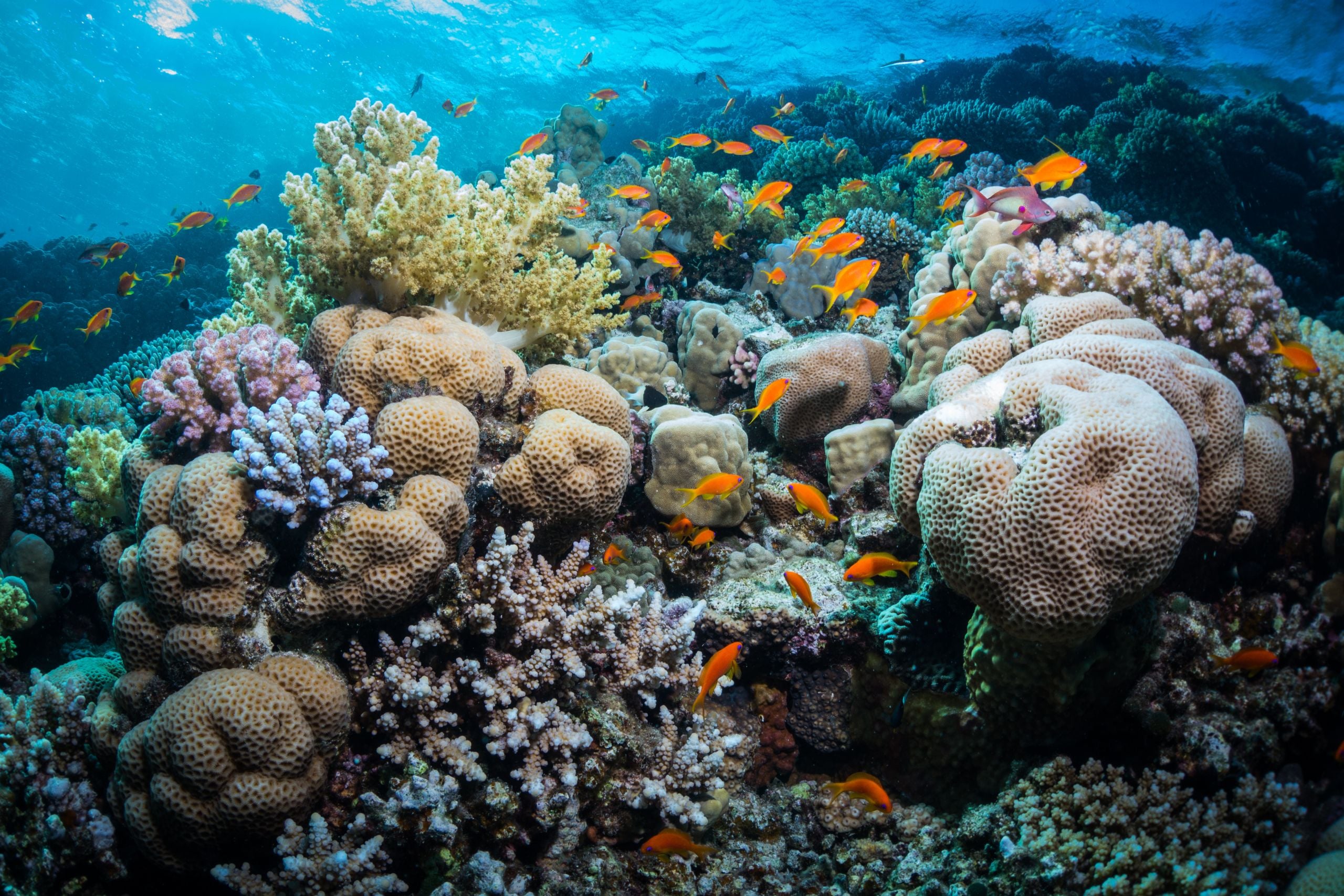
Fury Shoals sits in Egypt’s deep south, a stretch of reef and lagoon systems well away from the more heavily trafficked northern sites. It’s known for reef sharks, pelagic passes, and coral cover that has generally fared better here than closer to Hurghada and Sharm el-Sheikh, simply because far fewer boats reach it. Expect a slower, more current-driven style of diving than the shallow shore sites further north, with the reward being some of Egypt’s healthier reef systems. Our guide to the deep south of the Egyptian Red Sea covers Fury Shoals and St. John’s together, including how a typical southern itinerary is structured.
Quick Planning Facts:
- Water temp: ~25–29°C
- Visibility: 20–30m
- Diver level: Intermediate to advanced
- Note: Best suited to liveaboard itineraries; day-boat access doesn’t reach this far south.
St. John’s lies even further south than Fury Shoals, towards the Sudanese border, and tends to be calmer and more reef-focused than the shark-and-current routes to the north. Expect coral gardens, swim-throughs, and lagoon systems rather than open-water shark encounters, which makes it a good pairing with Fury Shoals on the same far-south itinerary rather than a destination most divers book on its own.
Quick Planning Facts:
- Water temp: ~25–29°C
- Visibility: 20–30m
- Diver level: Intermediate to advanced
- Note: Almost always dived on the same liveaboard itinerary as Fury Shoals
Thistlegorm and Wrecks of North of the Red Sea Liveaboard Diving
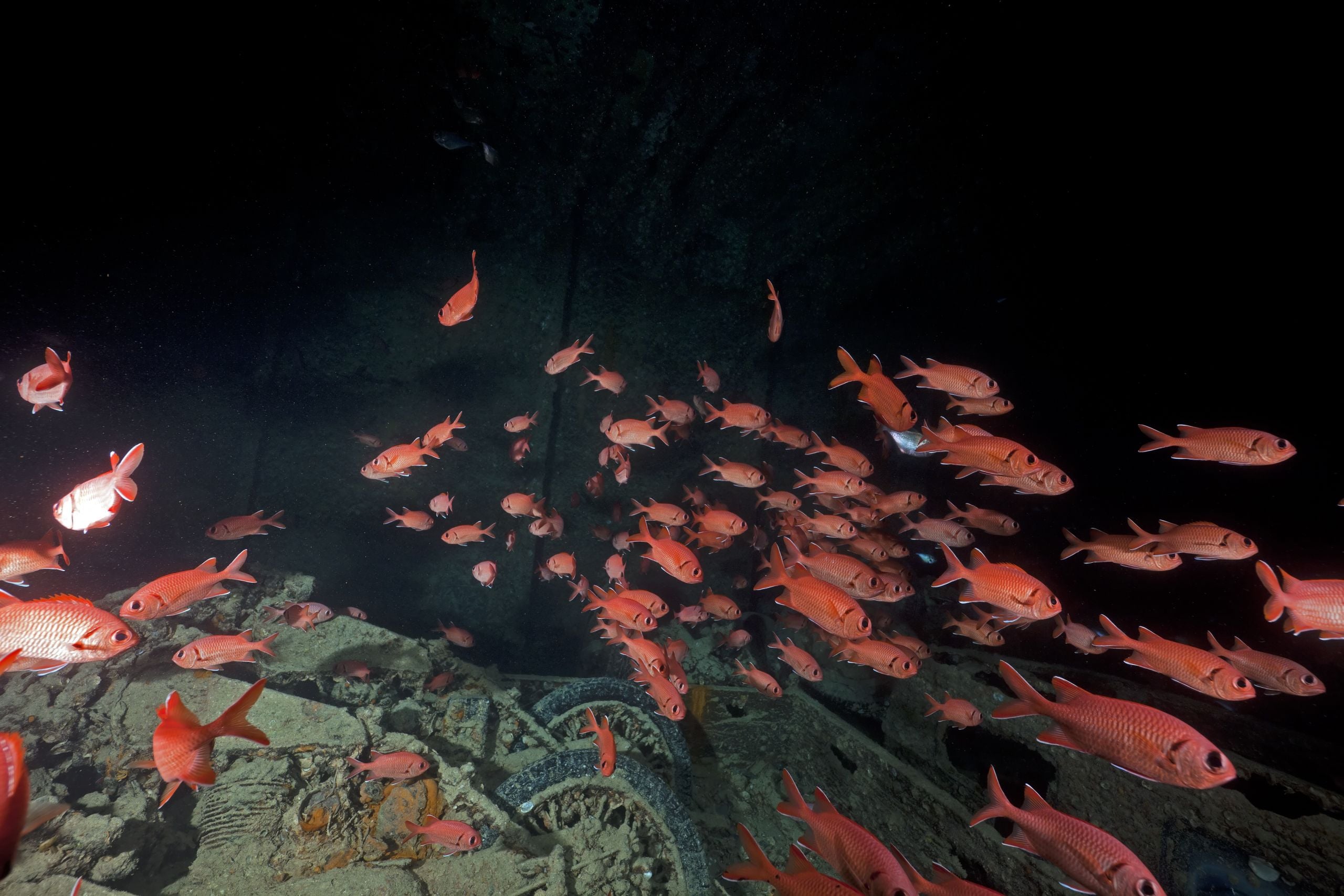
Thistlegorm is Egypt’s best-known wreck dive: a WWII British cargo ship sunk in 1941 that still holds much of its original load of motorcycles, trucks, and railway wagons. The wreck sits at a depth of 16–30m, and while the top of the superstructure (~16–18m) touches standard Open Water limits, exploring the main deck, cargo holds, propeller, and surrounding debris field requires Advanced Open Water certification due to depth and potential currents.
But Egypt’s wreck diving extends well beyond the Thistlegorm, to other Red Sea wrecks such as Numidia at Big Brother, Kingston, Ulysses, Rosalie Moller, Salem Express, and Dunraven. Depending on the route, most of these sit within standard recreational depth limits, with Rosalie Moller and the deeper sections of Numidia being the notable technical-level exceptions. Our full guide to Red Sea wrecks breaks down depth, required certification, and what to expect at each site.
Quick Planning Facts:
- Water temp: ~22–30°C (cooler in winter, warmest in summer)
- Visibility: 15–30m
- Diver level: Advanced Open Water recommended (Open Water certified divers can view the upper superstructure only; AOWD required for deck, holds, and deeper sections)
- Note: These wrecks are generally dived as part of a liveaboard route rather than booked as single standalone dives
Dahab
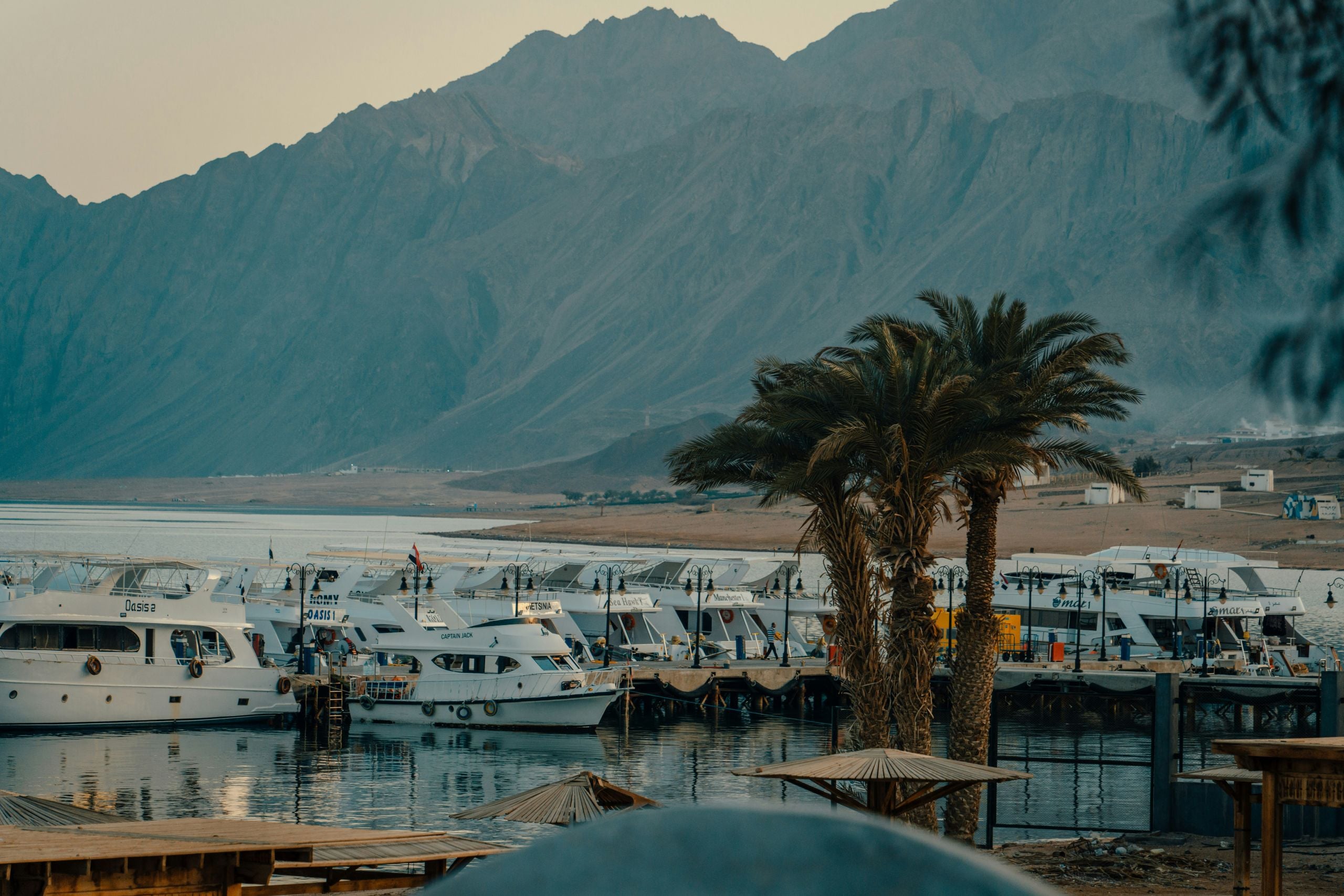
Dahab is Egypt’s main shore-diving base, built around shallow, easy-access house reefs and the Blue Hole, a sinkhole that drops straight down just off the shoreline. The shore sites are beginner-friendly and inexpensive to dive repeatedly. The Blue Hole, though, is very different and has a well-documented history of serious accidents among divers who exceed their training or push past the rim into open water. It calls for caution and the right certification rather than curiosity alone.
Quick Planning Facts:
- Water temp: ~23–27°C
- Visibility: 15–25m
- Diver level: Beginner-friendly at the shore sites; caution and relevant training required at the Blue Hole itself
Which Egypt Destinations Suit Your Experience Level
Certification requirements vary sharply across Egypt’s Red Sea, and knowing which destinations fit your current level matters as much as knowing what you want to see. None of Egypt’s currently bookable liveaboard itineraries suits true beginners: the closest options are the Thistlegorm’s exterior for Open Water divers and Dahab’s shore sites for divers with some baseline experience, while the marine parks, Fury Shoals, St. John’s, most wreck interiors, and the Blue Hole all call for Advanced certification, more comfort in current, or even a specific logged-dive count.
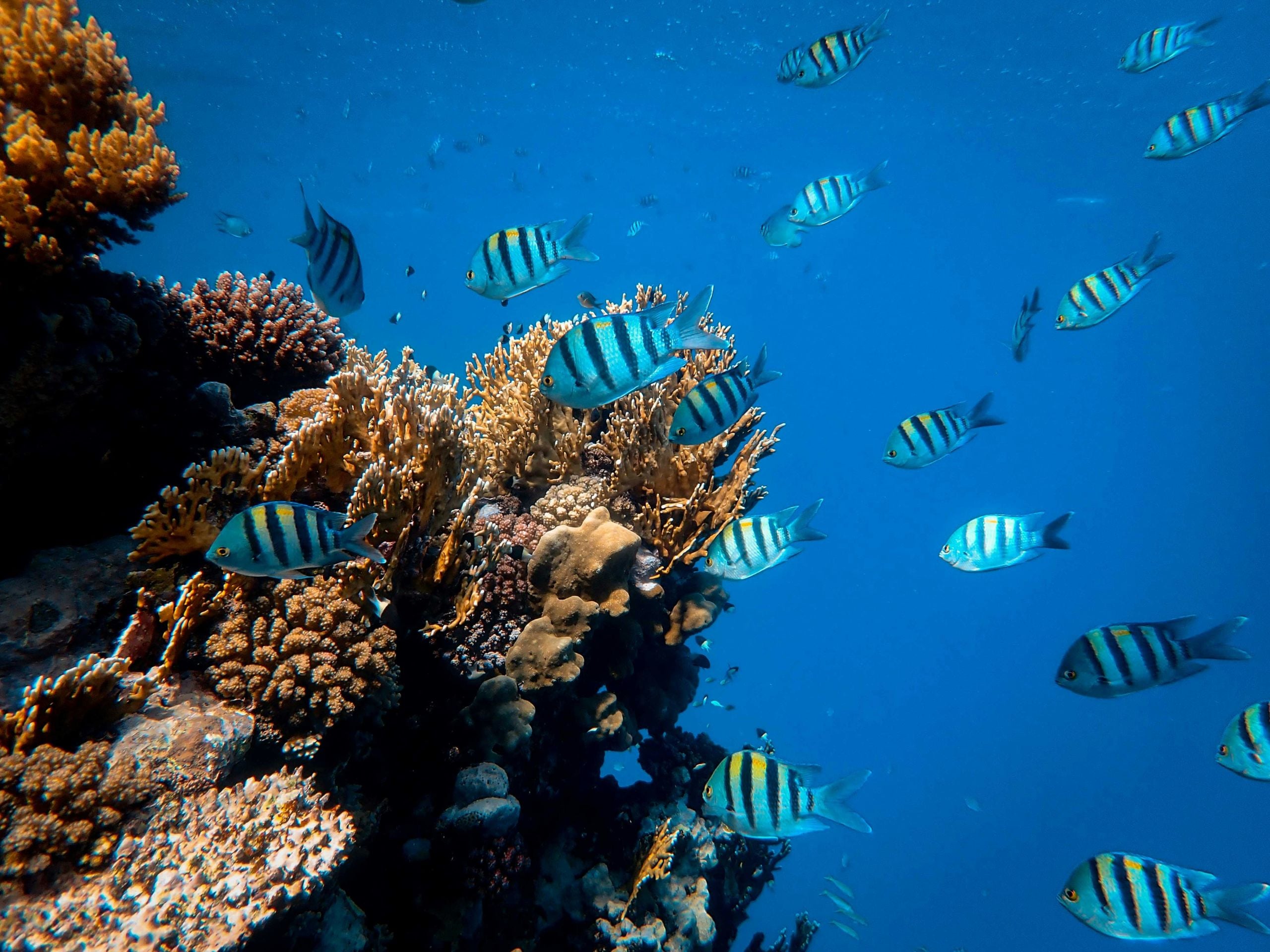
Advanced Certification and Comfort in Current
Egypt’s marine parks sit at the demanding end of the scale. All of the offshore marine parks have a legal minimum of 50 logged dives and an Advanced certification. They also need you to be comfortable with your buoyancy in blue water. Elphinstone, Fury Shoals, and St. John’s genrally require Intermediate to Advanced certification and experience, with each boat setting its own logged-dive minimum.
The Wrecks: From Open Water to Tech
The depth of the Thistlegorm and Egypt’s other wrecks don’t tell you whether the dive is an easy one. Even where the numbers fall within Open Water limits, Red Sea wreck sites often have current, overhead structure inside the holds, and boat-only access that call for more comfort than a straightforward reef dive.
The Thistlegorm sits at 16–30m: the exterior is open to Open Water divers, but the cargo holds and engine room call for Advanced training and some wreck-penetration experience. Kingston (4–20m), Salem Express (10–30m), and Dunraven (18–30m) are shallower and more forgiving, though they’re still generally dived from a liveaboard or day boat with a guide rather than treated as a casual shore dive. Rosalie Moller (17m at the mast down to around 50m at the seabed) and the deeper sections of Numidia at Big Brother (8m at the shallowest part of the bow, dropping past 80m at the stern) go further still, calling for Advanced training, wreck and deep specialties, if not at least deco training, and a higher logged-dive count set by the operator.
Dahab Is a Different Category
Dahab is mainly accessed as shore-based diving through local dive centers and dive resorts, though some liveaboard itineraries do include a stop there. Because most divers reach it independently rather than through a fixed boat itinerary, it doesn’t fit the same certification and logged-dive framework as the sites above. Its house reefs are approachable for divers with some experience, but the Blue Hole has a well-documented accident history and calls for caution and the right training, not curiosity alone.
If you’re weighing the options against each other: sharks and wall diving point to Egypt’s offshore marine parks, wrecks point to the Thistlegorm, reefs point to Fury Shoals and St. John’s, and shore diving without a liveaboard points to Dahab.
Timing an Egypt Trip Around Shark Season
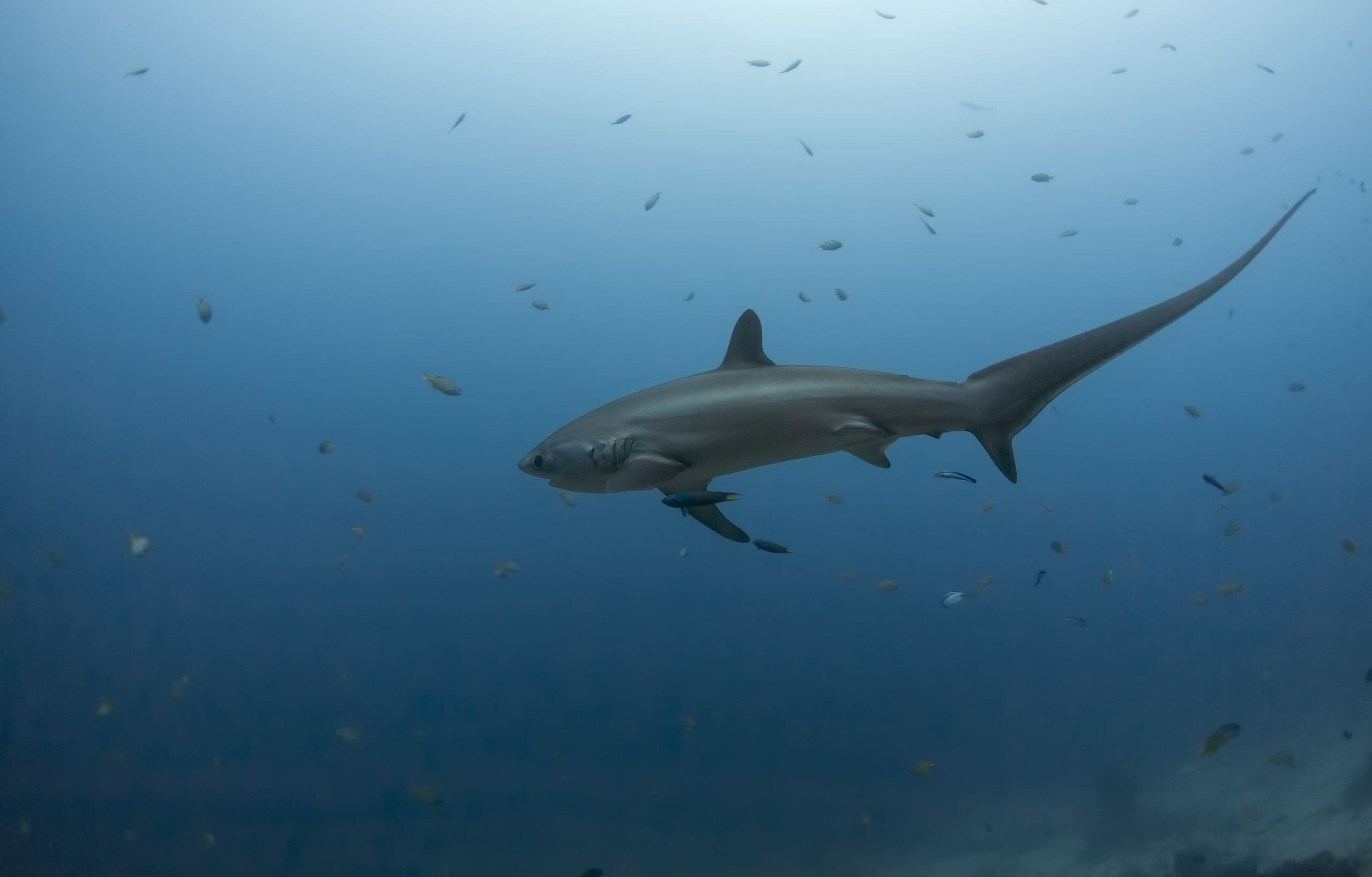
Shark odds at Egypt’s marine parks build through the year rather than staying flat:
- May–August: Hammerhead sightings are most active;
- September onward: Oceanic whitetips become more consistent;
- September–October: The two seasons overlap, giving you the best shot at both species on the same trip.
See When Is the Best Time to Dive the Red Sea? for the full month-by-month breakdown across all of Egypt’s diving.
Booking Logistics: Ports, Lead Time, and What to Pack
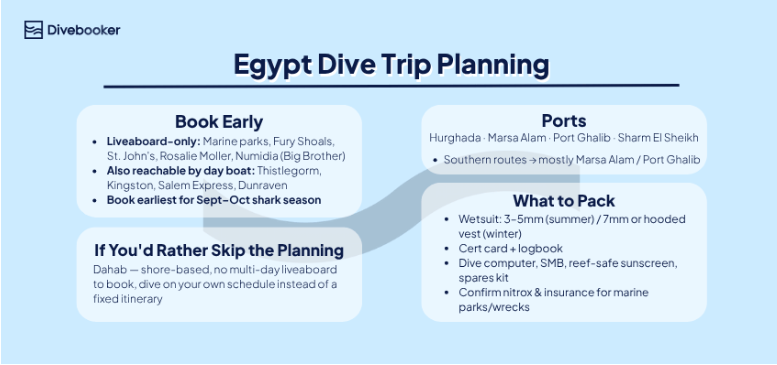
Book Further Ahead Than Usual
Egypt’s marine parks, Fury Shoals, and St. John’s are among the most popular Red Sea liveaboard routes, and departures during the busiest parts of the season can fill quickly. Booking well in advance gives you a better choice of cabins and travel dates, especially for marine-park itineraries planned around the September-October shark season. It can also help keep the cost down, as many operators release early bird rates, and getting the dates you want. Compare current Egypt liveaboard deals to see what’s discounted right now.
Flights and Ports
Most of these liveaboards depart from and return to Hurghada, Port Ghalib, or Sharm El Sheikh, depending on the operator and route; routes further south, such as Fury Shoals, St. John’s, and the marine parks, more often use Port Ghalib than Hurghada or Sharm El Sheikh. Factor that into flights and any pre- or post-trip stay, even though the diving itself happens well offshore rather than at the port.
What to Pack
Bring a 3–5mm wetsuit for summer and a 7mm suit or a hooded vest for winter. The water temperature swings from around 22°C to 30°C across the year and varies enough by location that it’s worth checking the specific season and route on your itinerary. Pack your certification card and logbook, since several routes check logged-dive counts before booking, along with a dive computer, a surface marker buoy for current-exposed sites, reef-safe sunscreen, and a save-a-dive spares kit. For the marine parks or wreck routes, confirm with your operator whether nitrox and dive insurance are required or recommended for your specific itinerary.
If You’d Rather Skip the Planning
Dahab works well if you’d rather skip the booking logistics above: as a shore-based destination, it doesn’t require booking a multi-day liveaboard route, and you can dive on your own schedule instead of a fixed itinerary.
Conclusion
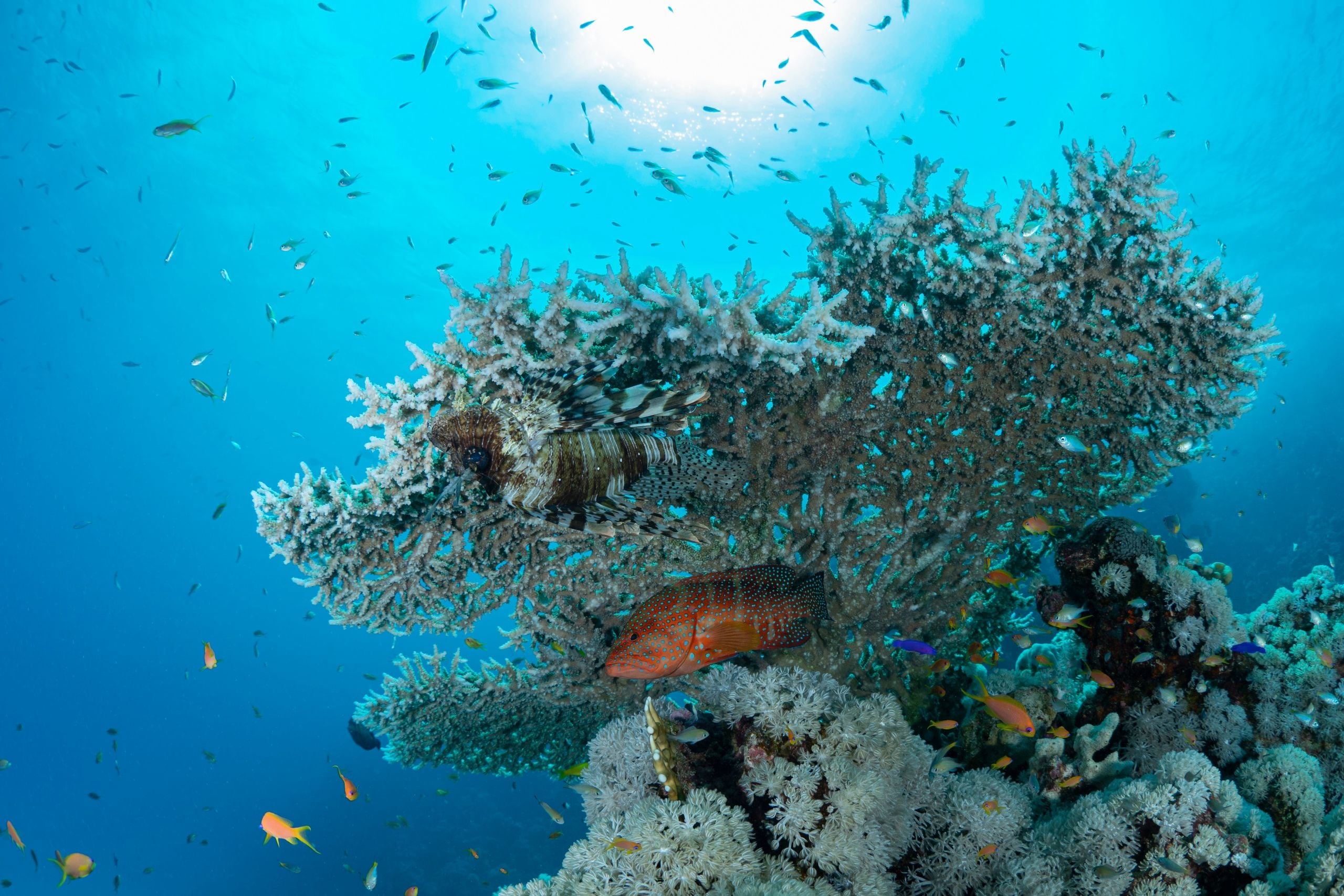
Where to scuba dive in Egypt comes down to what you want to see and how much current you’re comfortable with, not a single overall “best” pick. Egypt’s marine parks are the choice for sharks and advanced wall diving, Fury Shoals and St. John’s suit reef-focused liveaboard trips, the Thistlegorm and other wrecks reward wreck divers, and Dahab remains the most accessible option for shore diving
Whichever one fits, don’t leave the booking too late. Cabins on Egypt’s busiest liveaboard routes fill up fast. Compare liveaboard diving in Egypt to see all currently bookable routes and destinations side by side.
Most of Egypt‘s Red Sea can be dived year-round, with water temperature ranging roughly from 22°C in winter to 30°C in summer. Conditions and target species vary by season and location, so it’s worth checking When Is the Best Time to Dive the Red Sea? before booking
Not for Dahab’s shore sites, but the offshore marine parks, as well as Fury Shoals, St. John’s, and most wreck itineraries generally call for Advanced certification and comfort diving in current.
Liveaboards (Brothers, Daedalus & Elphinstone, Fury Shoals, St. John’s, wreck itineraries) suit divers after remote reefs, sharks, wrecks, and maximum diving, while shore-based diving in Dahab, or even Hurghada, suits divers who want flexibility and a lower cost.
Egypt’s offshore marine parks (Brothers and Daedalus, plus Elphinstone) are the main shark-focused liveaboard sites, with hammerheads most active May through October and oceanic whitetips more consistent from September through November. Fury Shoals is another option for reef sharks, though sightings vary by season and are never guaranteed.
The Thistlegorm is Egypt’s best-known wreck, sitting between 16m and 30m. While Open Water divers can view the uppermost structure, Advanced Open Water certification is recommended to explore the main deck, cargo holds, and deeper sections safely. Other popular wreck sites on Red Sea itineraries include Salem Express, the wrecks of Abu Nuhas (such as Giannis D and Carnatic), and Numidia at Big Brother. Most of these sit at least partially within recreational depth limits.