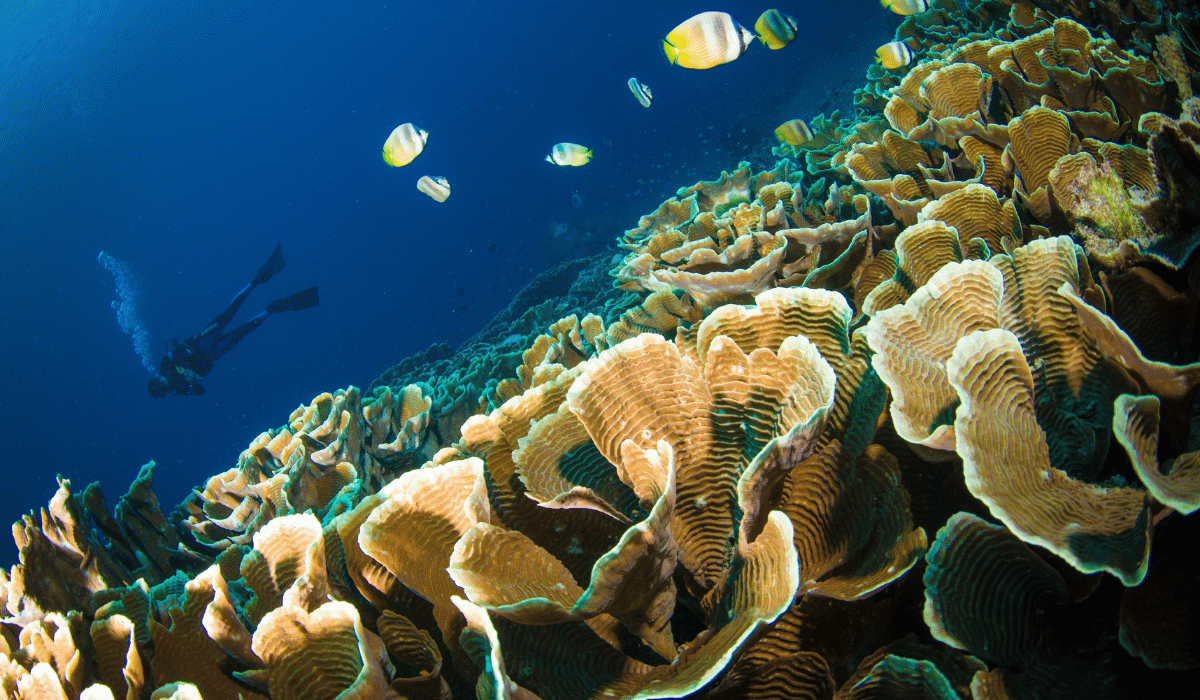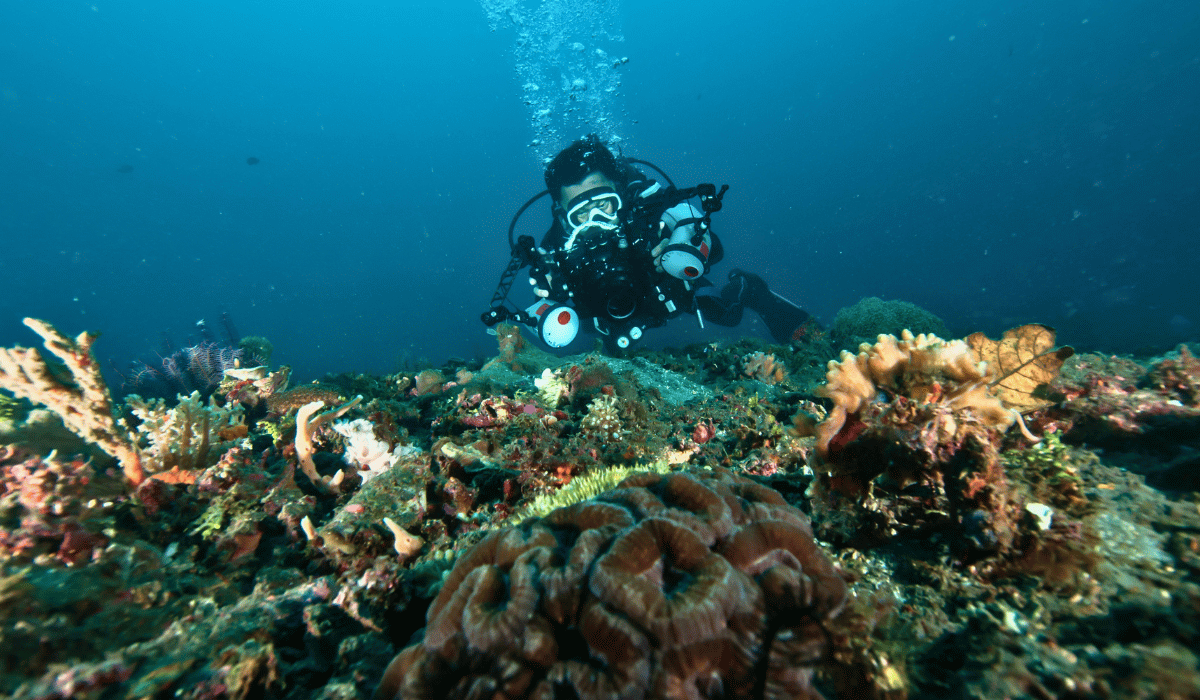
Diving in October opens a rare window where the world’s oceans seem to align. In the Indian Ocean and much of Southeast Asia, monsoon-fuelled nutrients are still driving marine activity. In the Caribbean and South Pacific, the seasonal weather is settling. The result is a rare month where decent conditions overlap across multiple regions. .
Whether you prefer the luxury of a remote liveaboard or the convenience of a shore-based resort, October diving offers access to some of the most compelling experiences of the year. To take advantage of the best deals, explore the liveaboard special offers available at Divebooker.
At a Glance: Top 7 Best Places to Scuba Dive in October
Planning an October dive trip?
Use this at-a-glance table to compare the best destinations by marine life, water temperature, visibility, and diver experience level.
This snapshot helps you find the perfect match for your next diving adventure in October.
| Destination | Best For | Water Temp | Visibility | Diver Level |
|---|---|---|---|---|
| Egypt | Hammerhead & thresher sharks on southern reefs; excellent wreck diving in the north | 25-28°C (77-82°F) | 20-30m | Intermediate/Advanced |
| Indonesia (Komodo) | Manta rays, thrilling drift dives, & Komodo dragons | 26-28°C (79-82°F) | 15-30m | Intermediate/Advanced |
| Fiji | Peak visibility, soft corals, & shark dives | 25-27°C (77-81°F) | 30-40m+ | All levels |
| Palau | Pristine reefs, manta rays, & WWII wrecks with fewer crowds | 27-29°C (81-84°F) | 20-40m | Intermediate/Advanced |
| Australia (GBR) | Leafy seadragons (south) & pristine reefs with clear water | 22-25°C (72-77°F) | 20-30m | All levels |
| Spain (Canary Islands) | Calm seas, warm water, & resident angel sharks | 22-25°C (72-77°F) | 15-25m | All levels |
| Seychelles | Calmest seas of the year, excellent viz, diverse marine life | 26-28°C (79-82°F) | 25-30m | All levels |
No matter your experience level, October serves up a remarkable range of world-class diving. If you’re still weighing your options for the rest of the year, check out our Ultimate Scuba Diving Calendar for a month-by-month breakdown.
A Closer Look at October’s Top Dive Destinations
Now, let us take a closer look at each October destination. From prime marine life encounters to practical diving conditions, these deep dives give you everything you need to plan your October diving adventure.
Egypt Diving in October
Why dive Egypt in October
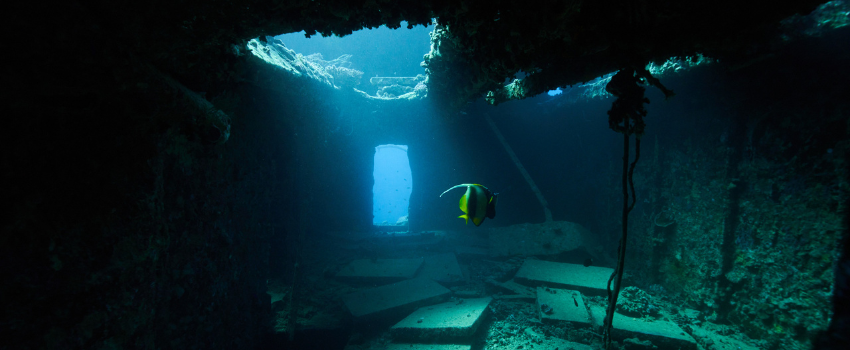
October sits right in one of the Red Sea’s sweetest windows. The blistering summer air fades, water temperatures remain a comfortable 25 to 28°C, and sea conditions are reliably calm across the entire northern and central coastline. For wreck divers, this means exceptional access to the legendary SS Thistlegorm and the reefs of Abu Nuhas without the rough winter swells or the intense summer heat that can make dive days exhausting. See our full rundown of the best wrecks in the Red Sea to know exactly which sites to put on your October list. Visibility often exceeds 25 metres, lighting up the wrecks beautifully.
At the same time, cooling water on the southern offshore reefs such as Daedalus, Elphinstone, and St. Johns signals the arrival of schooling hammerhead and thresher sharks. Because October conditions are so consistently good, several liveaboard operators offer extended North and South combo itineraries. This lets divers spend the first half of the trip on the famous wrecks and the second half drifting with sharks, all in a single sailing. Few other months allow both worlds so seamlessly.
Marine life highlights
- Scalloped hammerhead schools gather on the southern reefs
- Oceanic whitetip sharks patrol the blue water at Daedalus and Elphinstone
- Thresher sharks are often spotted in the early morning at St. Johns and Elphinstone
- The wrecks themselves, heavily encrusted with soft corals, teeming with lionfish, glassfish, and moray eels
Diving conditions
Water temperatures range from 25 to 28°C (77 to 82°F), so a 5mm wetsuit is comfortable on repetitive dives. Visibility typically sits between 20 and 30 metres, with calm seas and light winds. Currents vary from mild drifts on wreck dives to stronger flows on the offshore pinnacles, and your dive guide will plan accordingly.
Who it’s for
Intermediate to advanced for the southern shark routes, which involve deep descents and occasional blue‑water ascents, and require AOW certification with 50 or more logged dives. Northern wreck itineraries are accessible to Open Water divers, and several liveaboards run beginner‑friendly trips to the Thistlegorm, Abu Nuhas, and nearby reefs. The extended North and South combo itineraries described above are suitable only for experienced divers with solid buoyancy and fitness for multiple dives per day.
Pro Diver’s Tip
Book a North and South combo itinerary early. These extended trips running the full length of the Red Sea are rare outside of October and November, filling up months in advance. By locking in a combo, you get the quiet morning on the Thistlegorm before the day boats arrive and still catch the hammerhead action down south during the same voyage.
Indonesia, Komodo Island Diving in October
Why dive Komodo in October
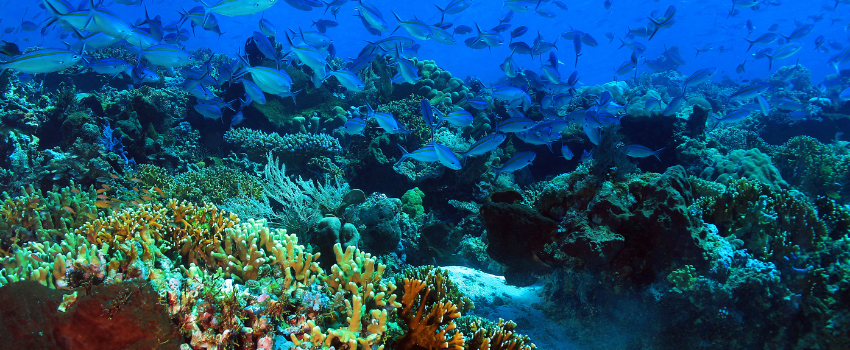
October sits inside Komodo National Park’s prime dry season window, with calm seas, sunny skies, and reliable visibility across the park. The monsoon winds have settled, granting full access to both the northern and southern dive sites. This is when Komodo truly shows off.
Manta rays gather at cleaning stations like Manta Alley and Karang Makassar, taking advantage of plankton-rich currents that sweep through the park. The same currents drive the electrifying drift dives at sites like Batu Bolong and Castle Rock, where masses of trevally, fusiliers, and reef sharks gather. For a detailed comparison of the northern and southern Komodo dive sites, see our expert breakdown.
On land, the famous Komodo dragons are active and visible, making surface intervals feel just as adventurous as the dives themselves. October offers that rare combination of peak conditions and peak wildlife, with fewer crowds than the earlier holiday months.
Marine life highlights
- Resident and visiting manta rays at the southern cleaning stations
- Massive schools of jacks, trevally, and barracuda on current-swept pinnacles
- White-tip and grey reef sharks patrolling the deeper slopes
- Pygmy seahorses, frogfish, and nudibranchs on quieter reefs for macro lovers
- Komodo dragons patrolling the beaches of Rinca and Komodo islands
Diving conditions
Water temperatures vary quite widely between the park’s regions. The northern sites in the Flores Sea sit at a warm 26 to 28°C (79 to 82°F), while southern sites influenced by the Savu Sea are cooler at 22 to 25°C (72 to 77°F) due to seasonal upwellings. A 5mm wetsuit works well for most divers, and packing a hooded vest adds comfort in the south. Visibility ranges from 15 to over 30 metres. Currents can be strong and are the defining feature of Komodo diving; proper drift diving technique is essential.
Who it’s for
Intermediate to Advanced. Komodo is defined by its currents, and the sites that deliver the famous pelagic action, such as Batu Bolong, Castle & Crystal Rock, and Manta Alley, demand quick descents, secure buoyancy control, and genuine comfort with drift diving and/or current. Dive operators consistently grade these signature sites as Intermediate to Advanced, and some, such as Tatawa Kecil and German Flag, are listed as Advanced only. That said, guided groups provide thorough briefings, and a handful of sheltered southern sites can work for confident beginners who are building experience. Liveaboard itineraries remain the best way to cover the park’s most remote and rewarding dive locations.
Pro Diver’s Tip
When diving the current-swept pinnacles, descend quickly into the current at the head of the site and tuck in behind the rock formations. Delay your decent and you’ve already missed the site. The lee side of sites like Crystal Rock and Castle Rock offers a pocket of calm where you can hold position while watching the pelagic parade pass by just beyond your fin tips.
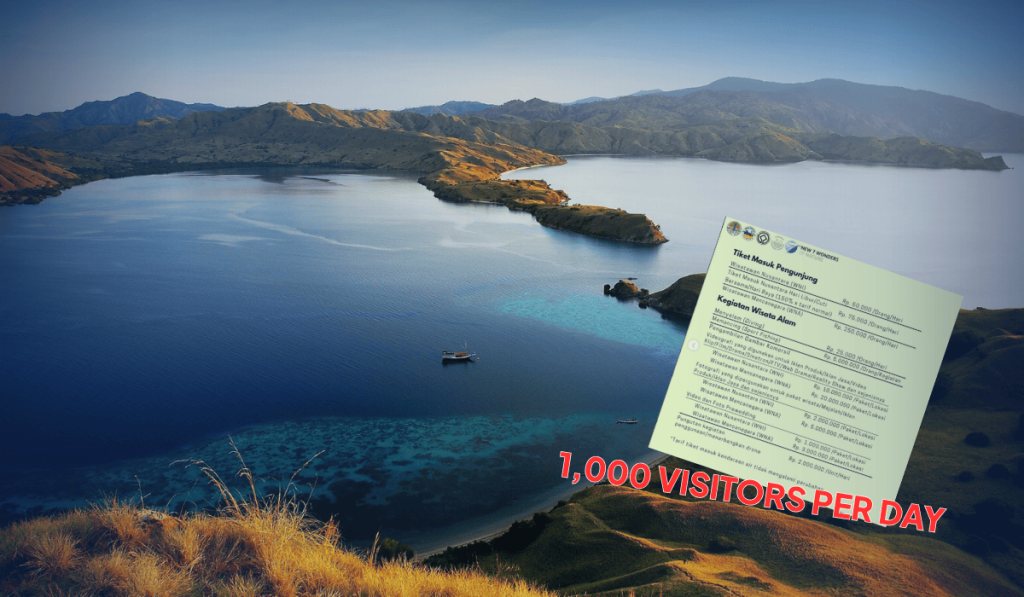
Note that prices have recently changed; view the 2026 Komodo National Park Entrance Fee update before you book.
Fiji Diving in October
Why dive Fiji in October
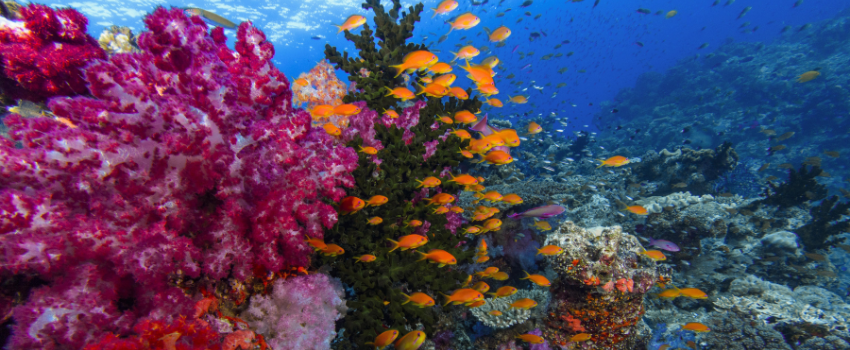
October lands at the very end of Fiji’s dry season, and the timing is excellent. The southeast trade winds have eased, the seas are calmer, and visibility is at its annual peak, often exceeding 40 metres. This is the soft coral capital of the world at it is showing off to its absolute finest.
The calm conditions open up the outer reefs and pinnacles, making for comfortable crossings and relaxed dives. Shark diving in Beqa Lagoon runs year-round, but October’s crystal water makes those encounters with bull sharks feel even more immediate. On the northern reefs, places like the Namena Marine Reserve light up with enormous schools of barracuda, jacks, and bright purple and pink soft corals in full bloom. It is an easy destination to fall in love with, especially when the water is this clear, and the reefs are this alive.
Marine life highlights
- Vibrant soft coral walls in purple, pink, and orange at Namena and Rainbow Reef
- Bull sharks and reef sharks on the Beqa Lagoon shark dive
- Massive schools of barracuda and big-eye trevally patrolling the outer pinnacles
- Eagle rays and manta rays passing through the channels
- Hawksbill and green turtles resting on bommies and reef tops
Diving conditions
Water temperatures hover around 25 to 27°C (77 to 81°F), and a 5mm wetsuit provides comfort on repetitive dives. Visibility averages 30 to 40 metres, with calm seas and light winds. Currents vary from mild on the inner reefs to moderate and occasionally strong on the outer pinnacles, but October’s subdued trade winds mean drops and pick-ups are generally manageable.
Who it’s for
All levels. The protected inner lagoons and shallow reef tops are perfect for beginners and those looking for relaxed dives. The outer pinnacle dives, and the Beqa Lagoon shark encounter, cater to intermediate and advanced divers. Both liveaboard itineraries and resort-based operations offer excellent access to the country’s best sites.
Pro Diver’s Tip
Book a liveaboard that includes both Namena Marine Reserve and the Somosomo Strait. The combination of Namena’s pristine walls and Rainbow Reef’s soft coral gardens gives you the full range of Fiji’s colour palette, all in one trip during the month of the best visibility of the year.
Palau Diving in October
Why dive Palau in October
October marks a transition in Palau. The rainy season tapers off, the winds drop, and the sea settles into a long calm spell that lasts through the winter. You get the best of both worlds: dry season conditions with shoulder season solitude. Fewer boats on the water means more intimate dives at sites that can get busy later in the season.
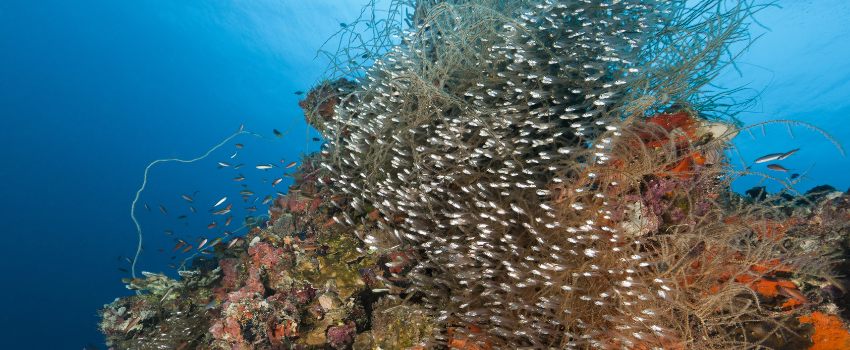
The channels that funnel nutrients into the lagoon remain active, drawing manta rays to cleaning stations like German Channel and Devilfish City. It’s not peak manta season, but you still have a good chance of encounters. On the outer reefs, grey reef sharks and schools of big-eye trevally patrol the drop-offs, while turtles and bumphead parrotfish work the shallows. And for divers who love history, Palau’s WWII wrecks, shipwrecks and planes that have become rich artificial reefs, sit in calm, clear water that makes them a pleasure to explore. In October, Palau’s most popular sites are significantly quieter, and the water is clear enough to make the wrecks worth lingering on.
Marine life highlights
- Mantas gliding through the channel cleaning stations on incoming tides
- Grey reef sharks, whitetip reef sharks, and occasional hammerheads on the outer walls
- Massive schools of bumphead parrotfish and barracuda on the reef crests
- WWII wrecks, including the wreck of the Iro, encrusted with soft corals and teeming with glassfish
- Napoleon wrasse, hawksbill turtles, and octopus on the sunken ship deck
Diving conditions
Water temperatures range from 27 to 29°C (81 to 84°F), so a 3mm wetsuit or rash guard is comfortable. Visibility sits between 20 and 40 metres, excellent across both the lagoon and the outer reefs, especially on incoming tides. Currents at the channel mouths can be strong and require proper timing, but the walls and wreck dives are generally mild and predictable.
Who it’s for
Intermediate to advanced divers. The channel diving requires good timing, solid buoyancy, and experience with drift diving. The wrecks are accessible to competent recreational divers with wreck specialty training, while deeper penetrations are strictly for technical divers. Liveaboards are the ideal way to cover Palau’s vast reef system in comfort.
Pro Diver’s Tip
Time your German Channel dives with the incoming tide. The flow brings fresh plankton into the mouth of the channel, and that is when the mantas arrive to feed. An extra weight in your pocket makes holding position on the sand easy while you watch the show. Just stay low and let them circle above you.
Australia Diving in October
Why dive Australia in October
Australia in October is all about the Great Barrier Reef.
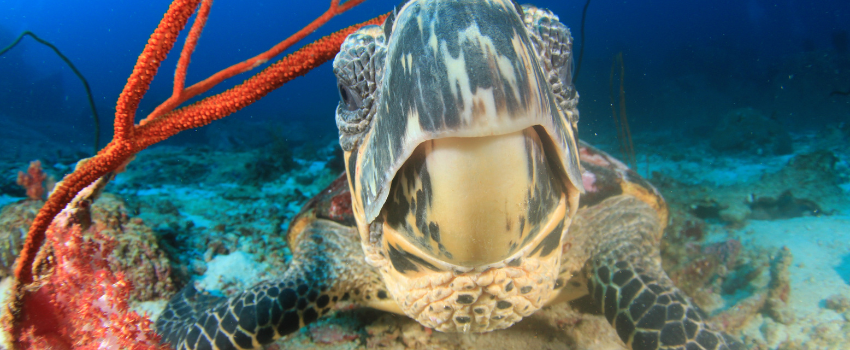
On the Great Barrier Reef, October delivers mild spring weather with clear water, low rainfall, and none of the summer stingers that arrive later in the season. Visibility frequently pushes past 30 metres, and the outer reefs are alive with sea turtles, reef sharks, and vast schools of tropical fish. It is the last month of the year when you can comfortably dive the northern reef without a stinger suit (though it’s still worth packing), and operators run full itineraries to the remote Ribbon Reefs before the summer heat settles in.
Marine life highlights
- Leafy seadragons and weedy seadragons camouflaged in the kelp and seagrass beds
- Sea turtles, reef sharks, and moray eels on the GBR’s outer reefs
- Massive schools of humphead parrotfish and sweetlips at popular GBR sites
- Occasional passing humpback whales on the southern GBR during their return migration
Diving conditions
On the Great Barrier Reef, water temperatures are a pleasant 22 to 25°C (72 to 77°F), and a 5mm wetsuit is comfortable. Visibility often exceeds 30 metres, with calm seas and light winds across the reef.
Who it’s for
All levels. The Great Barrier Reef offers everything from sheltered bommies for new divers to deep walls and drift dives for the more experienced. Both liveaboard and resort options are readily available.
Pro Diver’s Tip
Book an early-morning dive. Turtles are most active in the first hours after sunrise, when they rise from the reef to graze on seagrass and algae. The light is also at its best for photography, and you have a far better chance of an unhurried, close encounter before the day boats arrive.
Spain, Canary Islands Diving in October
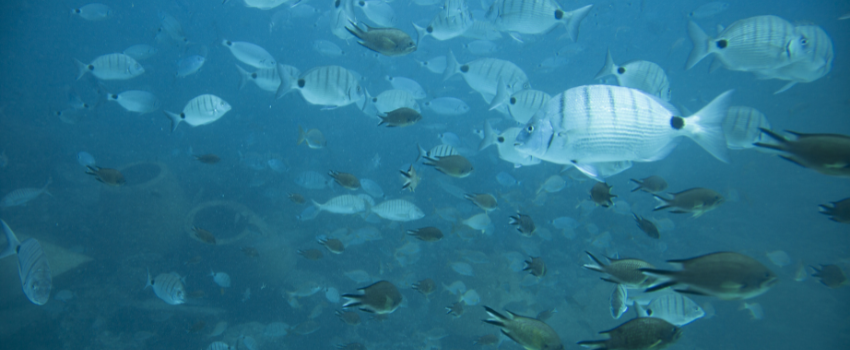
Why dive the Canary Islands in October
October is widely considered the best month to dive in the Canary Islands. The summer crowds have gone home, but the sea retains all its warmth, hovering around 22 to 25°C, and the air stays balmy without the fierce summer sun. Visibility climbs to 15 to 25 metres, and the trade winds have settled, granting calm surface conditions on both the sheltered and exposed sides of the islands. It is a comfortable, unhurried window that suits divers of every level.
What makes October truly special is the angel shark. The Canary Islands are one of the last strongholds of this critically endangered species, and October sightings are remarkably consistent. Sites like El Cabrón marine reserve on Gran Canaria offer shore dives where angel sharks lie camouflaged in the sand, often within a few fin kicks of the beach. Combine that with rays, barracuda, and the volcanic rock formations that characterize these Atlantic islands, and you have a genuinely unique dive destination in full autumn bloom.
Marine life highlights
- Resident angel sharks resting on sandy bottoms at El Cabrón and other sites
- Butterfly rays, bull rays, and common stingrays gliding over the sand flats
- Barracuda schools, trumpetfish, and damselfish around the rocky reefs
- Moray eels peering from volcanic crevices
- Occasional manta rays and mobula rays passing through the channel between islands
Diving conditions
Water temperatures range from 22 to 25°C (72 to 77°F), and a 5mm or 7mm wetsuit is recommended for repetitive dives. Visibility typically sits between 15 and 25 metres, and the sea is generally calm, with mild to moderate currents depending on the site. Shore diving is excellent, and boat diving provides access to the more remote pinnacles and walls.
Who it’s for
All levels. The protected marine reserves are perfect for beginners, with easy shore entries and sandy-bottom sites that make training conditions ideal. More experienced divers will enjoy the deep walls and seamounts that attract pelagic visitors. Both resorts and local dive centres operate year-round, and liveaboards are not necessary to access the best sites.
Pro Diver’s Tip
Move slowly and scan the sand when diving sites like El Cabrón. Angel sharks lie partially buried and are startlingly well camouflaged. A gentle approach without stirring up silt allows you to observe these ancient predators up close without disturbing them, and your dive guide will know exactly which patches of sand they favour.
Seychelles Diving in October
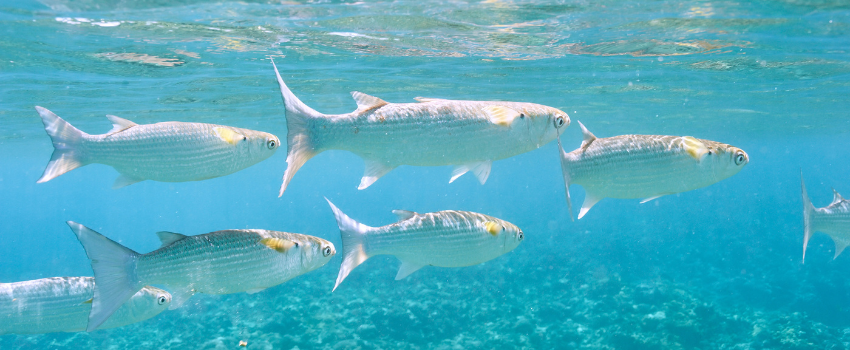
Why dive the Seychelles in October
October sits squarely between the two opposing trade winds that govern the Seychelles. The southeast trades have faded, and the northwest winds have yet to arrive. The result is a rare window of glassy calm seas, warm water, and exceptional visibility across the entire archipelago. It is arguably the single calmest month of the year.
This transition brings out the best of the inner islands. Sites around Mahe, Praslin, and La Digue deliver clear water and healthy granite reefs teeming with life. Whale sharks, which are seasonal in the Seychelles, can still be spotted in October before they move on, and the outer atolls like Aldabra and Cosmoledo remain pristine sanctuaries accessible by liveaboard. For divers seeking biodiversity without crowds, October in the Seychelles is a quiet, sun-soaked revelation.
Marine life highlights
- Whale sharks occasionally passing through the inner islands before the season ends
- Hawksbill and green turtles frequenting the granite reefs and seagrass beds
- Schools of bannerfish, butterflyfish, and fusiliers swirling around coral bommies
- Eagle rays gliding over sandy channels and reef drop-offs
- Giant guitarfish and nurse sharks on the outer atolls for liveaboard divers
Diving conditions
Water temperatures hover around 26 to 28°C (79 to 82°F), and a 3mm wetsuit provides ample warmth. Visibility averages 25 to 30 metres, often higher on the outer reefs. Currents are mild throughout the inner islands, making for relaxed, stress-free diving, while the outer atolls can see moderate drifts on the reef edges.
Who it’s for
All levels. The calm, clear conditions around the inner islands are ideal for beginners and those looking for unhurried reef dives. Advanced divers will find the current-swept outer atolls and deeper drop-offs more challenging. Both resort-based diving and liveaboard expeditions are available.
Pro Diver’s Tip
Book a liveaboard that ventures to the outer atolls. October’s calm seas make the long crossings comfortable, and sites like Cosmoledo and Aldabra offer some of the most untouched reef and shark diving in the Indian Ocean, with a fraction of the traffic found elsewhere.
How to Choose Your October Dive Destination
With so many world-class options, picking the right diving in October can feel overwhelming. To simplify things, we have grouped the top destinations by what matters most to you: big animal encounters, clear water and relaxed diving, wreck diving and history, or unique seasonal events. Use this guide to zero in on the perfect match for your next October dive trip.
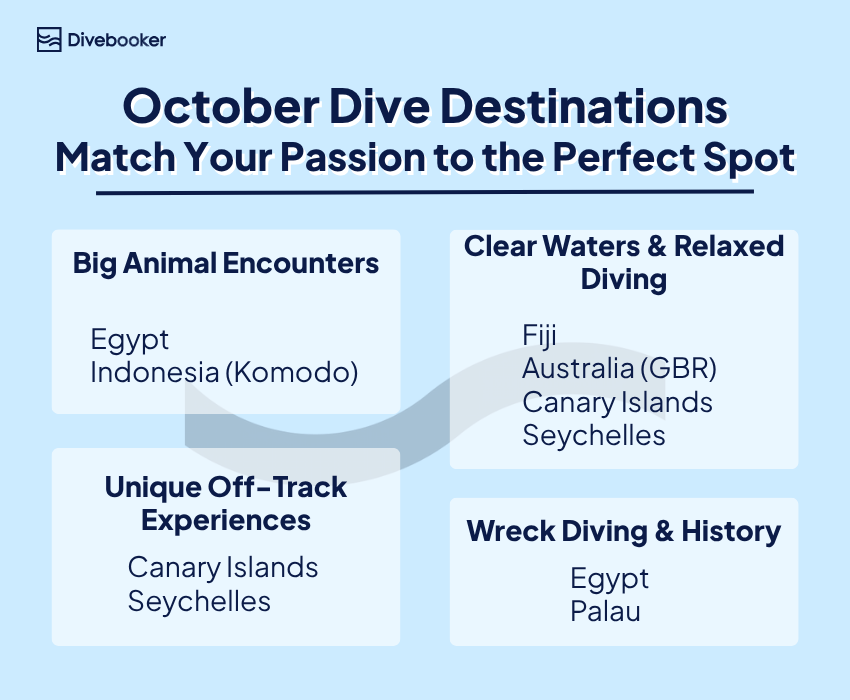
Best for Big Animal Encounters
If your goal is to share the water with giants, October delivers.
- Egypt – Schooling hammerheads and oceanic whitetip sharks gather on the southern offshore reefs.
- Indonesia, Komodo Island – Manta rays crowd the cleaning stations while massive trevally and reef sharks patrol the current-swept pinnacles.
Best for Clear Waters and Relaxed Diving
For divers who prioritise warm water, stunning visibility, and a laid-back pace, these spots shine in October.
- Fiji – The dry season peaks with glassy seas and visibility exceeding 40 metres, lighting up the famous soft coral walls.
- Australia, Great Barrier Reef – Spring weather brings clear water and no stingers, the last month before summer changes arrive.
- Spain, Canary Islands – Balmy air and warm sea, plus easy shore dives with angel sharks and rays in marine reserves.
- Seychelles – The calmest month of the year between opposing trade winds, with clear water and relaxed reef diving.
Best for Wreck Diving and History
October’s stable weather opens up extended itineraries that combine wreck exploration with pelagic action.
- Egypt – Calm seas, superb visibility, and balmy temperatures make October ideal for the northern wrecks like the Thistlegorm and Abu Nuhas. Some liveaboards run North and South combo itineraries, pairing the wrecks with the southern shark reefs in a single voyage.
- Palau – WWII shipwrecks and plane wrecks sit in clear, calm lagoon water, now vibrant artificial reefs rich with coral and marine life.
Best for Unique and Off-Track Experiences
Some October experiences fall outside the usual tropical reef checklist, and that is exactly what makes them unforgettable.
- Spain, Canary Islands – Shore dives with critically endangered angel sharks at marine reserves like El Cabrón, a species that is almost impossible to reliably encounter elsewhere.
- Seychelles – Pristine outer atolls like Aldabra and Cosmoledo, accessible by liveaboard during the calm October window, with untouched reefs and generous shark populations far from the crowds.
Insider Insight: The “Hidden” October Phenomenon
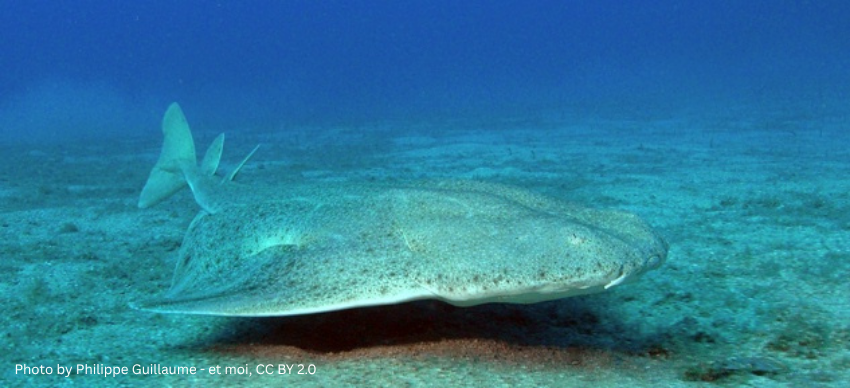
The angel shark dive at El Cabrón is one of October’s best-kept secrets. You walk in from the shore, fin out over the sand, and find them lying camouflaged exactly where your guide said they’d be.
October in the Canary Islands is peak angel shark season. These critically endangered flat sharks, which resemble a cross between a ray and a shark, gather in shallow sandy areas at sites like El Cabrón marine reserve on Gran Canaria. The encounters are remarkably consistent during this month, and the best part is that no liveaboard or complex logistics are required. You simply walk in from the shore, fin out over the sand flats, and find them lying camouflaged right where your dive guide said they would be.
It is one of the last places on earth where you can reliably dive with this ancient species, and October gives you the warmest water and calmest seas to do it.
Planning Your October Dive Trip
October’s variety means that every type of diver can find a match, but the best liveaboards and prime departure dates fill up fast. Destinations like Egypt, Komodo, and the Great Barrier Reef are at their seasonal peak this month, and the most sought-after itineraries are often booked six to twelve months ahead.
At Divebooker, we bring together the world’s best dive operators in one place. You can compare liveaboards and resorts by destination, departure date, price, and diver experience level, then book with confidence knowing you are getting competitive rates and expert support. Whether you are chasing manta cyclones, hammerhead schools, or humpback whales, the diving opportunities in October are unmatched
Frequently Asked Questions about Diving in October
October is a shoulder month in many destinations, meaning you can find fewer crowds on the reefs and better availability on liveaboards compared to the peak winter months. However, prime sites, like Komodo, are at their seasonal best and should be booked early.
Tropical destinations like Palau and the Seychelles range from 26 to 29°C (79 to 84°F). Subtropical spots like Egypt and Fiji sit at 25 to 28°C (77 to 82°F). Cooler-water destinations like South Australia require a 7mm suit at 15 to 18°C (59 to 64°F).
Komodo, Indonesia, offers reliable manta sightings at cleaning stations like Manta Alley during the dry season.