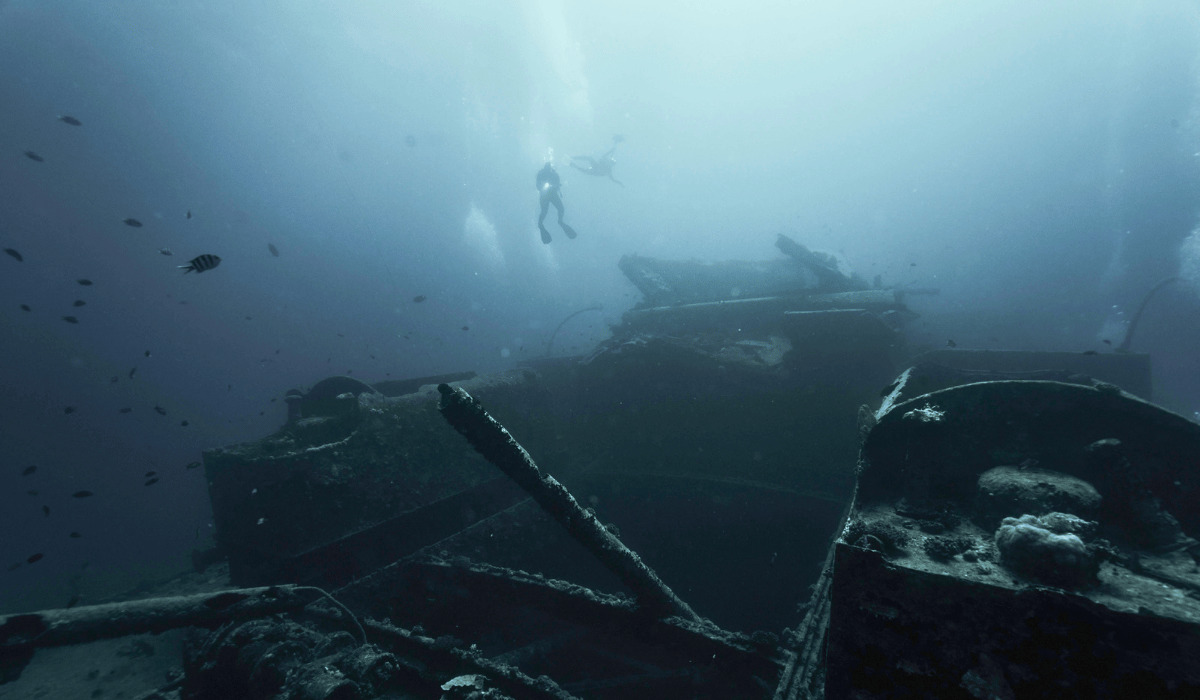
Wreck diving in the Red Sea puts some of the most famous shipwrecks on the planet within reach of ordinary certified divers. From the SS Thistlegorm’s WWII cargo holds to the ghostly hull of the Salem Express, the Red Sea has an unusual number of well-known, accessible wrecks within recreational diving depths, especially along Egypt’s coast.
This guide breaks down wreck diving in the Red Sea site by site: depth, current, required experience level, and what you’ll actually see, so you can work out which wrecks fit your certification before you book a trip.
Red Sea Wrecks at a Glance
| Wreck | Max depth | Minimum certification/experience | Access |
|---|---|---|---|
| SS Thistlegorm | 16–30m | Open Water (Advanced recommended for the holds) | Day boat or liveaboard |
| Rosalie Moller | 17–50m | Advanced Open Water + deep/wreck specialty | Liveaboard only |
| Salem Express | 8–30m | Open Water | Day boat or liveaboard |
| Dunraven | 18–30m | Open Water (Advanced recommended) | Day boat or liveaboard |
| Giannis D (Abu Nuhas) | 6–24m | Open Water | Day boat or liveaboard |
| Carnatic (Abu Nuhas) | 16–24m | Open Water | Day boat or liveaboard |
| Numidia (Big Brother) | 8–80m | Open Water for the shallow bow; technical for the full wreck | Liveaboard only |
| Kingston | 4–25m | Open Water | Day boat or liveaboard |
| Umbria Wreck (Sudan) | 5–38m | Open Water (Advanced recommended for the deeper holds) | Liveaboard only |
| SS Maidan Wreck (Rocky Island) | 80–120m | Technical/rebreather divers only | Liveaboard only |
Compare Red Sea dive trips to see which of these wrecks are on the itinerary before you book.
The Best Wrecks to Dive in the Red Sea
These are the most iconic, historically significant, and rewarding wrecks in the Red Sea. Here is what makes each one worth adding to your dive log.
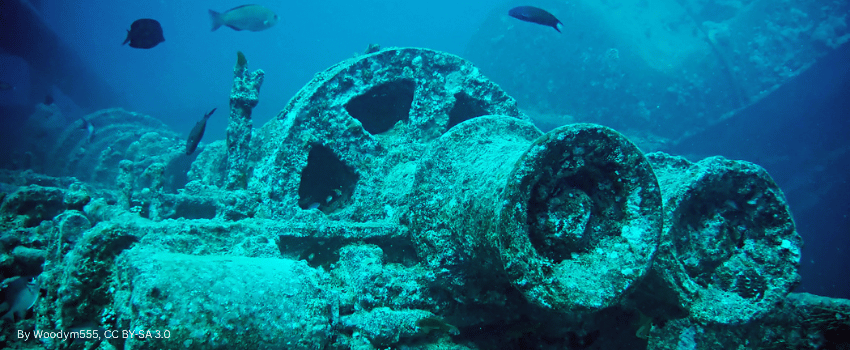
The SS Thistlegorm is the wreck that put Red Sea wreck diving on the map, and is the dive that so many northern Red Sea itineraries are built around. If you only dive one wreck in the Red Sea, this should be it. This British merchant navy ship was sunk by a pair of German Heinkel He11 bombers on 6 October 1941 while carrying a huge WWII cargo of trucks, motorcycles, train carriages, and rifles, most of which still lies exactly where it settled on the seabed.
The wreck sits at 16–18m at the top and around 30m at the seabed, making it accessible to Open Water divers on the exterior, while the cargo holds and engine room reward divers with Advanced certification and some wreck-penetration experience. Visibility is generally good (20–30m), though currents at this exposed spot in the Strait of Gubal can pick up without warning, so it’s worth knowing your limits and working with conditions on the day. Expect large schools of batfish, barracuda, and the odd passing turtle around the superstructure. Tip: book an early-morning slot if you can, since the Thistlegorm gets crowded and the light is best before mid-morning.
The Rosalie Moller is sometimes paired with the Thistlegorm as her lesser-known “sister ship”. She was bombed by more German Heinkels in an air raid, only two days after the one that sank Thistlegorm in 1941 while transporting coal. Unlike the Thistlegorm, she’s liveaboard-only and considerably deeper: the mast starts at a manageable 17m, the main deck sits at 28–39m, and the seabed is around 50m.
Most of the wreck is intact, and while penetration is possible into the holds, it isn’t necessary, since the forepeak, winch gear, deckhouses, and both masts are all visible from the outside, along with the huge propeller and rudder in the deepest section. Because of the depth, this is one of the two wrecks in this guide that genuinely needs technical-level planning (see the certification section below).
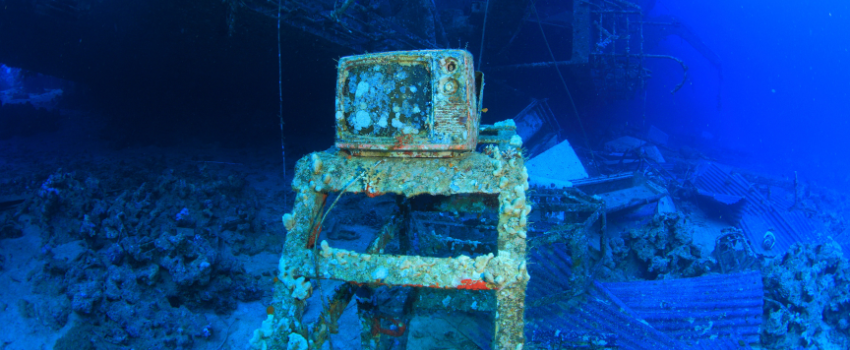
The Salem Express was a 100m passenger and vehicle ferry that sank in 1991. It’s a sensitive site; the sinking killed hundreds of people, and most operators ask divers to treat it that way, staying outside the wreck rather than exploring the interior. Divers can still see the propellers, corridors, upper decks, and personal belongings passengers left behind, from rolls of carpet to bicycles and chairs.
The top of the wreck sits at just 10m, and coral coverage and marine life have built up steadily since 1991, making it accessible to divers of most experience levels.
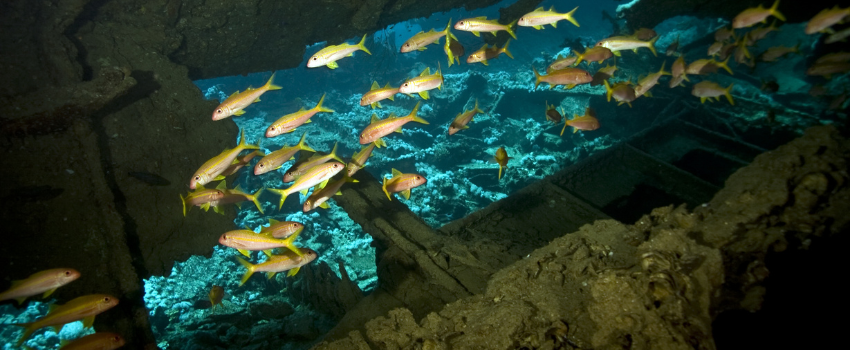
The Dunraven sank in 1876 and now lies upside down, diagonal to the reef it struck. It’s one of the older wrecks in this guide, and over 140 years underwater have left it densely coated in stone coral and soft coral, with a healthy population of resident marine life including glassfish and moray eels in the darker corners of the hull. It sits in a similar depth range to the Thistlegorm, making it a good pairing on the same liveaboard or day-boat itinerary.
Abu Nuhas: The Wreck Graveyard
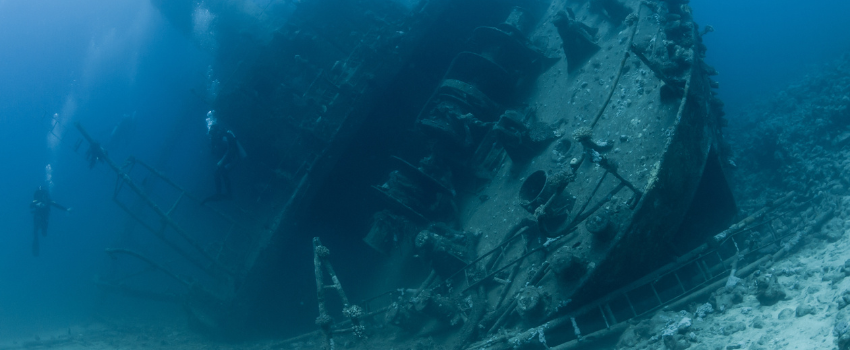
Abu Nuhas is a large triangular reef just north of Shadwan Island that has claimed so many ships it’s often nicknamed the wreck graveyard. Average depth across the reef is around 24m with good visibility (20–30m), but currents on the northern, more exposed side, where most of the wrecks lie, can be strong. Four wrecks are commonly dived here, from west to east: the Giannis D, the Carnatic, the Chrisoula K, and the Kimon M.
- Giannis D: A 1969-built cargo ship that collided with the reef in 1983 while carrying timber. Her stern rests at 24m and her mast at just 6m, and the interior is penetrable for divers with the right training.
- Carnatic: A 19th-century British cargo ship that struck the reef on 12 September 1869. Now broken into two pieces at 12–24m, it’s known for its huge bronze propeller and thick coral growth.
- Chrisoula K: Nicknamed “the Tile Wreck” for the Italian ceramic tiles still stacked in her holds, this German-built cargo ship sank on 31 August 1981. She sits at 4–26m.
- Kimon M: A German-built cargo ship that ran aground on 12 December 1978 while carrying a cargo of lentils, earning her the nickname “the Lentil Wreck.” She rests at 4–32m on her starboard side, largely intact with swim-throughs.
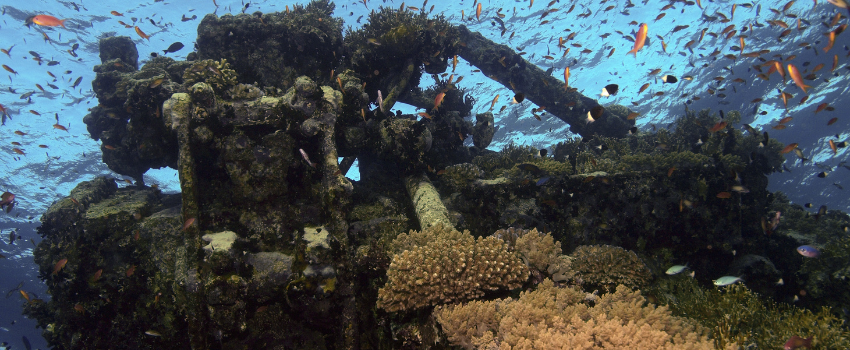
The Numidia lies draped across the steep northern slope of Big Brother Island, and it appears in nearly every serious “famous Red Sea wrecks” itinerary alongside the Thistlegorm and Carnatic. This British cargo steamer ran aground on the reef in July 1901 on only her second voyage, carrying roughly 7,000 tonnes of general cargo including railway material. Her captain spent seven weeks helping to salvage the cargo before she finally broke apart and sank, likely in the winter storms that followed.
What makes the Numidia stand out, and what makes it one of the two wrecks in this guide that needs a real certification check, is its depth profile: the bow rests at a diveable 8–20m, but the stern drops well past 80m down the reef wall. Recreational divers can enjoy the shallow bow and midsection comfortably, but exploring the full wreck is technical and rebreather-diver territory only.
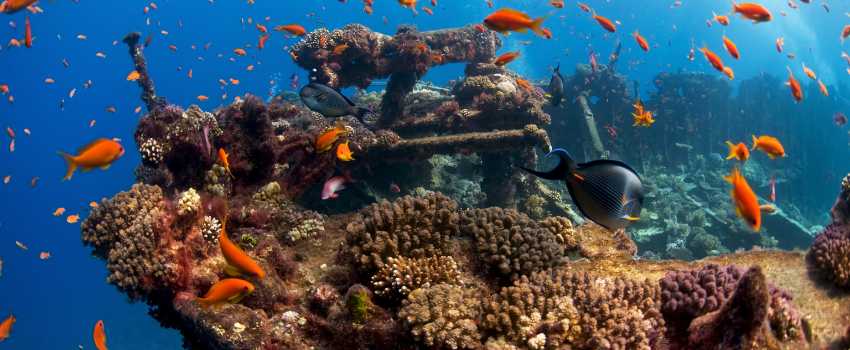
The Kingston sank in February 1881 after striking Shag Rock, at the entrance to the Straits of Gubal, while carrying a cargo of coal from Cardiff to Aden, with no loss of life. It’s one of the oldest wrecks in the Red Sea and, at roughly 4–25m, one of the shallowest and most forgiving, frequently recommended as a good historic wreck for divers who aren’t ready for Rosalie Moller or full-Numidia depths. The hull is well preserved and covered in soft coral, and the intact propeller is a favorite photo spot, with fusiliers, snappers, and the occasional passing eagle ray or turtle around the site.
Umbria Wreck (Sudan)
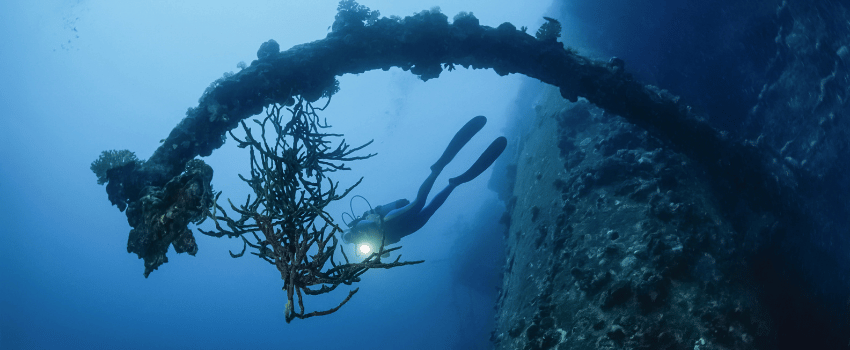
The Umbria lies on Wingate Reef near Port Sudan. Her own Italian crew scuttled her in June 1940 rather than let the British seize her WWII cargo, and she settled largely intact with an estimated 350,000+ bombs and detonators still sealed in her holds, alongside three vintage Fiat 1100 cars.
The wreck sits at roughly 5–38m, with the upper decks and holds open to Open Water divers and the deeper stern sections better suited to Advanced divers with some penetration experience. It’s liveaboard-only out of Port Sudan rather than Egypt’s Red Sea coast, so most divers see it as part of a dedicated Sudan itinerary rather than an add-on to an Egypt trip.
The SS Maidan sits off the south side of Rocky Island, near Zabargad Island in Egypt’s deep south, and she’s one of the least-dived wrecks in this guide for a good reason: depth. This Glasgow-built cargo steamer, sailing for the T&J Brocklebank line, spent part of WWI as a troop transport, carrying the Liverpool Scottish Regiment and the Queen’s Westminster Rifles from Southampton to Le Havre in November 1914, among the first British infantry landed in France. She struck the reef at Rocky Island and sank in June 1923; her crew and seven passengers made it ashore on St John’s Island and were picked up safely.
Technical divers rediscovered her in 2003. She sits between roughly 80 and 120 metres, nearly intact, her hull now covered in coral and sponge growth with jacks, snappers, barracuda, groupers, and reef fish sheltering around it. This is rebreather and advanced trimix territory, dived with specialist technical certification only.
Other Wrecks Worth Knowing About
A handful of other wrecks come up often enough on Red Sea itineraries to know about before you book.
- Aida II Wreck: At Big Brother alongside the Numidia. It isn’t on every Brothers itinerary, so choose a route that already includes it and confirm current depth and access with your operator.
- Ulysses: In the Strait of Gubal near Bluff Point. A shallow, beginner-friendly wreck that turns up on several Northern-route itineraries alongside the Thistlegorm and Rosalie Moller.
- Barge at Bluff Point: Also on Gubal Island, close to the Ulysses. There’s not much structure left of this small wreck, but its nooks and crannies make it a favorite night dive at around 14–20m.
- Yolanda: Near Ras Mohammed. The ship itself slid off the reef into water far too deep to dive, but its scattered cargo of bathtubs, sinks, and toilets still sits at around 15–18m and is a regular stop for Sharm El Sheikh day boats and liveaboards.
What Certification and Experience Do You Need for Red Sea Wreck Diving?
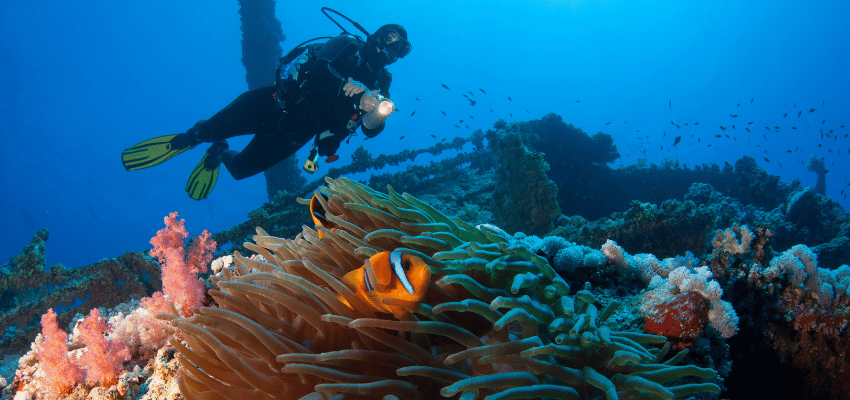
The good news is that most of the wrecks in this guide sit within standard recreational depth limits, roughly 18–30m for the Thistlegorm, Salem Express, Dunraven, Giannis D, and Carnatic, and 4–25m for the shallow, beginner-friendly Kingston. You don’t need a wreck diving certification to see the majority of what’s covered here, though an Advanced Open Water course and some wreck-specialty training will get you into the cargo holds and tighter spaces safely.
Two wrecks are the genuine exceptions:
- Rosalie Moller (mast at around 17m, deck 28–39m, base to around 50m): Advanced Open Water plus a deep or wreck specialty at minimum; several liveaboard operators require 50+ logged dives before allowing you to dive the wreck.
- Numidia at Big Brother (top around 8–20m, stern down to around 80m): the shallow bow is recreational-accessible, but exploring the full wreck down the reef wall is technical and rebreather-diver territory only
If you’re planning a trip specifically to tick off these two, make sure that your certification and logged-dive count meets your operator’s requirements before you book, since they vary by boat.
Best Liveaboards and Trips for Red Sea Wreck Diving
Most Red Sea wreck itineraries fall into two shapes: the Northern route and the Brothers route.
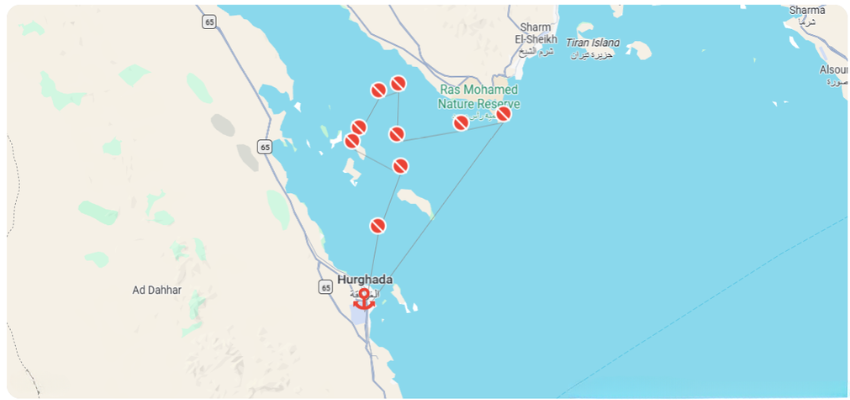
Example of the Emperor Elite Reefs & Wrecks Route
The Northern wrecks route covers the Thistlegorm, Rosalie Moller, Abu Nuhas (Giannis D and Carnatic), Kingston, Dunraven, and Ulysses, all within the Strait of Gubal and the backbone of most 7-night Hurghada and Sharm El Sheikh round-trips. Most of these wrecks sit at recreational depths, with Rosalie Moller the exception on this route: it’s deeper and effectively liveaboard-only, so you’ll still need Advanced Open Water plus a deep or wreck specialty even though it shares an itinerary with easier wrecks. Dozens of boats rotate through this route rather than one dedicated operator, so instead of picking a name blind, click through to each wreck above to see which specific liveaboards currently dive it.
The Brothers/deep-wreck route covers the Numidia and the Aida II Wreck at Big Brother Island, a remote reef roughly 60km offshore that’s reachable only by liveaboard, with a legal minimum of 50 logged dives to dive there. Because this itinerary specifically includes Big Brother, fewer operators offer the route, but they include: Emperor Elite, Odyssey, Heaven Saphir, Blue Horizon, Sea Serpent Serena Dreams, and Ghazala Explorer.
Both routes commonly require a minimum Advanced Open Water certification, plus 20–50 logged dives for the Thistlegorm and Rosalie Moller, and a legally mandated 50+ for diving at the Brothers, with exact thresholds set by each boat.
Browse Egypt wreck-diving liveaboards by route and certification level before you lock in dates.
Conclusion
The Red Sea earns its reputation as one of the world’s best wreck diving destinations honestly: well-preserved, historically distinct wrecks within a few days’ boat travel of each other. Some sit as shallow as 10m and are beginner-friendly Open Water dives. Others are beyond the reach of recreational dives and require technical training for depth and penetration. For most divers, the SS Thistlegorm is still the single best starting point, but the right wreck for you really comes down to your certification level and which route your trip follows. Once you know that, compare Red Sea liveaboards that include Thistlegorm and Abu Nuhas wreck dives and pick the itinerary that matches your logbook.
Frequently Asked Questions About Red Sea Wreck Diving
Yes. Several of the Red Sea’s best-known wrecks, including the Kingston, Salem Express, Carnatic, and the exterior of the Thistlegorm, sit at depths that Open Water divers can comfortably handle. The wrecks to be cautious about as a newer diver are the Rosalie Moller and the full Numidia at Big Brother, both of which drop well beyond recreational limits and are better saved until you’ve built up certification and logged dives.
Wreck diving in the Red Sea is far less seasonal than shark diving. Visibility and sea state shift a bit through the year, and winter water is cooler for longer penetration dives, but the wrecks themselves are diveable year-round. For the full seasonal breakdown by country and priority, see When Is the Best Time to Dive the Red Sea?.
For most of the wrecks in this guide, including the Thistlegorm‘s exterior, Salem Express, Dunraven, Giannis D, Carnatic, and Kingston, a standard Open Water certification is enough, though Advanced Open Water is recommended for penetration or deeper sections. A dedicated wreck diving certification becomes worthwhile if you want to safely enter cargo holds and tighter interior spaces, and it’s effectively required, alongside deep-diving training, for the Rosalie Moller and the full Numidia wreck at Big Brother.
The Dunraven sits at roughly 18–30m, similar to the Thistlegorm‘s depth range, and lies upside down against the reef it struck in 1876. It’s a comfortable dive for divers with Open Water certification, with Advanced recommended for getting the most out of the site.
The Salem Express lies near Safaga, in Egypt‘s Red Sea, and yes, it can be dived by divers of most experience levels, since the top of the wreck sits at just 10m. Because the 1991 sinking resulted in significant loss of life, most operators treat it as a sensitive site and ask divers to stay outside the wreck rather than penetrate it.
The Red Sea’s northern stretch, especially the Strait of Gubal, sits on one of the world’s busiest historic shipping lanes leading to and from the Suez Canal, and it’s studded with shallow reefs that are easy to strike in poor visibility or bad weather. Add in wartime activity through the region during both World Wars, and you get a concentration of wrecks, from 19th-century steamers to WWII cargo ships, that’s rare anywhere else in the world.
Yes, but only the outside. The main deck and superstructure of the Thistlegorm, sit at 16–18m, a comfortable dive for Open Water divers when conditions are good. Penetrating the cargo holds and engine room is a different story: silt, low light, and tight passages mean you want Advanced certification and a guide who dives the wreck regularly before you go in.
The SS Thistlegorm is undoubtedly the most famous shipwreck in the Red Sea. This British WWII cargo ship was sunk by a German air raid in October 1941 and still carries much of its original cargo, including trucks, motorcycles, train carriages, and rifles, making it a bucket-list dive for wreck divers of almost any experience level.