- Iconic Caribbean Reef Fish
- Caribbean Big Pelagics: Sharks, Rays and the Open-Water Thrills
- Caribbean Marine Mammals
- The Hidden Gems of Caribbean Macro Life
- Caribbean Sea Turtles
- Caribbean Marine Life by Destination & Season
- Conclusion: Dive Responsibly and Make It Happen
- Frequently Asked Questions About Marine Life of the Caribbean
The Caribbean’s warm, crystalline waters are home to more than 1,300 species of fish, 65–75 reef-building hard coral species, and sharks, rays, turtles, and macro species that most divers drift straight past.
This guide cuts through the textbooks and gives you the Caribbean marine life that matters most on a dive trip: the animals you are actually likely to see, where they hang out, and what makes each encounter unforgettable.
Before diving into the species, check out our Ultimate Guide to Caribbean Diving for travel tips and logistics.
Ready to meet marine life in person?
Iconic Caribbean Reef Fish
The reef holds its regular residents year-round. Algae grazers, ambush predators, and cleaner fish work different layers of the same structure, which is why almost every dive produces something different.
Quick-Reference Species List
| Species | What to Look For |
|---|---|
| Queen Angelfish | Electric blue and yellow body with a dark forehead spot circled in blue. Solitary or in pairs, often near large sponges. Grows to about 45 cm. |
| Foureye Butterflyfish | Disk-shaped with a black vertical stripe through the eye and a large dark spot near the tail that acts as a false eye. Small and flighty, rarely stopping still. |
| Blue Tang | Bright blue body with a yellow tail—remember Dory from Finding Nemo? That. Schools over reef flats, grazing on algae. Can reach 39 cm. |
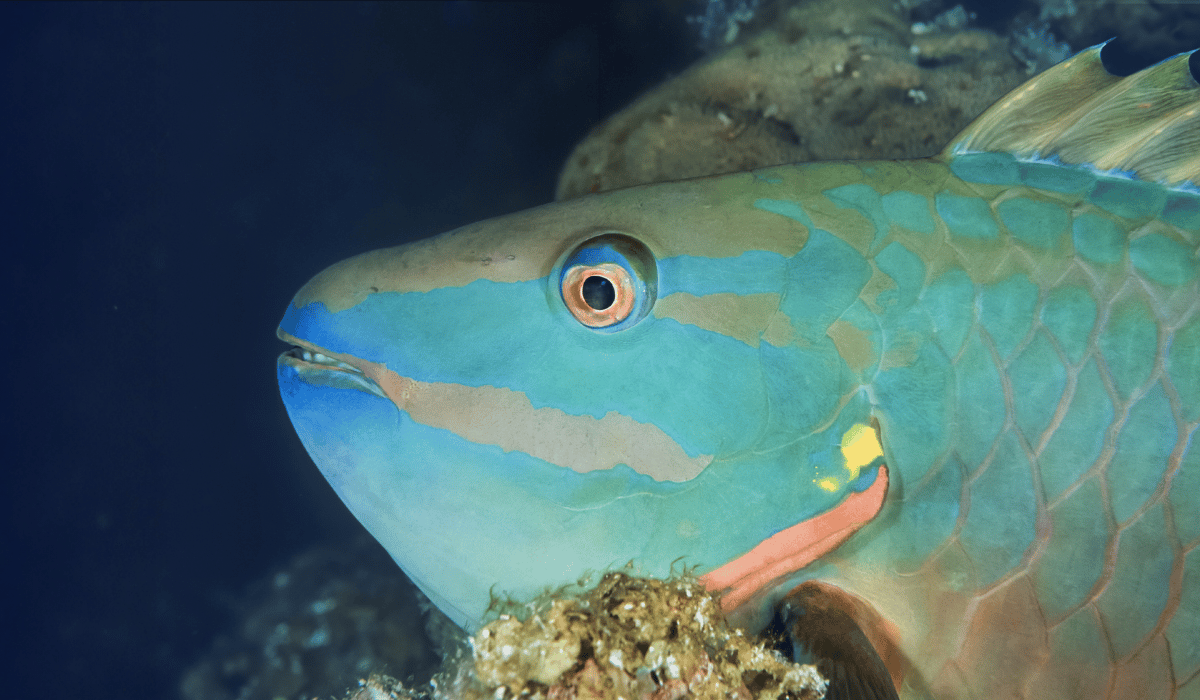
| Parrotfish | Beak-like teeth, thick body, and electric or muted colours depending on species. Grinds coral and algae all day. The reef’s cleanup crew. |
| Nassau Grouper | Heavy-bodied, pale tan to reddish-brown with five dark vertical bars. Curious and approachable but increasingly scarce due to overfishing. Listed as Endangered (Population decreasing) |
| Great Barracuda | Torpedo-shaped, silver, and streamlined with a dramatic underbite. Solitary ambush predator that can hit bursts of over 50 km/h. |
| Trumpetfish | Long and thin, it often hovers vertically among sea fans or soft corals to blend in. Ambushes small fish and crustaceans. |
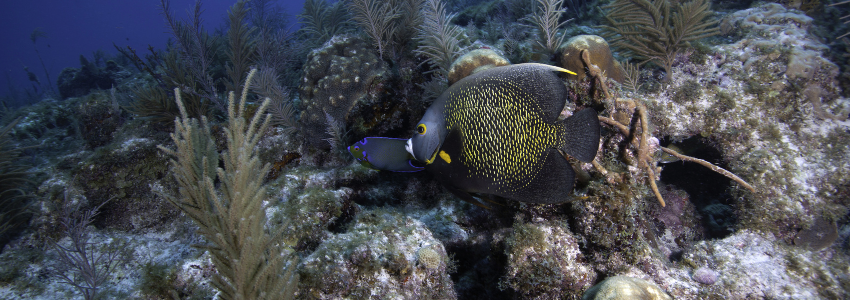
| French Angelfish | Black body with bright yellow scale edges. Often seen in bonded pairs around coral heads and sponges. Average size is 30-40 cm. |
Fun fact: Parrotfish not only clean the reef, they are also its primary sand factory. Scientists estimate that up to 70 percent of the sand on white Caribbean beaches has passed through a parrotfish. A single adult can excrete at least 90 kilograms of sand per year, up to 900, depending on the size and species; the beach between your toes was likely parrotfish waste.
Spot these Caribbean reef icons on the colourful walls of Cozumel and the pristine drop-offs of Roatan.
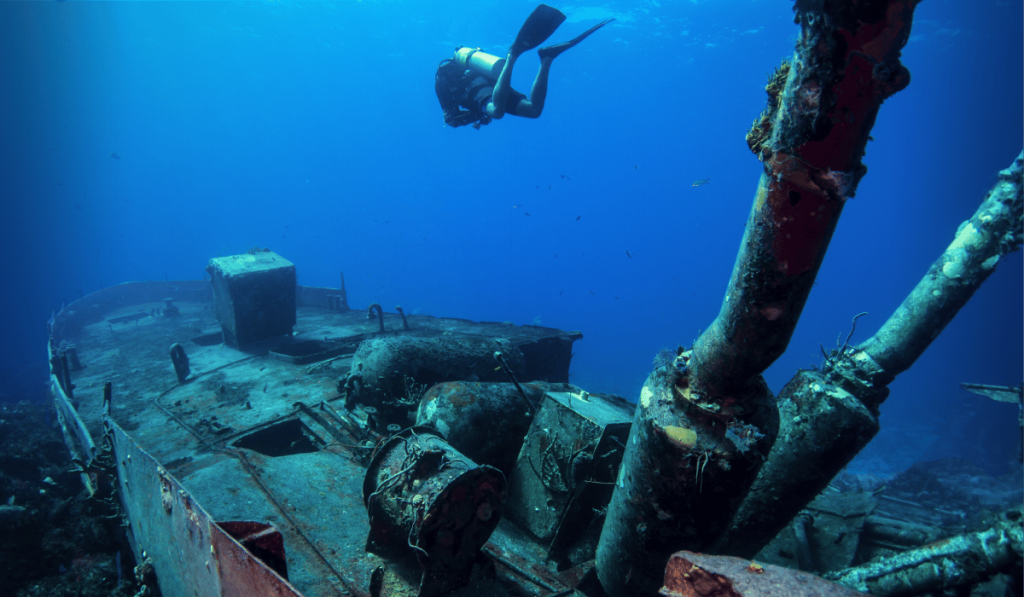
Many of these species congregate around the region’s famous sunken ships; see our list of the Top 10 Wreck Dives in the Caribbean for the best spots.
Caribbean Big Pelagics: Sharks, Rays and the Open-Water Thrills
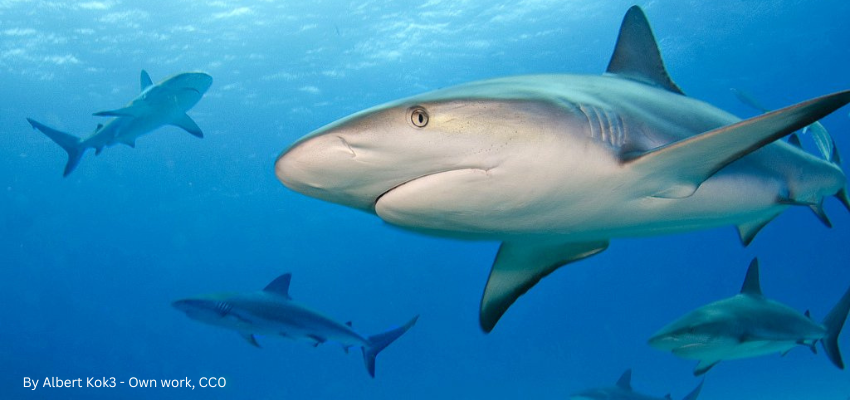
Reef sharks and eagle rays appear without warning, but a tiger shark at Tiger Beach is a different category of encounter entirely. The Caribbean’s pelagics range from sleek but shy reef sharks to the seasonal giants that draw divers from across the globe.
Sharks
- Caribbean Reef Shark – The most frequently sighted shark. Sleek, curious, and common at depths of 3–30 m throughout the region. Usually seen cruising the reef edge.
- Tiger Shark – The heavyweight star of Tiger Beach, Bahamas. Often seen on organized baited dives. Can reach over 4 m.
- Nurse Shark – Docile and bottom-resting. Abundant in Belize and the Bahamas. Recognizable by its barbels and habit of lying still under ledges.
- Scalloped Hammerhead – Occasional schools in the northern Caribbean, though the large congregations are a Pacific draw at Cocos Island.
- Great Hammerhead – The larger cousin of the scalloped hammerhead, this mostly solitary species averages close to 5 meters in length. Present throughout the Caribbean Sea, but with prime sightings in Bimini, the Bahamas, from December to March.
- Whale Shark – Seasonal filter-feeder. Spotted off Mexico (Isla Mujeres). Peak months are May through September.
Rays
- Southern Stingray – Iconic and approachable. The star of Stingray City in the Cayman Islands, where they gather in shallow sand flats.
- Spotted Eagle Ray – Graceful, with dark wings dotted in white. Often glides along drop-offs and reef slopes throughout the region.
- Manta Ray – Rare but possible. Sighted occasionally at offshore cleaning stations in the broader Caribbean.
Plan your shark trip through our Bahamas liveaboard departures or the Belize itineraries for reliable reef shark and nurse shark action. Read our Shark Encounters in the Bahamas guide for a full breakdown of tiger shark dives and what to expect.
Caribbean Marine Mammals
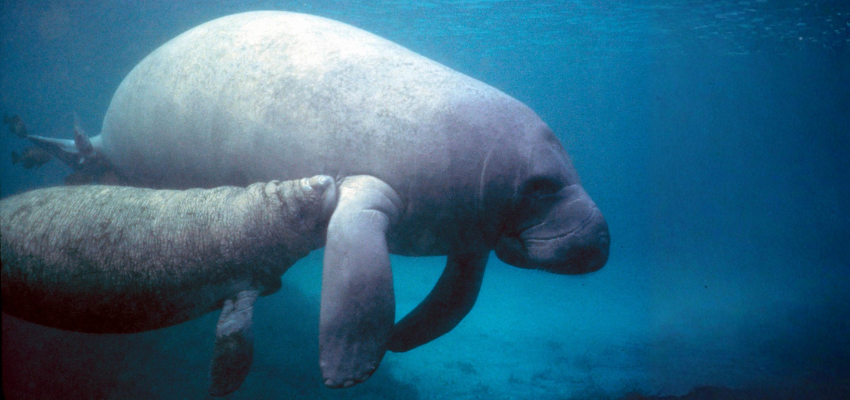
The Caribbean’s big animal story extends well beyond sharks and rays. In the right months, certain destinations concentrate species that are hard to find anywhere else. .
- Humpback Whale: Every winter, thousands of North Atlantic humpbacks migrate to the warm, sheltered banks of the Dominican Republic to mate and calve. Silver Bank remains one of the only places on Earth where you can snorkel alongside breeding humpbacks under permit.
- Bottlenose Dolphin: Widespread and acrobatic. Often seen riding the bow of liveaboards or hunting in coordinated pods over deep water. Encounters are common on crossings and near channel mouths.
- West Indian Manatee: Elusive and fully protected. Occasionally spotted in shallow seagrass beds, mangrove channels, and freshwater-influenced lagoons. The best sightings remain rare and fleeting.
Silver Bank in the Dominican Republic is the primary humpback destination.
Browse our Dominican Republic liveaboard departures for seasonal windows.
The Hidden Gems of Caribbean Macro Life
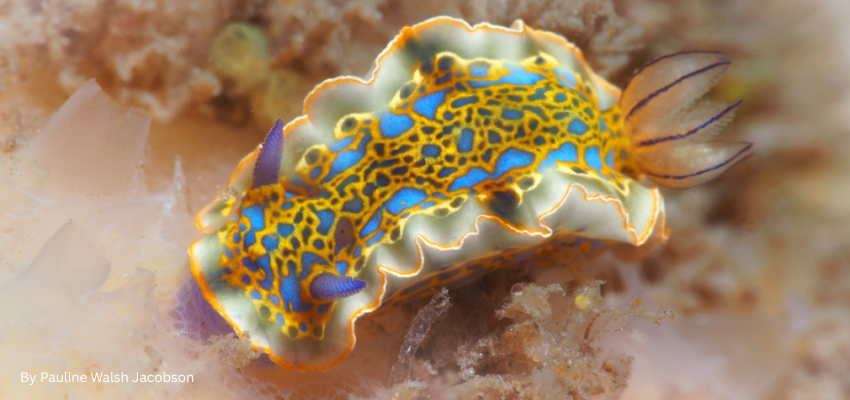
The Caribbean’s best macro sites reward slower dives. A single sponge-covered ledge in Bonaire can hold frogfish, nudibranchs, and cleaner shrimp within a metre of each other.
| Creature | Where to Spot It |
|---|---|
| Seahorses | Seagrass beds and soft corals throughout the region. Often found holding onto gorgonians with their prehensile tail, especially on calm, shallow sites. |
| Cleaner Shrimp | Bright red with stark white antennae. Picks parasites from fish at cleaning stations, sometimes even venturing inside a moray eel’s mouth. |
| Nudibranchs | Tiny, shell-less sea slugs in electric colours. Finding one can be a genuine event. The colours are extreme, and they don’t move, meaning they are perfect for photographers. Check rocky shallows and sponge-covered ledges. |
| Octopus | Master of disguise. Changes colour, pattern, and texture in seconds. Reef and rubble sites across the Caribbean hold several species, most active on night dives. |
| Moray Eel | Often just a head peering from a crevice, mouth opening and closing to breathe. Frequently shares its den with cleaner shrimp, which pick parasites from the eel’s skin and gills. Both benefit. |
Caribbean Sea Turtles
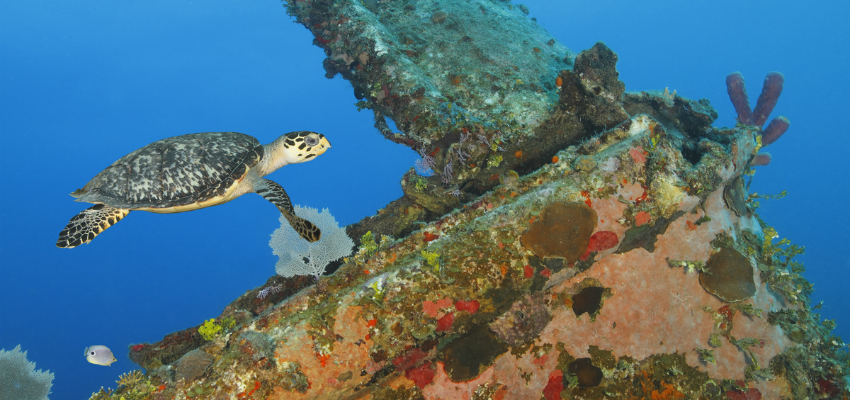
Five species of sea turtle cruise Caribbean waters, and encounters are common on reefs, walls, and seagrass beds. All are protected. Keeping your distance and never touching them is a non-negotiable part of responsible diving.
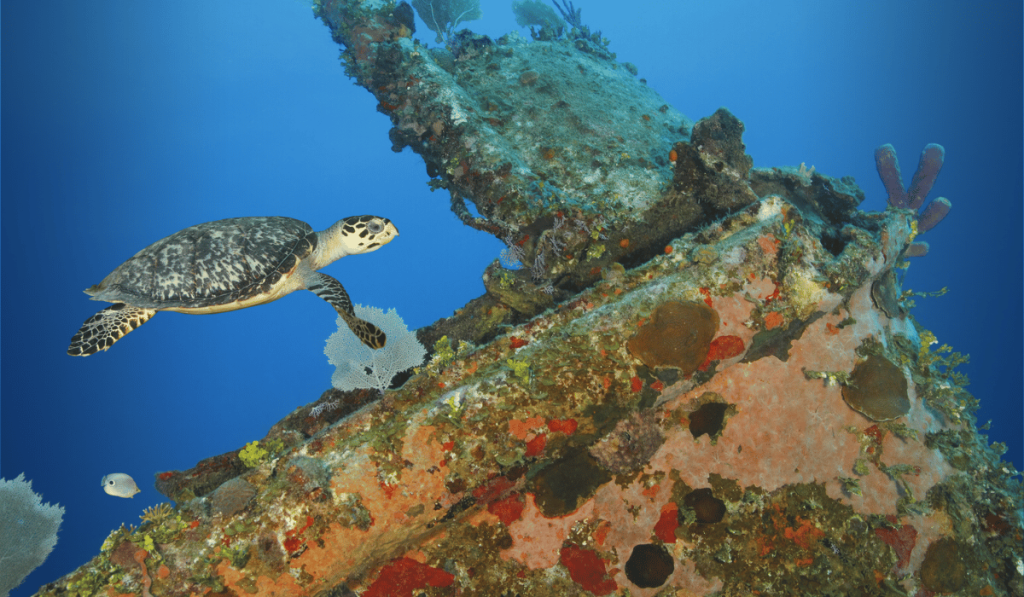
- Hawksbill Turtle: Critically endangered. You will recognize the narrow, pointed beak and the serrated edge of the shell. They feed almost exclusively on sponges and are often seen working their way along a reef slope.
- Green Turtle: Herbivorous and gentle. Spends much of its time grazing on seagrass, which keeps seabeds healthy. The smooth carapace and rounded face set it apart from the hawksbill.
- Loggerhead Turtle: The largest hard-shelled turtle in the Caribbean. A powerful, blocky head and strong jaws let it crush crabs, conch, and mollusks. Less frequently seen on the reef than greens or hawksbills.
- Leatherback Turtle: Deep-water wanderer that rarely appears on reef dives. Feeds almost exclusively on jellyfish. A leatherback sighting is a rare and special moment, usually offshore.
- Kemp’s Ridley Turtle: The world’s most endangered sea turtle is found in the Gulf of Mexico and Caribbean, with documented nesting sites in Mexico.
Keep a 3 to 5 metre distance. Never chase, touch, or ride a turtle. Let them surface on their own terms.
Sea turtles are abundant on the reefs of Roatan, the Cayman Islands, and Bonaire.
Caribbean Marine Life by Destination & Season
The table below matches the Caribbean’s most sought-after species to the destinations and seasons that offer the best chance of an encounter. Use it to build a trip around the animals that are on your personal list.
| Species | Top Destinations | Best Season |
|---|---|---|
| Caribbean Reef Shark | Bahamas, Roatan, Belize, Turks & Caicos | Year-round |
| Tiger Shark | Bahamas (Tiger Beach) | Mid-December to mid-March (peak activity) |
| Nurse Shark | Belize, Bahamas, Roatan | Year-round |
| Whale Shark | Mexico (Isla Mujeres) | May to September |
| Humpback Whale | Dominican Republic (Silver Bank) | January to April |
| Southern Stingray | Cayman Islands, Belize, Bahamas | Year-round |
| Spotted Eagle Ray | Cozumel, Roatan, Belize | Year-round (most frequent Nov to Apr) |
| Hawksbill Turtle | Roatan, Bonaire, Cayman Islands | Year-round (nesting May to Oct) |
| Green Turtle | Roatan, Bonaire, Belize | Year-round (nesting Jun to Nov) |
| Frogfish | Bonaire, Roatan, Cozumel | Year-round, easiest in calm conditions |
| Seahorses | Bonaire, Turks & Caicos | Year-round, shallow seagrass sites |
| Bottlenose Dolphin | Bahamas, Roatan, Turks & Caicos | Year-round, most active in morning transits |
Ready to plan?
Pick a species, a destination, and a season, then browse all Caribbean liveaboard departures to lock it in.
Conclusion: Dive Responsibly and Make It Happen
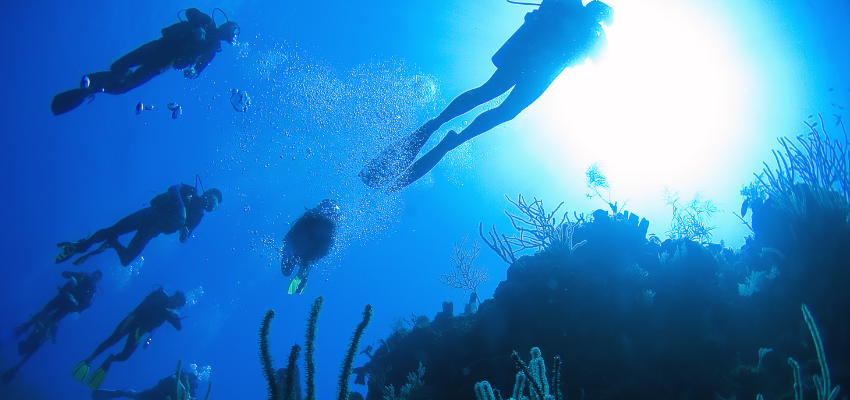
The Caribbean’s marine life is generous, but it is not limitless. Every diver in Caribbean waters has a direct effect on what survives long enough for the next one to see. Keep your distance. Never touch, chase, or feed anything. Use reef-safe sunscreen and dial in your buoyancy so the reef stays intact for the next generation.
You now know what is out there, where it lives, and when to go. The only thing left is to pick a date and get underwater. Browse our Caribbean liveaboards and turn the species on this page into logbook entries.
Frequently Asked Questions About Marine Life of the Caribbean
For most reef shark and nurse shark encounters, no special certification is required. Organised baited dives with tiger sharks in the Bahamas often require Advanced Open Water and a minimum number of logged dives. Always confirm requirements with your chosen operator when you book.
Bonaire is the region’s macro capital. Shore sites like Bari Reef and Something Special deliver frogfish, seahorses, and cleaner shrimp in shallow, unhurried conditions. Roatan and Cozumel also produce solid macro finds.
Whale shark season runs from May to September, with reliable sightings off Isla Mujeres (Mexico). Refer to the destination and season table above for specific windows.
The Caribbean is generally a safe place to dive. Reef sharks and nurse sharks are curious but not aggressive. Lionfish have venomous spines and should be given space. The most common risks are cuts from fire coral or sea urchin spines. Standard dive awareness keeps things safe.
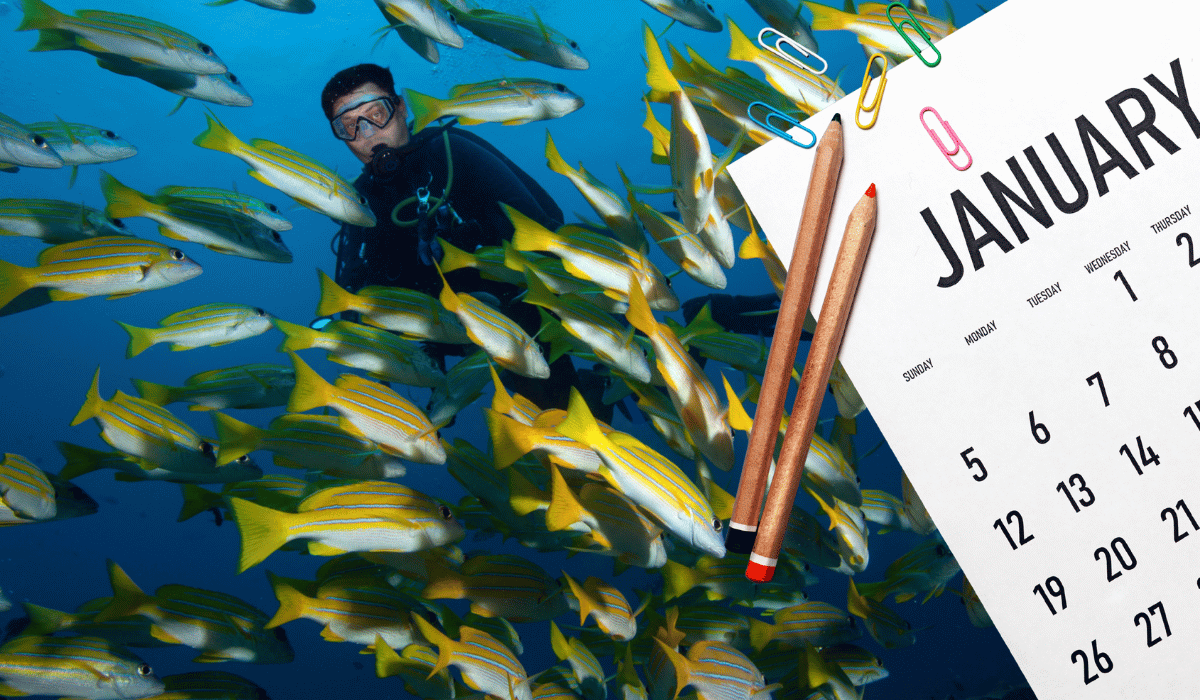
Blue tang, parrotfish, foureye butterflyfish, and queen angelfish are among the most frequently spotted. On almost any reef dive, you will see at least one of these species within the first few minutes.
The Atlantic Princess draws enormous schools of sergeant majors and parrotfish. The Austin Smith is known for reef sharks and a resident Goliath grouper. The St. George attracts nurse sharks and eagle rays. Each wreck offers a different kind of encounter.