- Why Scuba Dive in the Bahamas?
- When is the Best Time for Bahamas Diving?
- Best Diving Regions in the Bahamas
- Top 5 Best Dive Sites in the Bahamas
- Signature Bahamas Experiences: Sharks, Wrecks, and Blue Holes
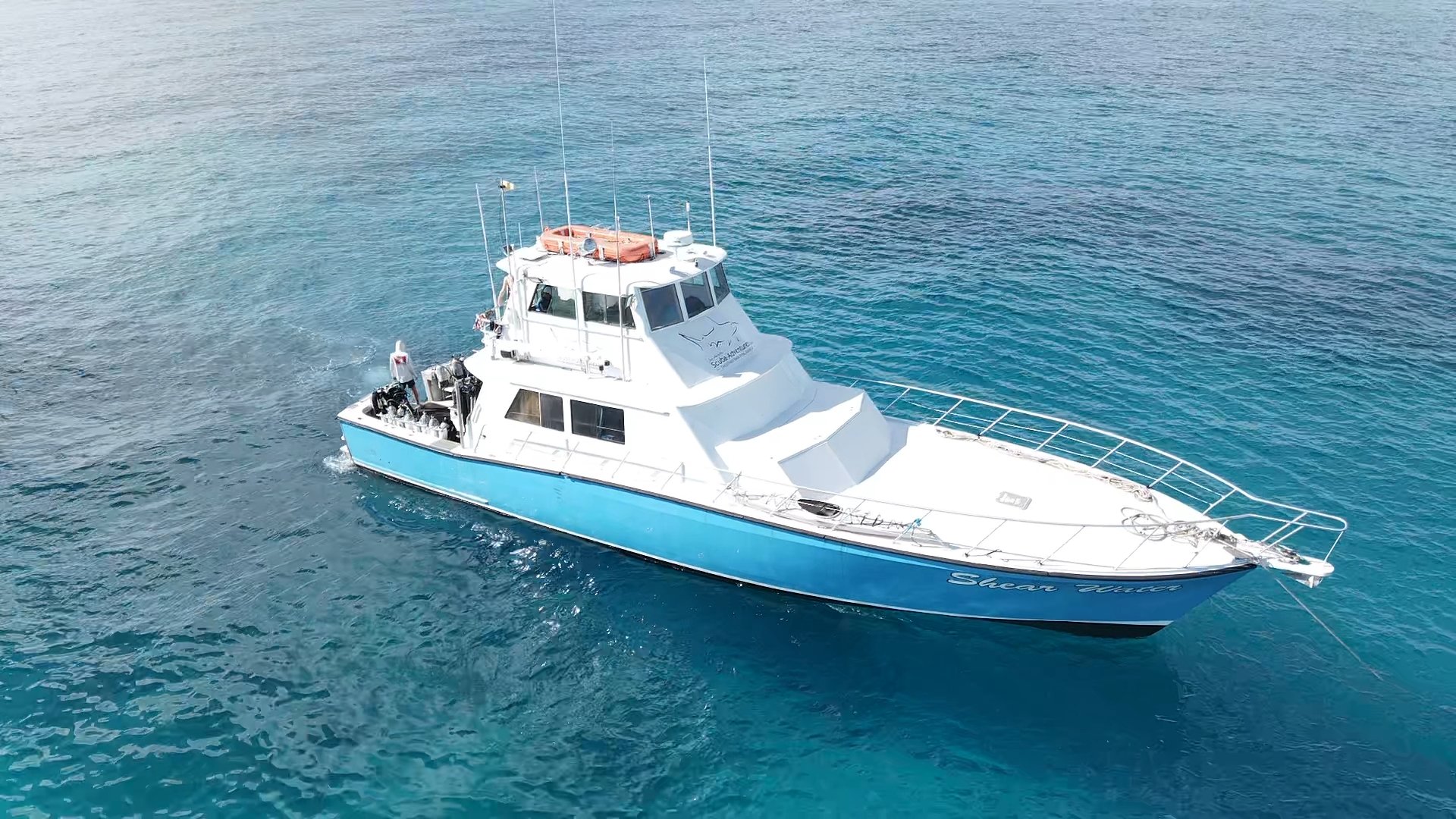
- How to Experience the Bahamas: Liveaboards vs. Diving Resorts
- Practical Travel Tips for Bahamas Divers
- Book Your Bahamas Scuba Diving Adventure
- Frequently Asked Questions About Bahamas Diving
With over 700 islands, diving in the Bahamas isn’t a single destination. Grand Bahama is not the Exumas, and neither is Nassau. Pick the wrong island for your Bahamas diving goals and you’ll miss what the country actually does well. The sheer variety of underwater environments makes this archipelago a global standout. In a single holiday, you can drift along vertical drop-offs that plunge into thousands of metres of blue abyss, weave through deep historical shipwrecks, or sit quietly on a shallow sandbar while massive tiger sharks cruise inches above your fins.
What truly sets Bahamas diving apart is how accessible these world-class thrills are for every certification level. Novices can enjoy sun-drenched coral gardens and shallow movie-set wrecks, while experienced and technical divers can test their skills inside mysterious inland blue holes. Whether you choose the luxury of a shore-based dive resort or the maximum bottom time of a dedicated liveaboard itinerary, the clarity of these waters ensures that the marine spectacle is always front and centre.
Why Scuba Dive in the Bahamas?
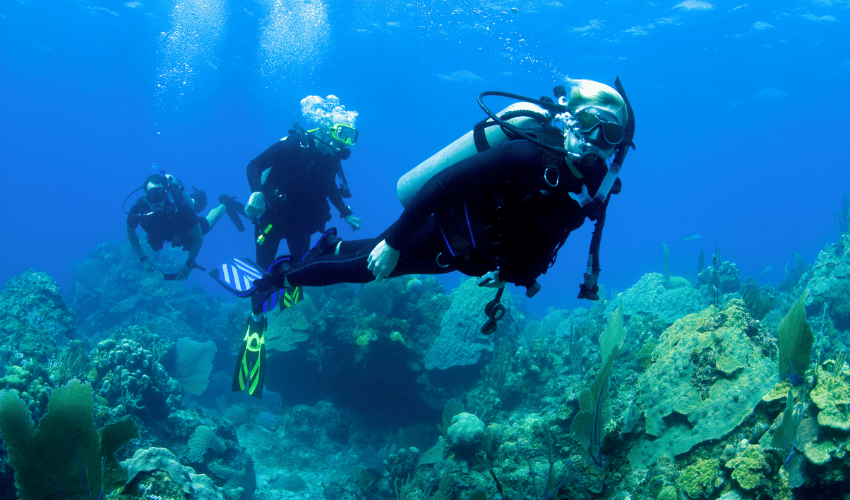
This island nation consistently ranks in the top 5 most popular places to dive in the Caribbean, and for good reason. Bahamas diving is defined by its sheer geological diversity and an almost unmatched density of marine megafauna. It is one of the few places on earth where a diver can transition from pristine coral gardens to thrilling marine megafauna encounters in a single afternoon. To see how this destination matches up against neighbouring islands, check out our comprehensive guide to Caribbean diving.
Unrivaled Shark Encounters
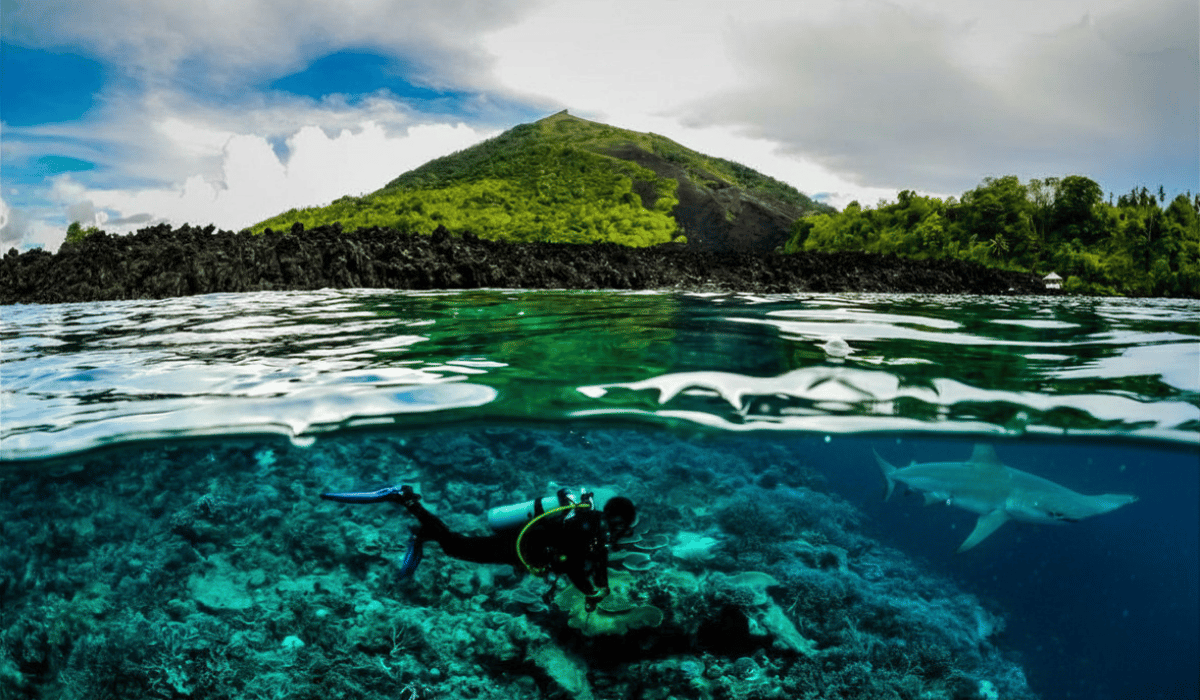
For many, the primary draw of diving in the Bahamas is the opportunity to get up close with apex predators. The country established itself as a commercial shark sanctuary in 2011, banning all commercial shark fishing in its waters. This strict environmental protection, supported by organisations like the Bahamas National Trust, has allowed populations of tiger sharks, lemon sharks, great hammerheads, and Caribbean reef sharks to thrive. Sites like Tiger Beach off Grand Bahama and the winter feeding grounds of Bimini offer world-renowned encounters that draw underwater photographers from every corner of the globe.
Dramatic Topography and Blue Holes
Beyond the wildlife, the underwater landscape itself is a major draw. The archipelago sits on two massive coral limestone platforms, the Great and Little Bahama Banks. This geological layout creates dramatic vertical walls that plunge thousands of metres into the Tongue of the Ocean.
The islands are also famous for their blue holes, flooded cave systems that open up both inland and out at sea. These unique features offer advanced divers an eerie, crystal-clear environment to explore stalactites and ancient rock formations that formed when these caves were above sea level during the last ice age.
A Living Museum of Wrecks
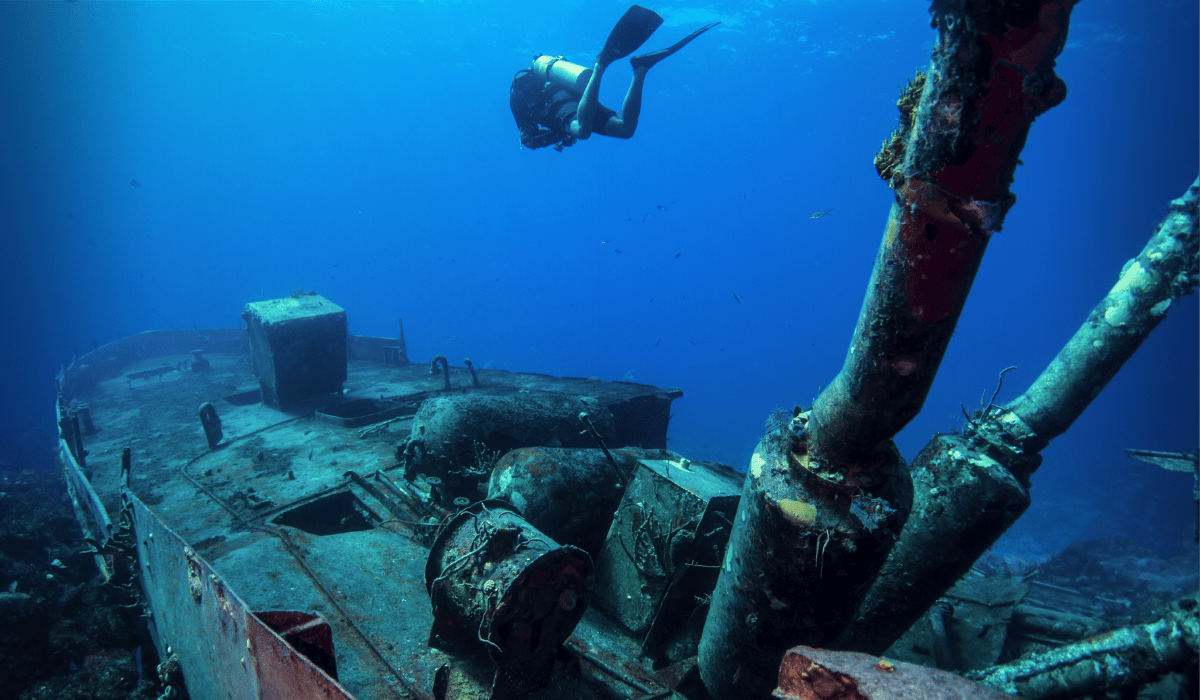
If you enjoy wreck diving, the shallow, clear waters around New Providence and the Out Islands act as an accessible underwater museum. Many of the vessels here were intentionally scuttled to create artificial reefs, while others carry historic wartime pasts. Because of the excellent visibility and shallow depths, these sites are ideal for practicing underwater photography, logging wreck certification dives, or simply watching how quickly nature reclaims steel structures in the warm Atlantic waters.
When is the Best Time for Bahamas Diving?
While conditions remain highly diveable year-round, timing your trip is important if you have specific marine encounters or geographical areas on your itinerary. The tropical climate keeps sea temperatures comfortably warm, but seasonal shifts dictate both water clarity and the migratory patterns of the ocean’s largest inhabitants.
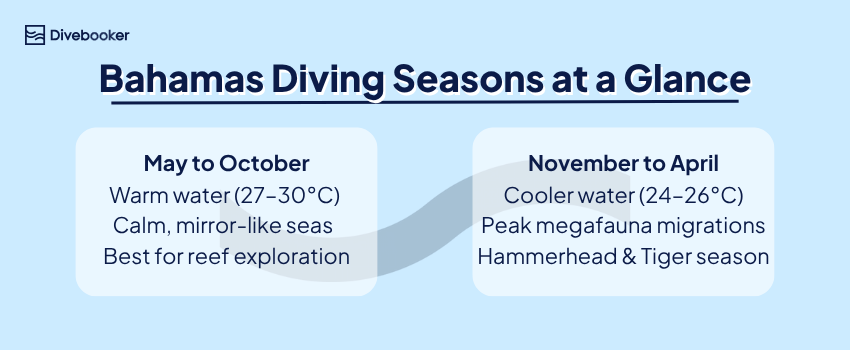
The Warm Season: May to October
If your ideal holiday involves smooth boat rides, minimal neoprene, and long, lazy reef dives, the late spring through early autumn months are spectacular. During this window, water temperatures peak between 27°C and 30°C.
The ocean surface is often mirror-calm, making it the finest window for exploring shallow coral mazes and historic shipwrecks. Keep in mind that June marks the official start of the Atlantic hurricane season, according to the National Oceanic and Atmospheric Administration (NOAA), which means afternoon rain showers are common and trip insurance is highly recommended.
The Cool Season: November to April
For adrenaline-seeking divers, the winter and early spring months are the undisputed peak season. As water temperatures drop to a crisper 24°C to 26°C, ocean visibility sharpens to its absolute highest, frequently exceeding 30 metres.
More importantly, this cooler water acts as a beacon for migratory sharks. It is the only time of year you can reliably be face-to-face with great hammerheads or experience the maximum density of sharks, particularly tigers, on the sand flats.
Regional Breakdown & Diver Data
The table below highlights the seasonal nuances across the core Bahamian diving regions.
| Region | Peak Diving Window | Average Water Temp | Key Highlight for Divers |
|---|---|---|---|
| Grand Bahama & Tiger Beach | January to April | 24°C – 26°C | Maximum presence of tiger and lemon sharks with optimal underwater clarity |
| Bimini | December to March | 24°C – 25°C | The prime winter migration window for close-up great hammerhead encounters |
| Nassau | April to October | 26°C – 29°C | Calmer seas and warm water, ideal for navigating wrecks and deep blue holes |
| Eleuthera & Exuma Cays | May–September | 25°C – 30°C | Pristine visibility for drift diving through high-energy passes and exploring protected marine parks |
For more specific details on seasonal wildlife migrations, you can browse current boat schedules directly on our liveaboard search tool.
Best Diving Regions in the Bahamas
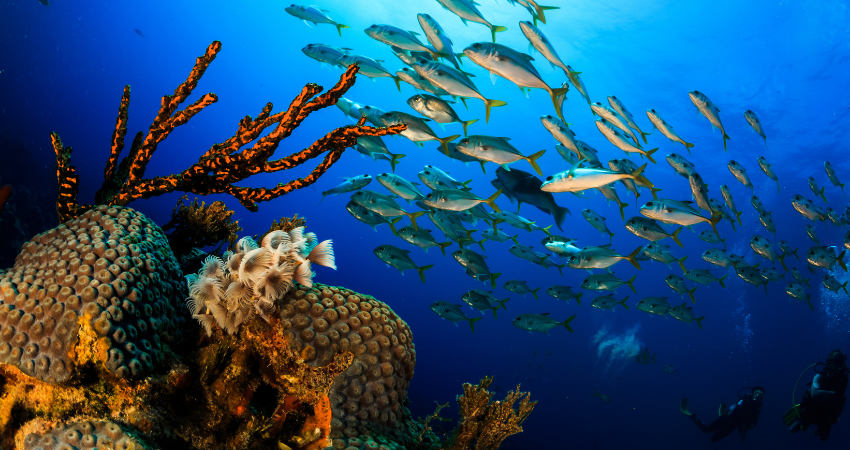
The geography of this archipelago means that different islands offer completely distinct underwater experiences. Rather than trying to see everything at once, understanding the unique strengths of each specific region helps you match your travel plans to your dive goals.
For divers seeking raw adrenaline, this northern sector is the premier destination for diving in the Bahamas. Located approximately 30 kilometres off the West End of Grand Bahama Island, Tiger Beach is a shallow sand flat famed for its consistent water clarity and apex predator encounters that are hard to find anywhere else in the world.
Divers drop down to a maximum of 12 metres and rest on the sandy ocean floor while large numbers of sharks glide within arm’s reach. Most famously, the resident tiger sharks get the glory, but lemon sharks and Caribbean reef sharks are also there year-round in large numbers. Because these shallow, open-water conditions require excellent buoyancy control and absolute comfort around large wildlife, this area is highly sought after by professional underwater photographers and advanced open-water divers.
Sitting just 80 kilometres east of Florida, Bimini is the westernmost gateway to diving in the Bahamas. The island acts as an oceanic crossroads, bordered by the deep Gulf Stream on one side and the shallow Great Bahama Bank on the other. This unique geographic placement creates a rich marine highway supported by local conservation research from the Bimini Shark Lab.
Between December and March, the coastal waters of South Bimini become the global epicentre for close-up great hammerhead shark encounters. Beyond the seasonal sharks, experienced divers can navigate the high-energy drift dives of Tuna Alley and Victory Reef, where sloped coral banks plunge dramatically into the oceanic abyss.
As the primary travel hub of New Providence Island, Nassau is the most versatile destination for a shore-based or resort-led diving holiday. Nassau perfectly balances ease of logistical travel with an extensive collection of vertical walls, easily accessible coral reefs, and historical shipwrecks.
It is also a legendary cinematic destination. Iconic vessels like the Tears of Allah, featured in the James Bond thriller Never Say Never Again, were intentionally scuttled in these waters to create thriving reef structures. With plenty of sites maxing out at 20 meters and highly developed operator infrastructure, this is the ideal region for newly certified divers to build confidence, practice photography, or complete advanced wreck training.
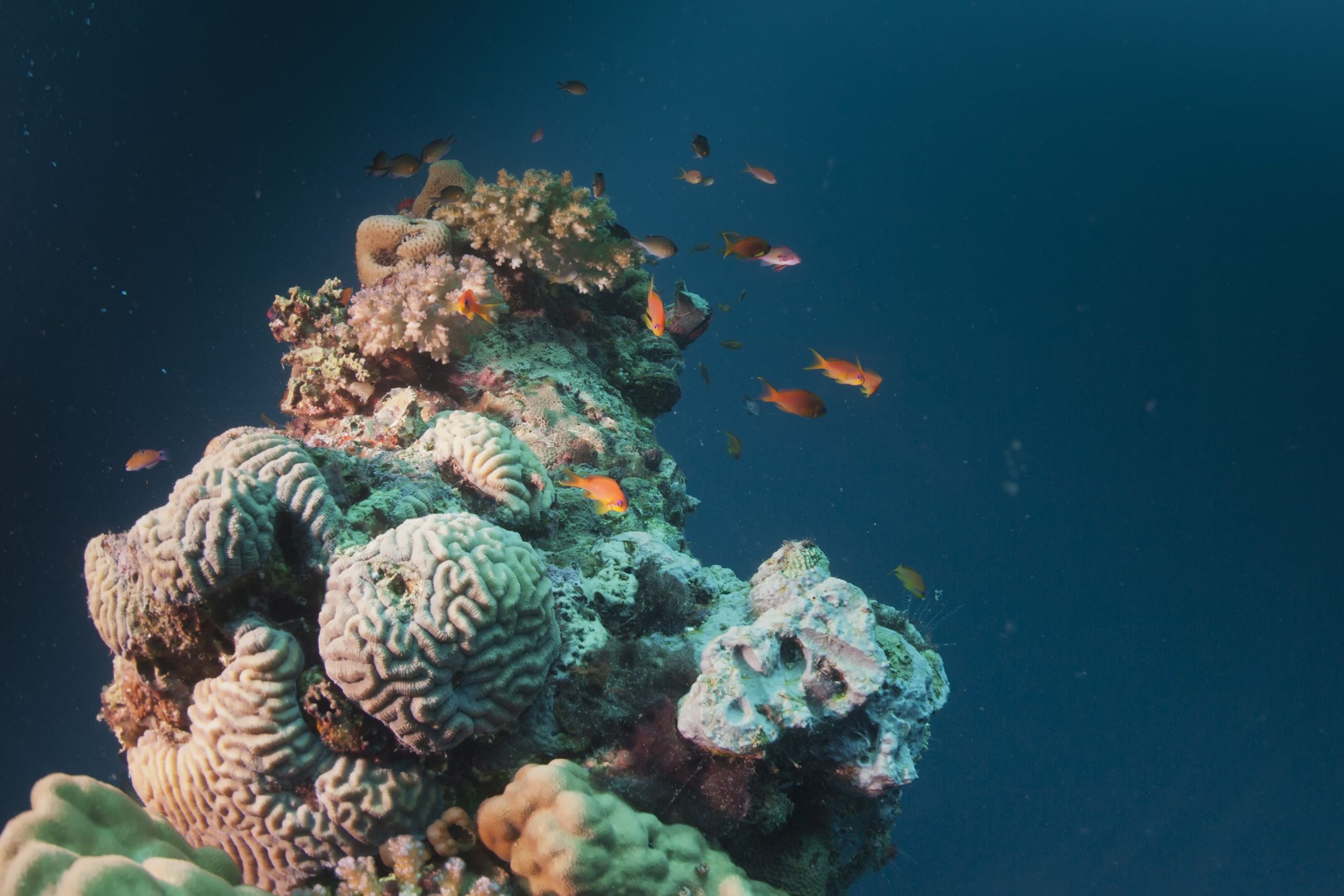
If your priority is untouched reef health and absolute biodiversity, this central band of islands is unmatched. The region is anchored by the Exuma Cays Land and Sea Park, a massive 455 square kilometre no-take marine reserve managed by the Bahamas National Trust since 1958.
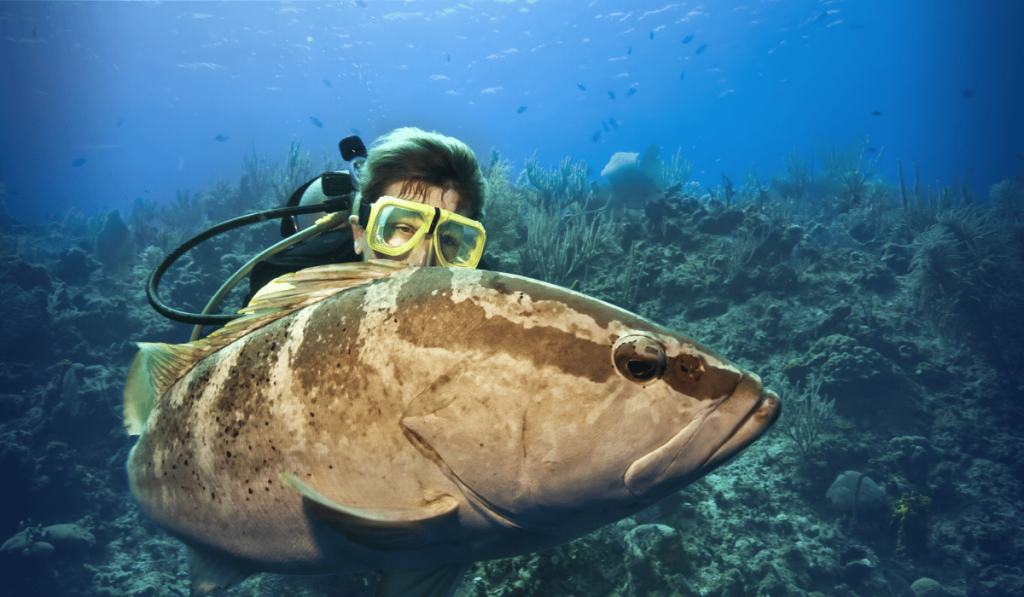
Because all fishing has been strictly prohibited here for decades, the marine biomass is spectacular. Divers can experience “The Washing Machine,” a high-velocity drift dive where tidal currents flip divers upside down through a narrow cut in the reef, before popping them out to explore the deeper, reef and vertical drop-offs along the Exuma Sound, where eagle rays, massive groupers, and pristine hard corals thrive in the current.
Top 5 Best Dive Sites in the Bahamas
The sheer geographic spread of the archipelago means that the best dive sites in the Bahamas offer completely contrasting experiences. You can spend one day kneeling completely motionless on a shallow sand flat with sharks and the next drifting along a vertical wall that drops straight into an oceanic trench.
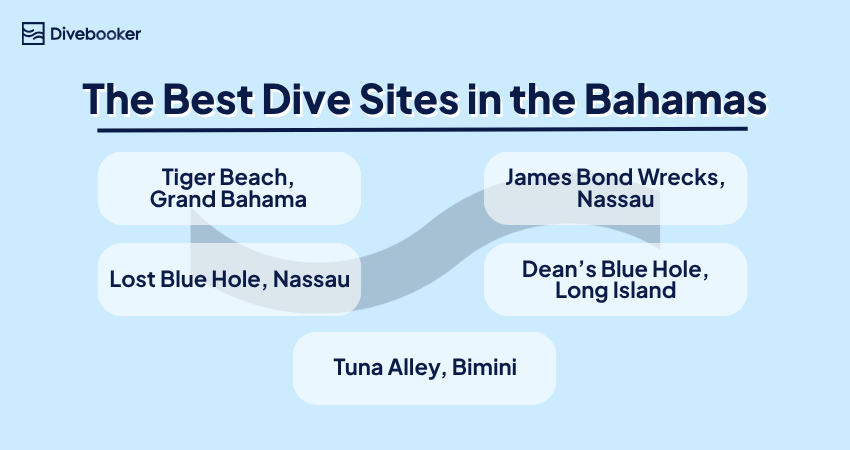
Here are five of the most iconic, diverse, and requested dive sites available across our booking network.
1. Tiger Beach (Grand Bahama)
Widely considered the premier destination for tiger shark and lemon shark photography, this shallow sand flat consistently delivers one of the most reliable large-animal encounters in the ocean, especially for those two species. Located northwest of Grand Bahama, the site has a stable, light-coloured sandy bottom and a depth of only 6 to 12 metres, which allows sunlight to fully illuminate the area. Divers are arranged on the bottom while resident tiger sharks and lemon sharks cruise past. There are also seasonal visitors, such as bull sharks and great hammerheads, that sometimes join the mix.
- Average Depth: 10 metres
- Recommended Experience Level: Open Water + 25+ logged dives; comfort around sharks essential. Verify with the operator.
- What You Will See: Tiger sharks and lemon sharks are almost guaranteed, with exceptional natural lighting for photography
2. James Bond Wrecks (Nassau)
For movie buffs and wreck enthusiasts, New Providence offers a unique double-feature dive. This site combines the remains of a mocked-up Vulcan Bomber from the 1965 film Thunderball with the Tears of Allah, a 28-metre supply ship used in Never Say Never Again. Over the decades, both structures have been heavily colonised by soft corals, continuous schools of grunts, and macro life, creating a highly photogenic artificial reef system.
- Average Depth: 12 to 15 metres
- Recommended Experience Level: Beginner to Advanced
- What You Will See: Intact ship structures, dense schools of tropical fish, and macro critters hiding in the coral growth
3. Lost Blue Hole (Nassau)
Located a short boat ride from the capital, this natural limestone phenomenon is a unique structural dive. The site is an immense underwater sinkhole with a protected rim that sits at a comfortable depth of about 12 metres. The hole itself plunges down into the floor to over 60 metres, creating a sheltered marine oasis in the middle of a vast, sandy plateau. Because of its unique shape and calm inner waters, it attracts a dense concentration of marine life, ranging from tiny jawfish burrowing in the sand along the edge to large pelagic species hovering in the deep blue.
- Average Depth: 12 to 25 metres for recreational dive profiles
- Recommended Experience Level: Intermediate
- What You Will See: Dense schools of snappers hugging the rim, nurse sharks, southern stingrays, and seasonal aggregations of blacknose sharks deeper down in the hole.
4. Dean’s Blue Hole (Long Island)
If you want to witness the dramatic limestone geology that defines diving in the Bahamas, this site is a true natural wonder. Plunging to a total depth of 202 metres right off the beach of Long Island, it stands as the third-deepest saltwater blue hole on Earth. While the extreme depths are strictly the domain of world-class free-divers and highly trained technical teams, recreational divers can safely explore the shallow lip and upper cave entrances to marvel at the sheer vertical scale of the structure.
5. Tuna Alley (Bimini)
For high-energy drift diving, Tuna Alley is a legendary stretch of sloped coral wall located on the western edge of Bimini. Fed by the nutrient-rich currents of the nearby Gulf Stream, the site is layered with massive, overhanging coral buttresses, swim-throughs, and caverns. Because the current pushes consistently along this oceanic highway, divers can effortlessly glide past resident loggerhead sea turtles, reef sharks, and huge schools of pelagic fish.
- Average Depth: 15 to 30 metres
- Recommended Experience Level: Intermediate to Advanced (due to currents)
- What You Will See: Nurse sharks, spotted eagle rays, and diverse marine life cruising in the passing currents
Signature Bahamas Experiences: Sharks, Wrecks, and Blue Holes
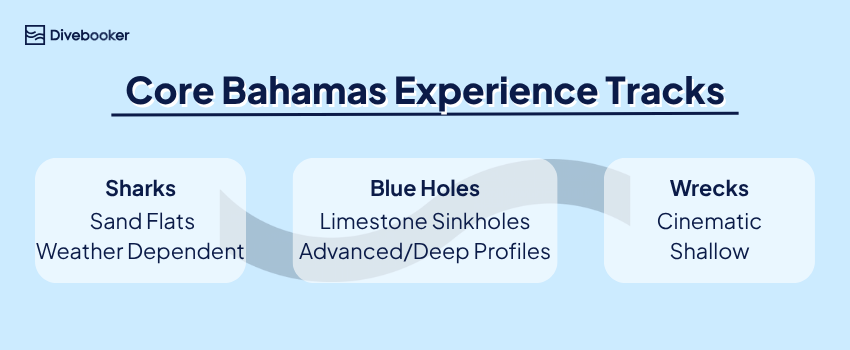
To maximize a diving trip here, it helps to understand the three signature styles of underwater exploration that define the region. Each environment requires a slightly different approach to safety, equipment, or certification levels.
Ethical Shark Encounters
The Bahamas acts as a prime example of successful marine conservation, with its entire territorial sea designated as a protected sanctuary. For people interested in diving with sharks, encounters are often highly structured, predictable, and focused heavily on education rather than simple thrills.
When participating in these dives, reputable operators typically require dark-coloured full wetsuits, hoods, and gloves to cover exposed skin, this prevents high-contrast reflections that could confuse the animals. Divers are asked to remain neutral, kneeling or resting flat on the sand while sharks swim through. Be aware that approaches vary: some operators use bait to attract sharks, others rely on natural curiosity. Always research your chosen operator’s methods beforehand. If you are looking to identify the specific apex predators you will encounter, explore our complete breakdown of the shark species in the Bahamas.
Cinematic and Historic Wrecks
The limestone shelves are littered with artificial reefs, old cargo transport ships, and unique historical wrecks. Because the water is shallow and light penetration is high, these structures have become a magnet for international filmmakers, underwater photographers, and divers looking to practice wreck penetration skills. Over decades on the sea floor, these metal hulls have been completely overtaken by nature, forming dense reef systems. Many of these legendary hulls are featured prominently in our rankings of the top wreck dives in the Caribbean, demonstrating just how significant this region is to underwater history.
Mysterious Blue Holes
For those fascinated by unique geological formations, the limestone banks hide a network of flooded vertical sinkholes known as blue holes. These sites open up both inland and directly in the middle of shallow sea flats.
Diving into a blue hole has a completely different feeling from that of a typical reef dive. The water inside is perfectly still, often revealing ancient stalactites and distinct changes in salinity at deeper intervals. Because these sites transition into deep, darker environments with overhead structural hazards, they are best suited for intermediate and advanced divers who possess strong buoyancy skills and a comfort level with deep-water environments.
How to Experience the Bahamas: Liveaboards vs. Diving Resorts
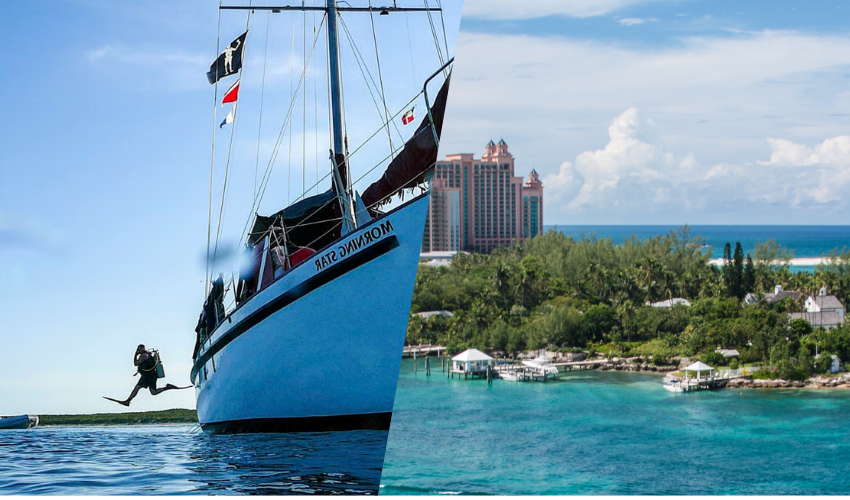
Deciding where to base your holiday depends entirely on your personal travel goals, your budget, and who you are travelling with. The infrastructure across the islands caters equally to those who want a land-based trip with plenty of surface flexibility and those who want to spend every waking hour out at sea.
Bahamas Diving Resorts
Choosing a land-based resort is the most versatile option, especially if you are travelling with non-divers, children, or partners who prefer to spend their time topside. Dedicated diving resorts in major hubs like Nassau or Grand Bahama offer highly structured daily boat schedules, typically running two-tank morning trips that return you to the dock by lunchtime.
This setup leaves your afternoons completely open for exploring local historic sites, dining at island restaurants, or relaxing on the beach. Land-based packages also provide an excellent safety net if offshore weather conditions shift, allowing you to easily pivot to land activities without missing out on your holiday experience.
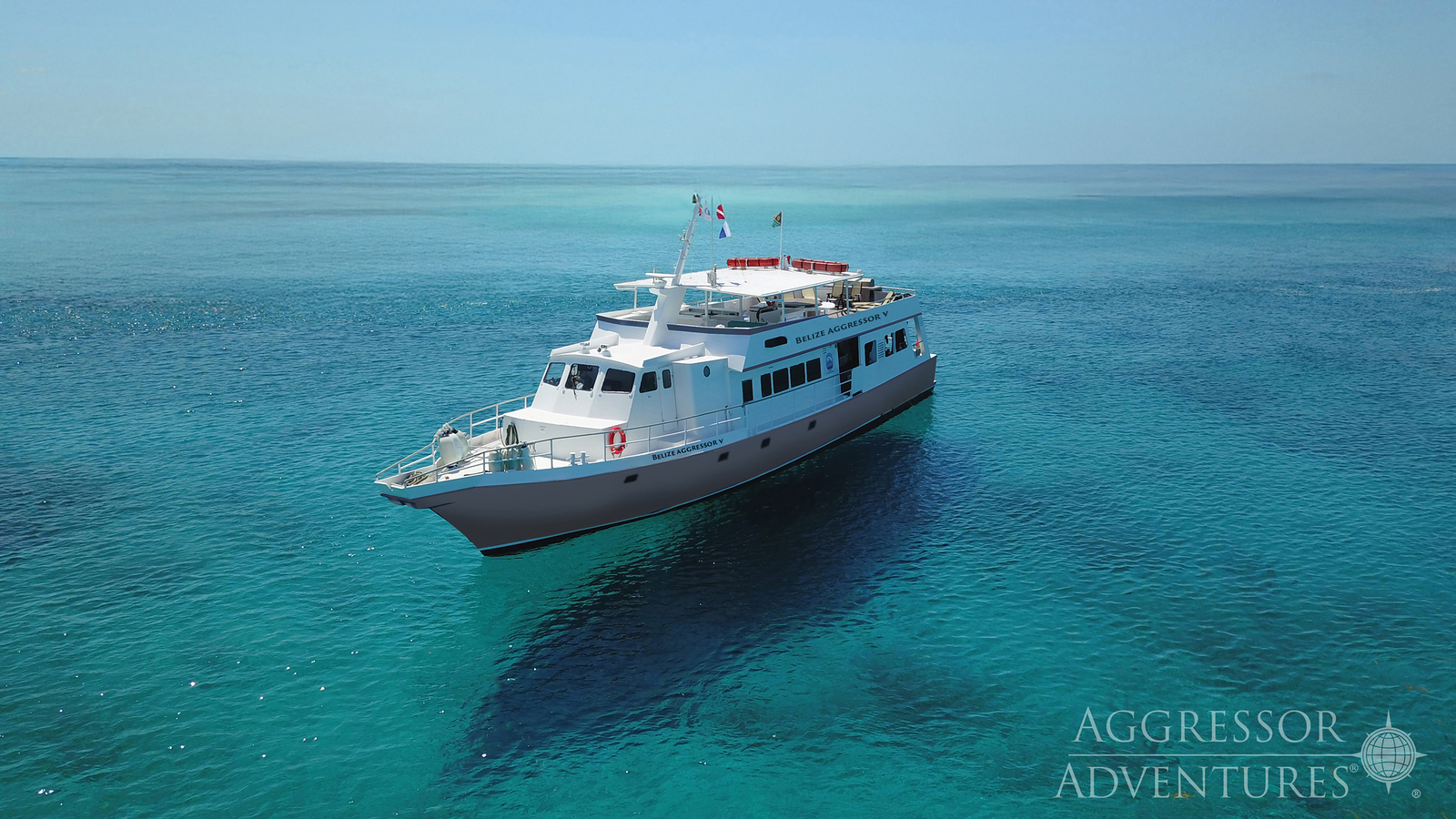
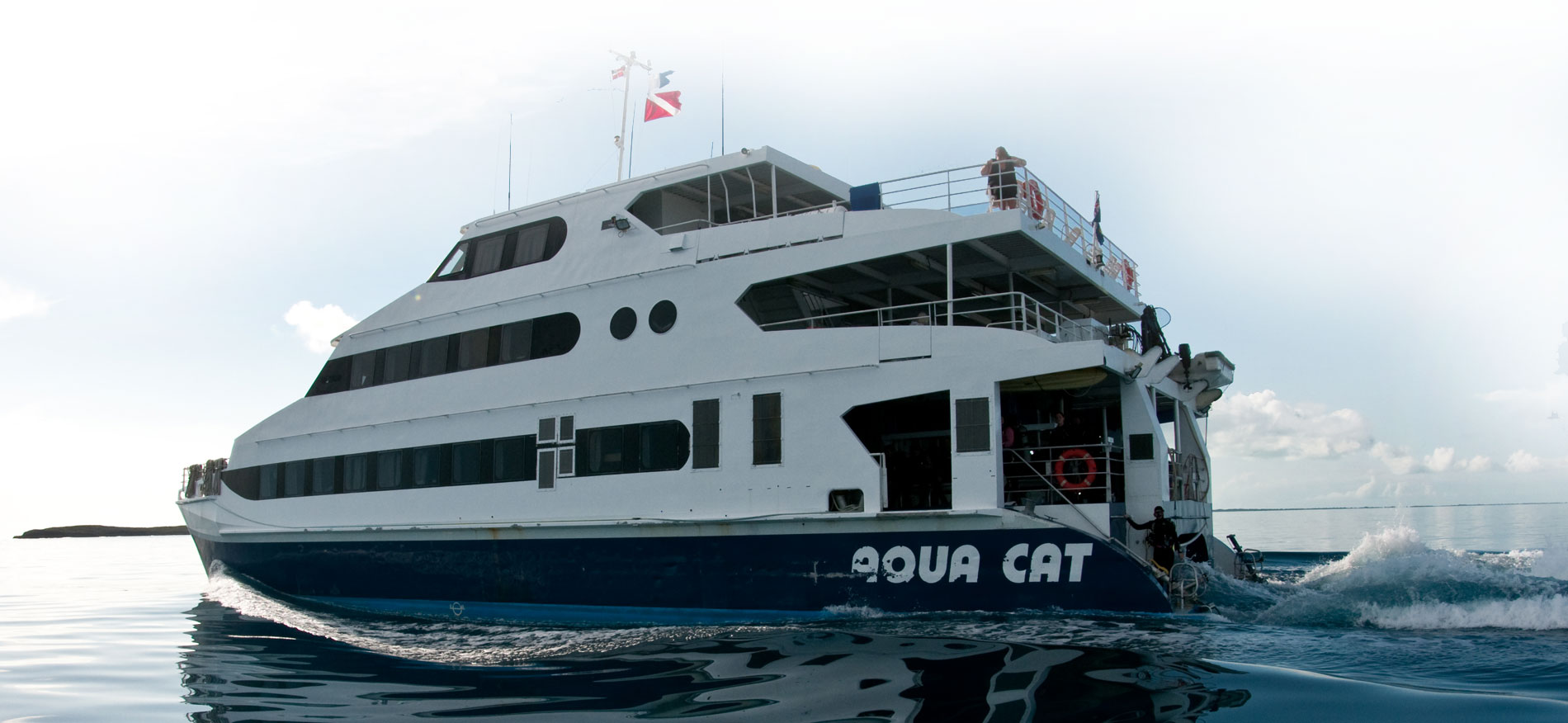
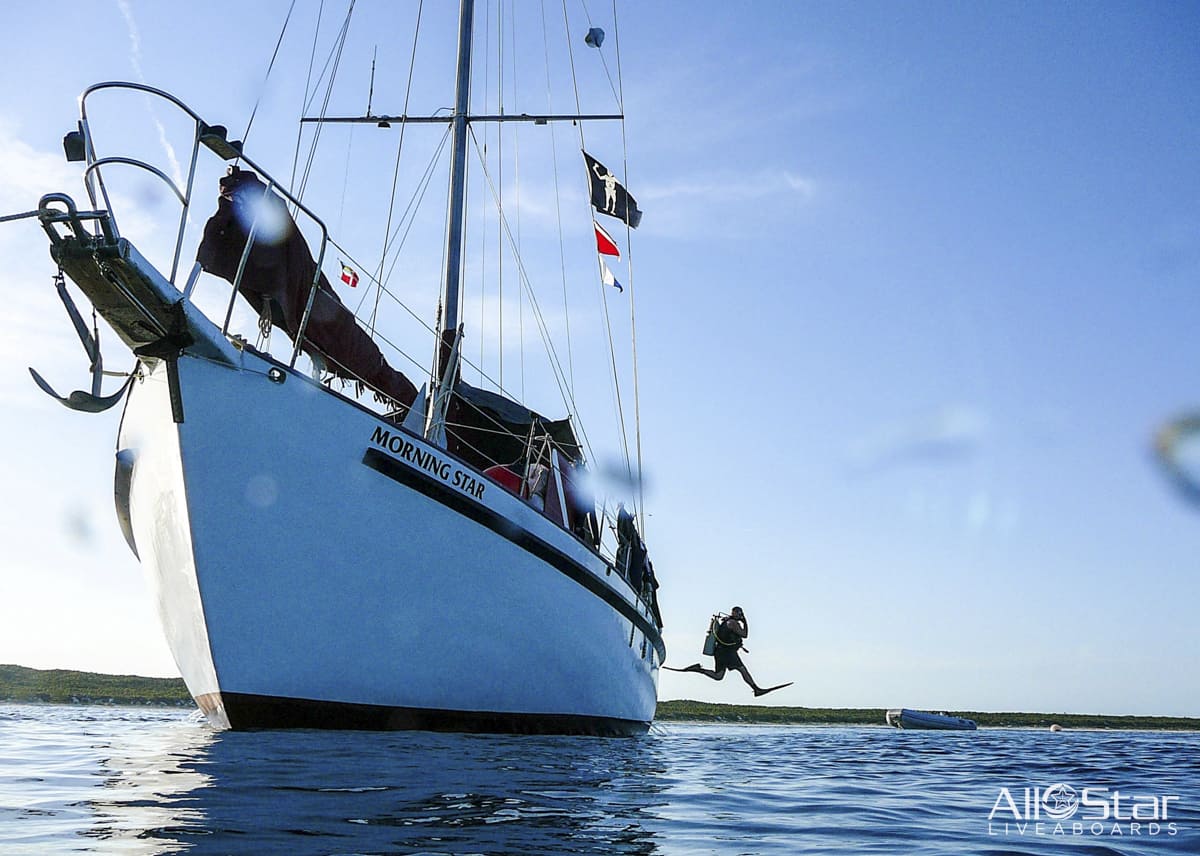
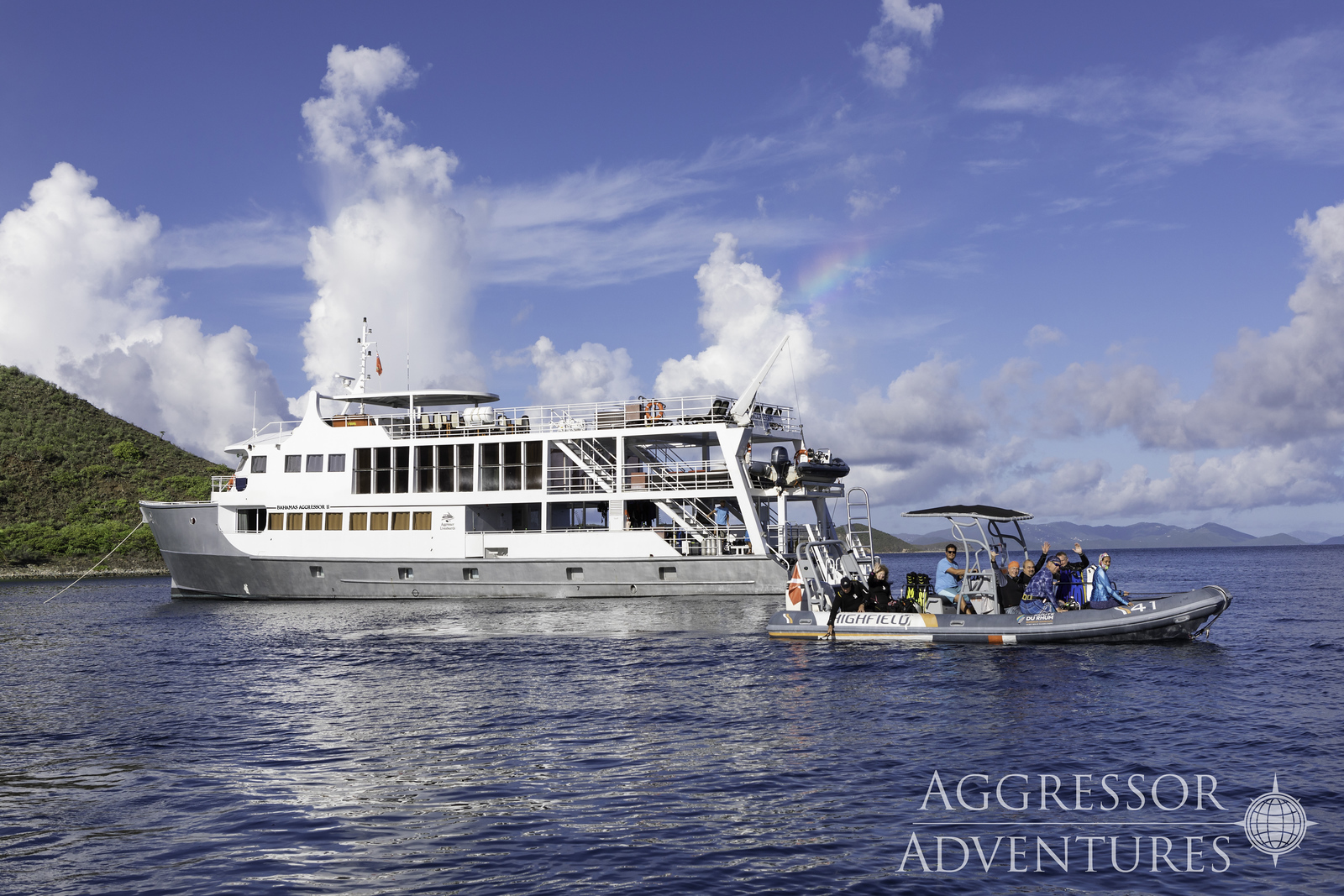
For certified divers whose primary objective is to log the maximum amount of bottom time possible, a liveaboard vessel is the ultimate choice. These floating operations allow you to reach pristine reefs, deep walls, and isolated shark environments in the outer cays that remain completely out of range for daily shore-based boats.
A standard liveaboard itinerary generally offers up to four dives per day, often including night dives. Life on board is fully self-contained and highly social, with accommodation, meals, and tank fills all managed in one place. This option is highly recommended for advanced divers and solo travellers looking to experience the rawest, least visited corners of the ocean.
-
 from$327 /day
from$311 /day
from$170 /day
from$327 /day
from$311 /day
from$170 /day
Practical Travel Tips for Bahamas Divers
To ensure your diving holiday runs smoothly, keep these quick logistical requirements in mind before you pack your gear bags:
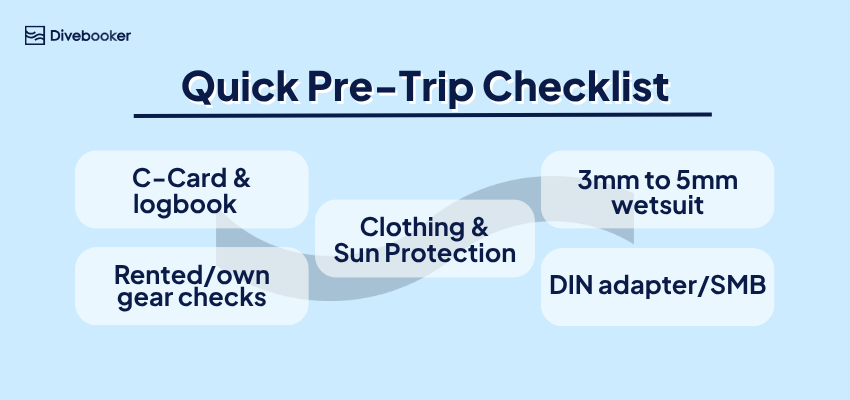
- Certification Cards: Always carry your physical or digital certification card. Many operators in the Bahamas accept digital cards via apps like PADI’s eCard or SSI’s digital login, but reliable cell service isn’t guaranteed on remote Out Islands. Download a screenshot or PDF of your cert card before leaving home. For blue hole diving (Dean’s Blue Hole or Lost Blue Hole) or dedicated shark dives, some operators request proof of a minimum number of logged dives or an Advanced Open Water cert due to depth and overhead environments. Leave your paper logbook at the hotel; a photo of your latest dive stamps on your phone usually suffices for local shops.
- Wetsuit Selection: Pack a 3mm wetsuit if you are visiting during the warm summer months. If you are booking a winter trip specifically for the hammerhead or tiger shark migrations, switch to a 5mm full wetsuit, hood, and dark gloves to stay warm during long, stationary shark-sighting profiles.
- Clothing & Sun Protection: The Bahamian sun is intense, with UV indexes of 10+ throughout the summer. Pack a rash guard or UV shirt for surface intervals between dives. For non-diving days or evenings, light cotton clothing (shorts, sundresses, linen pants) works best; the humidity makes synthetics uncomfortable. Bring reef-safe sunscreen (look for non-nano zinc oxide or titanium dioxide). The Bahamas has growing restrictions on oxybenzone and octinoxate, and many dive operators now refuse guests wearing chemical sunscreens, with some marine parks banning them entirely. A wide-brim hat and polarized sunglasses are non-negotiable for boat rides. Leave the heavy cotton at home; it never fully dries in the tropical humidity.
- Equipment Essentials: Most Bahamas dive operators provide standard aluminum 80 tanks with yoke valves. The essential item to pack: a yoke-to-DIN adapter if your regulator uses a DIN connection, as you cannot guarantee local shops will stock them. Beyond that, bring a surface marker buoy (SMB) and a whistle; drift dives (especially at Tuna Alley and Exuma’s Washing Machine) require you to signal boats if you surface away from the group. A simple dive light is also worth packing for peeking into swim-throughs and blue hole ledges.
- Currency and Fees: The Bahamian Dollar is pegged 1:1 with the US Dollar, and both currencies are accepted everywhere. Keep in mind that specialized marine park fees or fuel surcharges are often settled directly with the dive operator at the end of your trip.
Book Your Bahamas Scuba Diving Adventure
Ready to explore the Bahamas?
Whether you want the morning-to-afternoon flexibility of a world-class dive resort or the non-stop underwater immersion of a dedicated liveaboard itinerary, we make finding your perfect trip easy.
Through our platform, you can compare real-time availability, check seasonal itineraries, and book complete dive packages tailored precisely to your experience level. Dive into our live inventory to secure your next logbook milestone today.
Frequently Asked Questions About Bahamas Diving
Do liveaboard packages include airport transfers?Divebooker Team2026-05-20T13:51:36+00:00Most liveaboard operations departing from Nassau or Freeport do not automatically include airport transfers in their base package rate. Because flight arrival times can vary, travelers typically need to arrange a local taxi or private shuttle from the terminal to the marina dock. To protect your trip from unexpected flight delays, booking a hotel room near the harbor for the night prior to your ship’s embarkation is highly recommended.
Can I use my standard regulator setup, or do I need a DIN adapter?Divebooker Team2026-05-20T13:51:18+00:00The vast majority of tanks provided by resorts and liveaboard fleets across the Bahamas are standard aluminum 80-cubic-foot cylinders outfitted with international yoke (A-clamp) valves. If your personal regulator uses a European DIN connection, you should pack a simple screw-on yoke adapter to ensure compatibility with local rental equipment.
When can I see great hammerhead sharks and tiger sharks?Divebooker Team2026-05-20T13:50:58+00:00Shark migrations are highly dependent on seasonal water temperatures. To see great hammerheads, you should plan your trip to Bimini between December and March. For tiger sharks, numbers rise at Tiger Beach off Grand Bahama between October and April, when the water is slightly cooler, and the visibility is at its absolute sharpest.
Is shark diving in the Bahamas safe for beginners?Divebooker Team2026-05-20T13:50:30+00:00Yes, provided you choose an operator-led trip. The local dive masters follow strict safety parameters established over decades of shark ecotourism. While sites like Tiger Beach require strong confidence in the water and are best for experienced divers, newly certified divers can safely enjoy reef shark encounters at shallow sites around Nassau under close professional supervision.