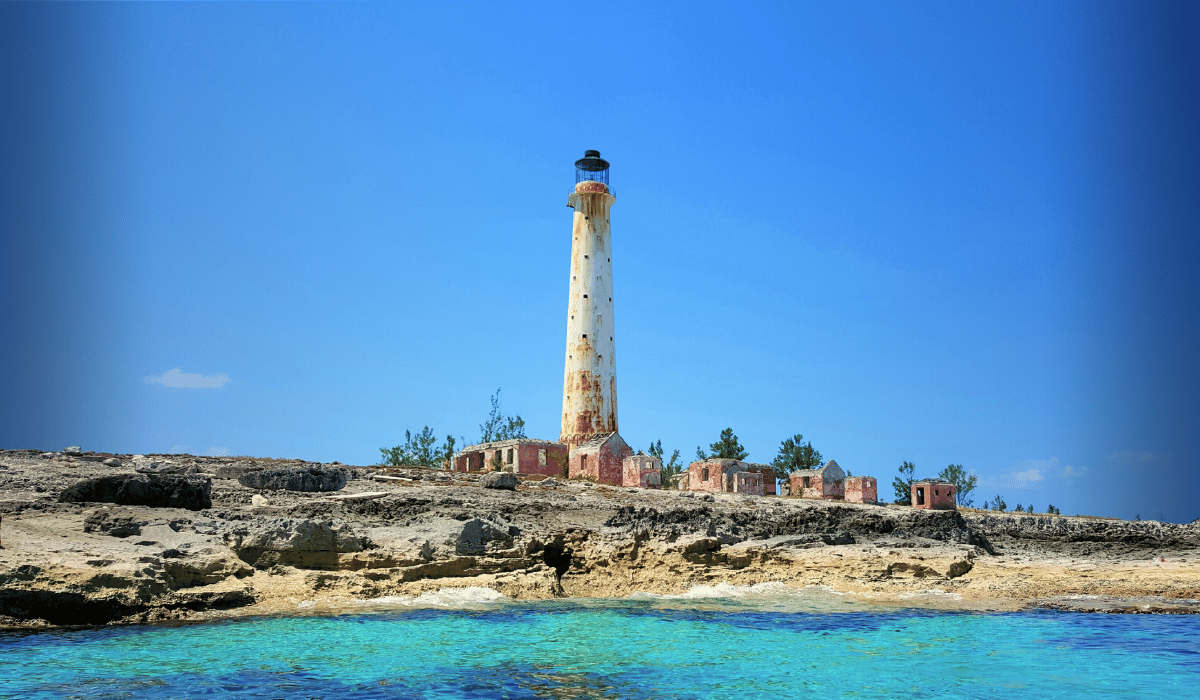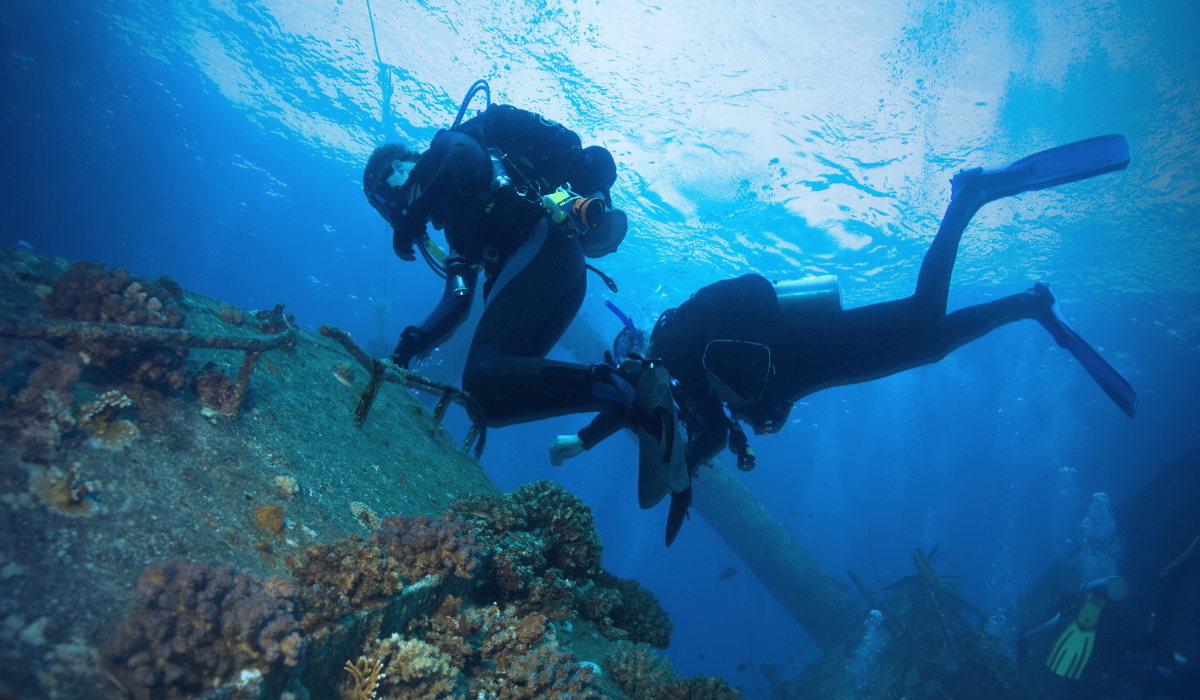
Picking the ‘best’ Caribbean diving is a fool’s errand. The ‘perfect’ spot depends entirely on what you’re looking for.
Is it the Bahamas for sharks, or Bonaire for shore diving, or even the easy drifting of Cozumel’s walls?
They’re all good choices, which is exactly what makes choosing so hard.
This guide isn’t just a list, it’s a comparison tool that matches your logbook, your budget, and your travel style to the right destination. Whether you’re leaning toward a liveaboard or a resort, you’ll find the information you need to stop scrolling and start planning.
We’ll walk you through why you need to go diving in the Caribbean, when to go, and what you’ll see when you’re there. We’ll then break down every major dive destination so you can compare them side by side.
Let’s get you underwater.
Why Dive the Caribbean?
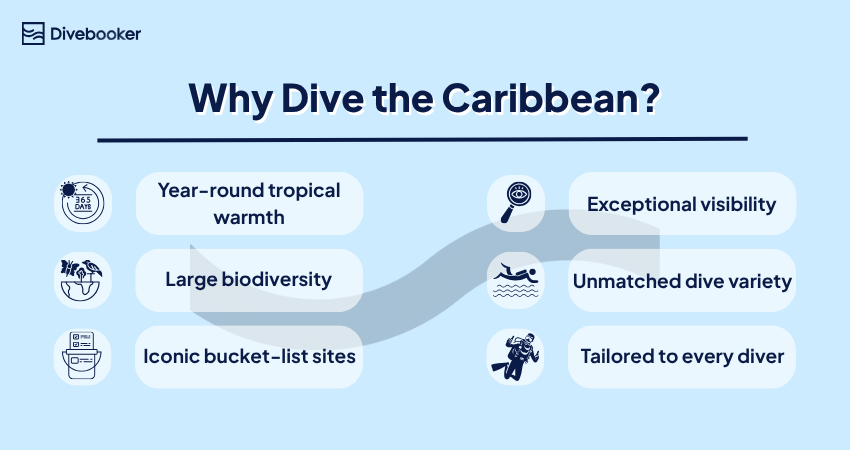
The Caribbean isn’t one diving experience. It’s a collection of them, packed into a sea small enough that you can reach a completely different underwater world in a single short flight, or sometimes a single boat ride.
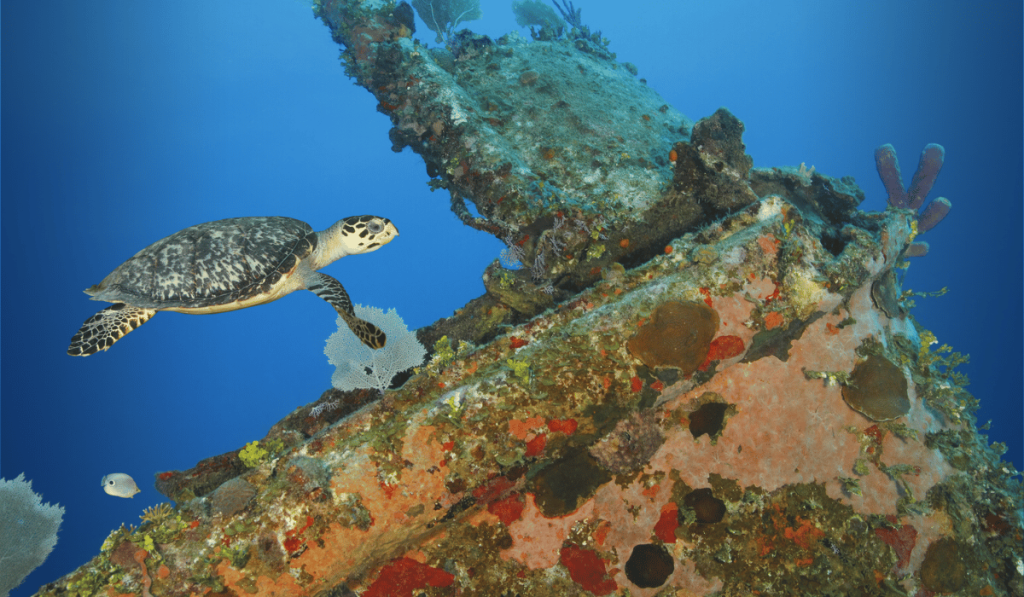
As you would expect, the Caribbean is totally tropical. Water temperatures sit between 26 and 29°C (79 to 84°F) year-round, so a 5mm wetsuit is about as heavy as you’ll ever pack. Visibility often pushes past 30 metres (100 feet), and on a calm day off Little Cayman or the Turks and Caicos, you can watch the reef from the surface before your mask even touches the water. The biodiversity is staggering: eagle rays, reef sharks, hawksbill turtles, seahorses, schooling jacks, and walls of coral that stretch as far as the viz allows.
But the real draw is the variety of diving itself. Within a few islands of each other, you can drift a wall in Cozumel, explore a wreck in Barbados, photograph pygmy seahorses on a Bonaire reef, and stare into the blue hole in Belize. The Caribbean packs wall diving, wreck diving, drift diving, and shore diving into one relatively compact region, which means you can chase a completely different trip every year without ever leaving the basin.
What you pick depends entirely on what kind of diver you are. That’s what the rest of this guide is built to sort out.
Choosing Your Caribbean Dive Style
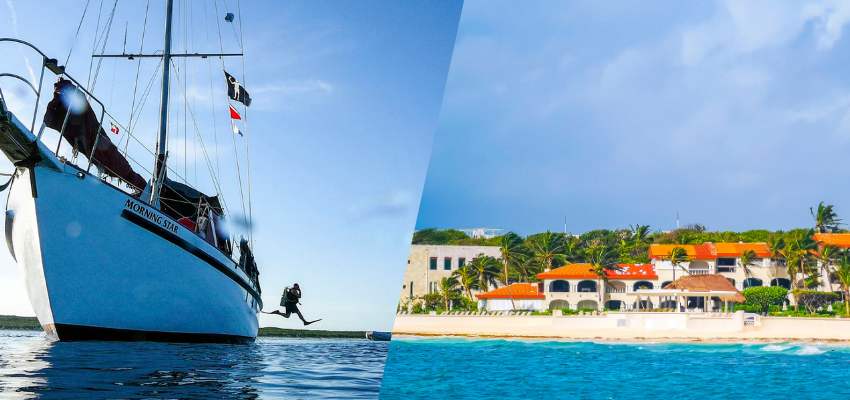
Before you pick an island, pick how you want to dive. In the Caribbean, there is plenty of choice between liveaboard trips and resort-based diving. Each shapes your budget, your daily rhythm, and which destinations make sense.
Caribbean Liveaboard Diving
In the Caribbean, liveaboards solve a specific problem: the best walls, pinnacles, and shark dives rarely sit a ten-minute boat ride from shore. A liveaboard puts you on top of those sites for two to four extra dives a day, with no time wasted on transit.
Why choose a liveaboard:
- More dives per day. Four or even five dives a day is normal. If you want to log serious bottom time, no land-based option comes close.
- Access to remote sites. Many of the Caribbean’s best walls and pinnacles sit hours from shore. A liveaboard parks right on top of them.
- All-inclusive setup. Liveaboards bundle accommodation, meals, tanks, and weights into the trip price.
- Multi-island itineraries. A few Caribbean liveaboards cross borders, like the routes linking St. Kitts and St. Maarten, so you can dive multiple islands without repacking.
If you know a liveaboard fits your style, browse our Caribbean liveaboard trips right now.
Caribbean Resort-Based Diving
Resort-based diving puts you on land at a dive resort or a hotel with an on-site or partner dive centre. You head out by boat each morning, or in places like Bonaire, walk straight to your choice of reef on your own schedule. This is the more flexible option, and it’s usually the better fit if you’re travelling with non-divers who want beaches, restaurants, and day trips.
Why choose a resort:
- Total flexibility. Skip a dive day without feeling you’ve wasted money. Sleep in, explore the island, and come back to the reef tomorrow.
- Family and non-diver friendly. Resorts offer pools, kids’ clubs, and topside activities that liveaboards simply can’t match.
- Shore diving. Destinations like Bonaire and Curaçao are built around it. Grab a tank, walk in, and dive on your own schedule.
- Package options. Many dive resorts bundle rooms and boat dives into a single rate, making it easy to budget.
The choice is simple: if your goal is to maximize your logbook, a liveaboard is unbeatable. However, if you have a surface interval that requires a cocktail and a real beach, the resort-based model wins every time. The destination breakdown in the next section will help you match both styles to the islands that do them best.
Caribbean Dive Destinations at a Glance
This is the section that turns vague ideas into a shortlist. Instead of jumping between ten browser tabs, you can scan the table below and see which islands match your diving style, your travel dates, and the kind of trip you are actually planning.
Each row starts with the country or territory, followed by the main dive hubs within it. Destinations with clickable names have liveaboard inventory ready to book right now. A few are primarily resort-based or have limited liveaboard coverage. Either way, the information you need to compare them is already here.
If you know you want a liveaboard, the links take you directly to available trips. If you are leaning toward a resort, the “Travel Vibe” and “Best For” columns will point you to the islands that do it best.
| Destination (Country/Territory) | Key Dive Hub(s) | Best For | Signature Dive Site(s) | Best Season (quick peek) | Travel Vibe |
|---|---|---|---|---|---|
| Mexico | Cozumel, Playa del Carmen | All levels, drift diving, cenote/cavern diving | Palancar Reef (Cozumel), Cenote Dos Ojos (mainland) | Dec-Apr (dry, best viz); bull sharks Nov-Feb, whale sharks Jun-Sep | Cultural, foodie, lively town |
| Belize | Ambergris Caye, Placencia, Turneffe Atoll | Wall dives, atoll diving, beginners | The Great Blue Hole (Lighthouse Reef), Half Moon Caye (Placencia) | Nov-May (dry) | English-speaking, laid-back, eco-adventure |
| Honduras | Roatán, Utila | Affordable diving, whale sharks (occasional), families | Halliburton Wreck (Roatán) | Year-round; whale sharks possible Mar-Apr & Aug-Sep | Relaxed, expat-friendly, great value |
| Bahamas | Nassau, Eleuthera & Exuma Cays, Grand Bahama & Tiger Beach | Shark diving, wrecks, blue holes | Lost Blue Hole (Nassau), Wreck of the Austin Smith | Nov-May (dry); tiger sharks year-round, peak Oct-Jan; hammerheads Jan-Mar | Easy flight from US, island-hopping charm |
| Turks & Caicos | Providenciales, West Caicos | Wall diving, pristine reefs, beginners | Gullies (Providenciales) | Dec-Apr (dry) | Luxury, very calm seas, powder-sand beaches |
| Cayman Islands | Grand Cayman, Little Cayman, Cayman Brac | Stingray encounters, dramatic walls | Stingray City (Grand Cayman), Bloody Bay (Little Cayman) | Dec-Apr (dry) | Upscale, excellent infrastructure, family-friendly |
| Saba, St. Kitts & St. Maarten | Saba, St. Kitts, St. Maarten | Pinnacles, wrecks, advanced diving | Eye of the Needle (Saba), M/V River Taw (St. Kitts), HMS Proselyte (St. Maarten) | Year-round; peak Dec-Apr | Quiet eco-paradise, historic charm, dual-island culture |
| St. Lucia | Soufrière, Anse Chastanet | Volcanic formations, macro life, beginners | Superman’s Flight (drift dive at the base of the Pitons) | Dec-Apr (dry) | Romantic, lush scenery, boutique resorts |
| Bonaire | Kralendijk, entire leeward coast | Shore diving, macro photography, beginners | Salt Pier, Hilma Hooker (wreck) | Year-round; calmest Feb-Jun | Dive-centric, rugged beauty, independent spirit |
| Curaçao | Willemstad, Westpunt | Wreck diving, shore diving, families | Superior Producer (wreck), Car Pile (Willemstad) | Year-round; slightly drier Jan-Mar | Colourful architecture, vibrant culture, dual-language |
| Aruba | Oranjestad, Malmok | Wrecks, easy beginner dives | Antilla (WWII shipwreck) | Year-round; outside hurricane belt | Desert-island feel, glitzy resorts, constant trade winds |
When to Go: Caribbean Diving Seasons
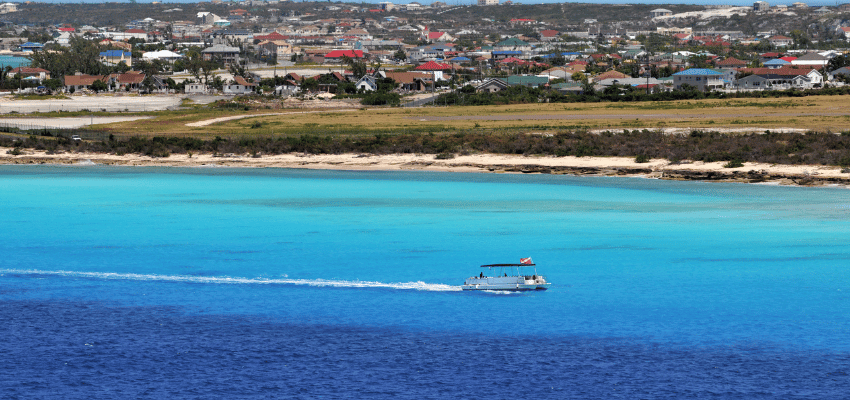
The Caribbean is a year‑round dive destination. There isn’t a bad month to get in the water. But the seasons do shift visibility, marine life, crowds, and prices. The short version: calm and clear from December to April, warmer and wilder from May to November.
Water Temperature and Visibility Quick Glance
| Month Range | Avg Water Temp | Visibility | Highlights |
|---|---|---|---|
| Dec–Apr | 26–27°C (79–81°F) | Often 30m+ | Calm seas, best all-round conditions, hammerheads in Bahamas |
| May–Nov | 27–29°C (81–84°F) | Variable, still excellent on calm days | Whale sharks, fewer crowds, lower prices |
Dry Season (December to April)
This is the Caribbean’s high season for a reason. Trade winds ease, seas flatten, and visibility often reaches its peak, especially along exposed walls like those off Grand Cayman and the Turks and Caicos. Water temperatures hover around 26°C (79°F) and a 3mm or 5mm wetsuit keeps most divers comfortable.
Expect more boats at popular sites and higher accommodation rates, especially around Christmas and Easter. If you want glassy conditions and don’t mind the crowds, this is your window.
Off‑Season (May to November)
May through November brings warmer water (up to 29°C/84°F), lower prices, and far fewer divers. The trade‑off is less predictable weather. The official hurricane season runs from June through November, with the highest storm risk from August to October. That said, many storms stay well offshore, and islands like Aruba and Bonaire sit outside the hurricane belt entirely, making them excellent off‑season choices.
This is also the time for big animal encounters. Whale sharks gather off Mexico’s Yucatán (June to September) and around Utila in Honduras (March to April and again August to September). Sightings in Utila have become noticeably less frequent in recent years, so set expectations accordingly. Hammerheads cruise the Bahamian channels from January to March, though some operators run trips into early spring.
Picking Your Window
- Want reliability and flat water? Book somewhere like the Caymans or Turks and Caicos between December and April.
- Chasing whale sharks or deals? Look at Mexico or Honduras from June to September, or consider Bonaire any time the winter crowds feel too heavy.
- Travelling in August or September? Stick to the southern Dutch islands (Aruba, Bonaire, Curaçao) or check liveaboard itineraries that shift routes to avoid storms.
The table above gives you a fast way to see which islands shine in which season, and our Caribbean liveaboard search keeps real‑time availability in view.
What You’ll See: Caribbean Marine Life Encounters
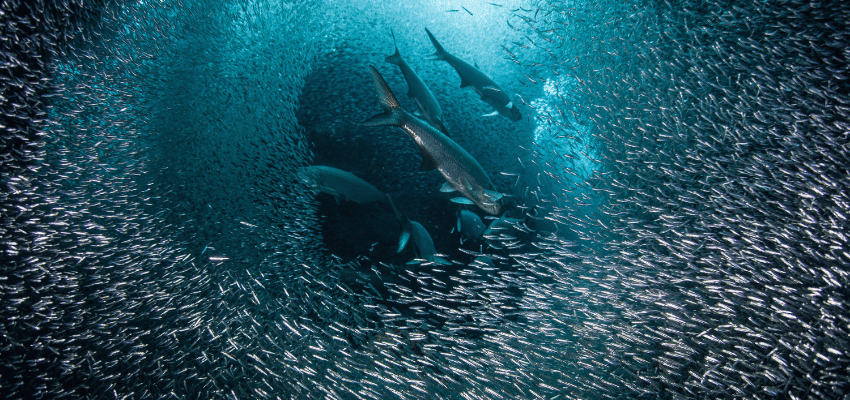
The Caribbean gives you big animals and tiny critters, often on the same dive. A single tank might start with a hawksbill turtle cruising past, switch to a cleaning station full of neon gobies, and end with a southern stingray buried in the sand. Here’s a quick look at what’s waiting, and where.
Caribbean Megafauna
- Reef sharks. Blacktips in the Bahamas, grey reef sharks in Belize, and the occasional hammerhead in deeper passes from January to March.
- Eagle rays. Common across the region, especially on wall dives in the Caymans and Turks and Caicos.
- Whale sharks. Seasonal visitors off Mexico (June to September) and Utila, Honduras (March to April and again August to September).
- Turtles. Hawksbills, greens, and loggerheads are everywhere; Bonaire and the Bahamas see especially big numbers.
- Dolphins. Occasionally join dives or follow boats; the Bahamas and Roatán have resident pods.
Caribbean Macro Life
- Seahorses. Look in seagrass beds and shallow reefs; Bonaire and St. Lucia are good bets.
- Pygmy seahorses. Tiny and hard to spot; found on gorgonian fans in places like Curaçao and Roatán.
- Frogfish. A favourite for photographers; common in Bonaire, the Caymans, and St. Lucia.
- Cleaning shrimp and Pederson shrimp. Found on anemones across the region, especially on night dives.
- Nudibranchs. Colourful and varied; Bonaire’s shore dives are perfect for slow nudibranch hunts.
This is just a taste of what the region holds.
Plan Your Caribbean Trip: A Diver’s Checklist
A few things worth sorting before you zip up your bag. Nothing complicated, just the stuff that makes the difference between a smooth trip and a minor headache.
Packing Essentials
- Mask, computer, and SMB. Rental gear is fine, but these three are worth bringing yourself.
- Reef-safe sunscreen. Many islands now require it. Skip the oxybenzone.
- A light rash guard for boat rides between dives, even in warm water.
- Your certification card. A photo on your phone works at most shops, but a physical card never hurts.
Dive Safety and Currents
- Know the dive profile of your destination. Cozumel means drift dives, Bonaire means shore entries, and the Bahamas can mean deep walls. Match your experience to the conditions.
- Most liveaboards and resorts will ask for a check‑out dive. It’s just a quick skills refresher.
Travel Tips
- Currency. The US dollar is accepted across much of the Caribbean, but the Eastern Caribbean islands (like St. Lucia) use the Eastern Caribbean dollar. Check before you land.
- Customs. If you travel through the US, allow for longer security lines on the way home. Global Entry helps.
- Plugs. Most islands use the same 110V plugs as North America. A few (like St. Maarten) use 220V, so a universal adapter doesn’t weigh much and covers all bases.
Conclusion
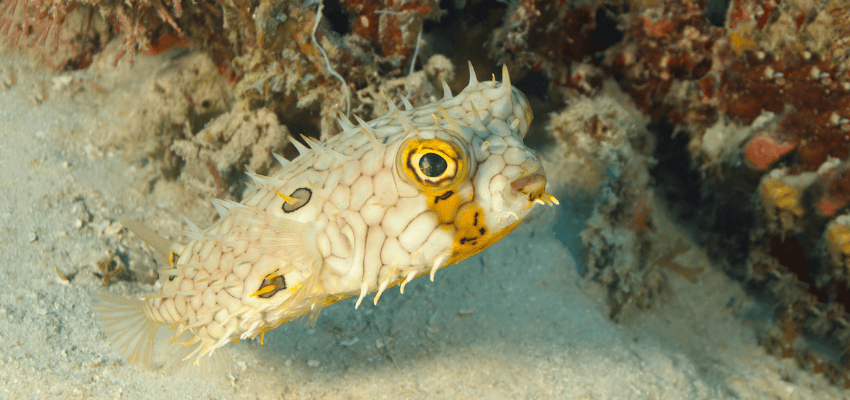
The Caribbean is too big for one trip. Start with the topography that excites you most, be it the walls of Grand Cayman or the wrecks of Aruba, and go from there.
If a liveaboard makes sense, the next step is easy. Browse our Caribbean liveaboard trips, filter by month and region, and lock in your dates while cabins are still open.
Caribbean diving isn’t one thing, and the best place to dive in the Caribbean is the one that lines up with your budget, your logbook, and whoever is coming with you. That’s the trip this guide was built to help you find.
Frequently Asked Questions about Caribbean Diving
Almost every dive delivers turtles, southern stingrays, and healthy reef fish. Walls add eagle rays and reef sharks, while the Bahamas throws in hammerheads in winter. Macro hunters find seahorses, frogfish, and nudibranchs on Bonaire’s shore dives. Whale sharks are seasonal off Mexico and Utila. Our Marine Life Encounters section breaks down exactly what shows up where.
Absolutely, as long as you plan smart. The southern Dutch islands (Aruba, Bonaire, Curaçao) sit outside the main hurricane belt and see minimal storm risk. Even in hurricane‑prone areas, liveaboards and resorts monitor weather closely and adjust itineraries. Late summer also brings whale sharks and thinner crowds.
This depends on what you want to do. Diving in Cenotes is cave and cavern diving, and you need at least an Open Water certification. If you want to go into the darkness, or go deeper, then you would need at least a cavern or cave speciality, depending on the dive. There are also tec options. Most operators require a guide and a checkout dive to assess buoyancy control.
The Bahamas and Turks and Caicos are excellent starting points. Short flight from North America, calm seas during winter, and boats that stay fairly close to land. The itineraries mix shallow reefs with walls, so new divers don’t feel out of their depth. Browse our Caribbean liveaboard trips and find a boat that suits you.
For example, Roatán in Honduras is famous for affordable dive packages and low cost of living. If you want the lowest possible daily price, look at a shore‑diving‑focused trip or a multi‑day liveaboard that bundles everything.
There is no single answer, and any diver who gives you one is probably describing their own logbook. The right island depends entirely on your skill level, budget, and what you want to see. Use the destination table in Section “Caribbean Dive Destinations at a Glance” to match your priorities. For drift dives, start with Cozumel. For shore diving freedom, pick Bonaire. For sharks, look at the Bahamas.