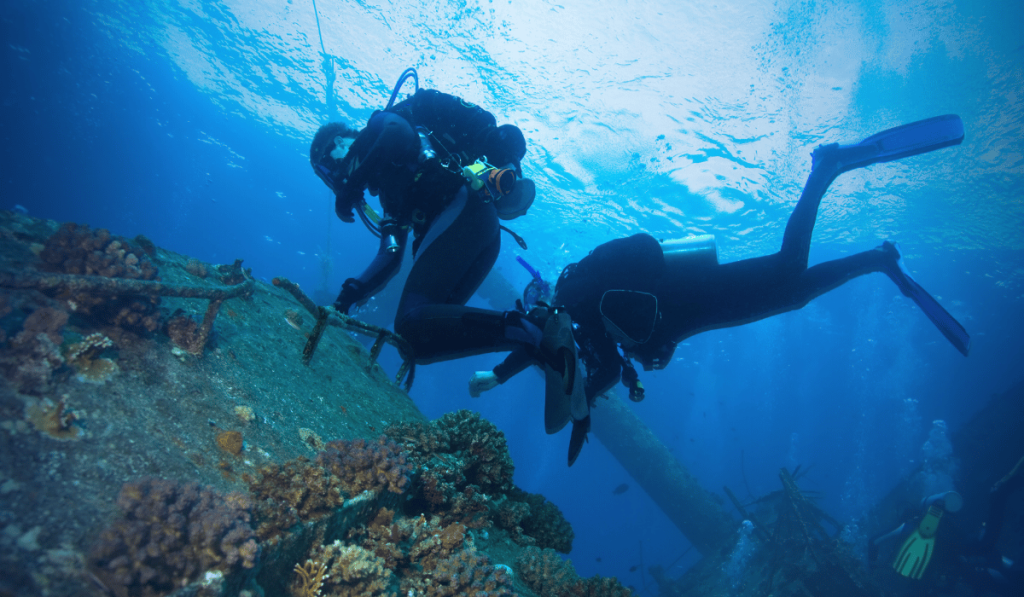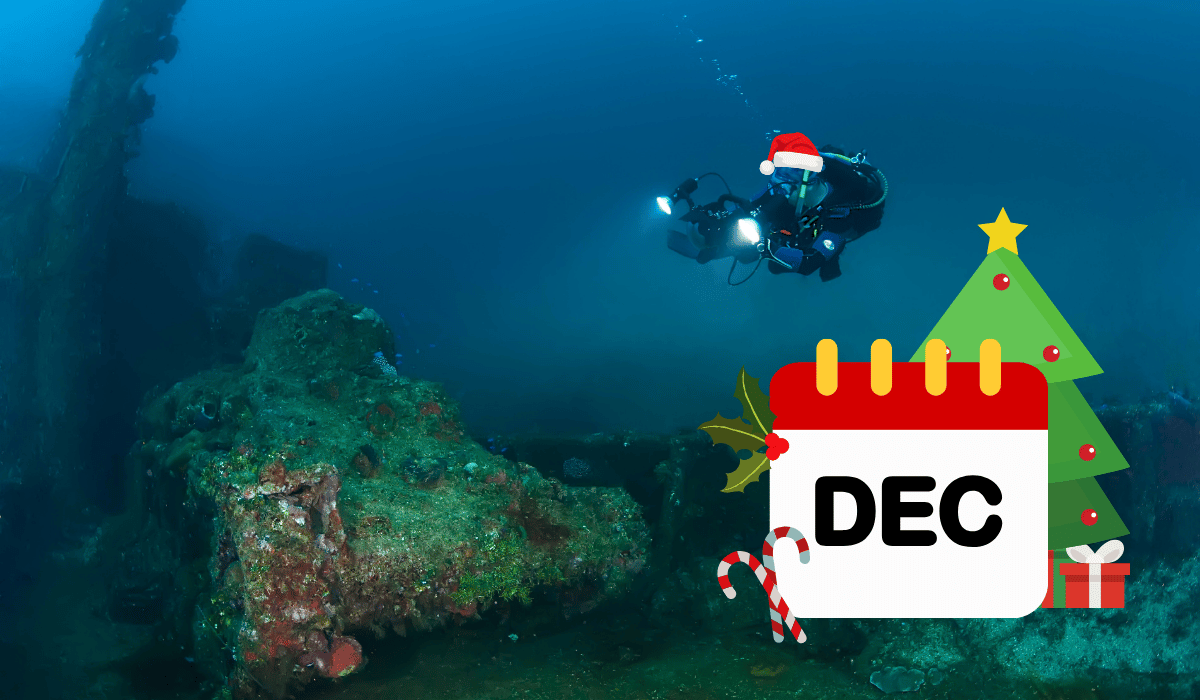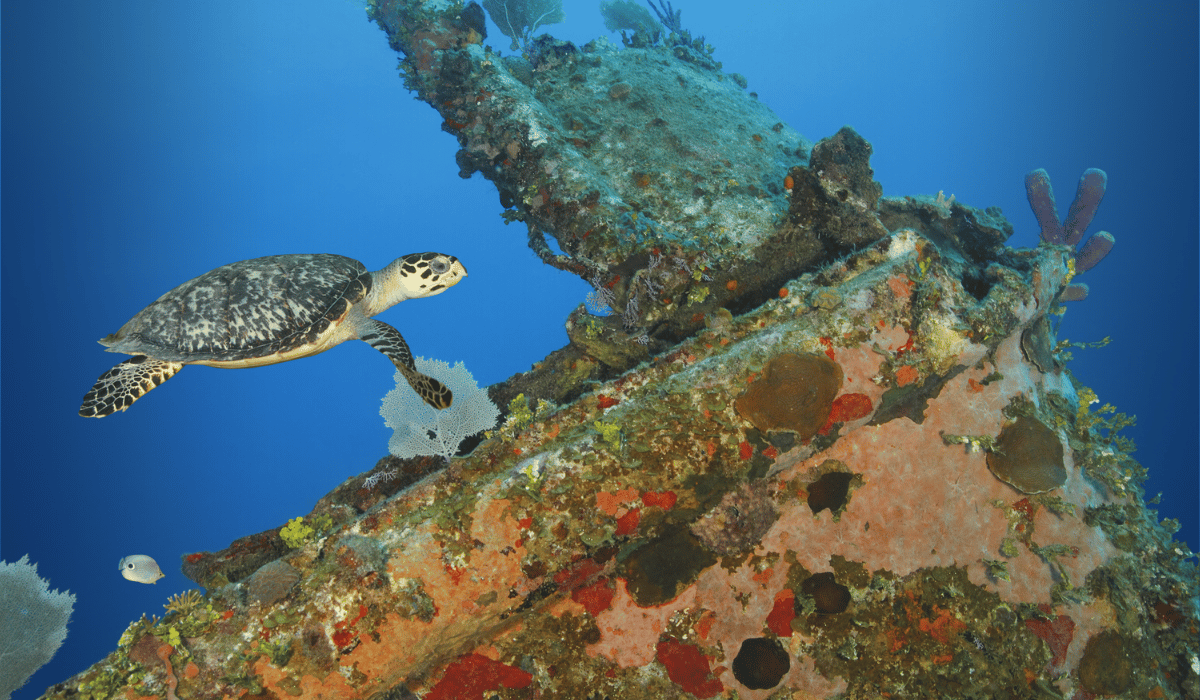
Wreck diving in the Caribbean is different from what most divers expect. You descend, and the shape comes into focus slowly: a hull, a wheelhouse, a propeller big enough to stand inside. Shipwrecks with histories you can still trace with your hands.
The Caribbean holds hundreds of them. Purpose-sunk naval vessels. Freighters torn in two by hurricanes. Artefacts from galleons that went down centuries ago. Some sit in ten metres of water, shallow enough for even a snorkeller to explore. Others lie deep, demanding technical training and a fair bit of nerve.
Whether you book a liveaboard or a resort-based package, the Caribbean’s wrecks are ready. Start planning soon, the wrecks aren’t going anywhere, but the best dates to dive them do.
Why the Caribbean Is Strong for Wreck Diving
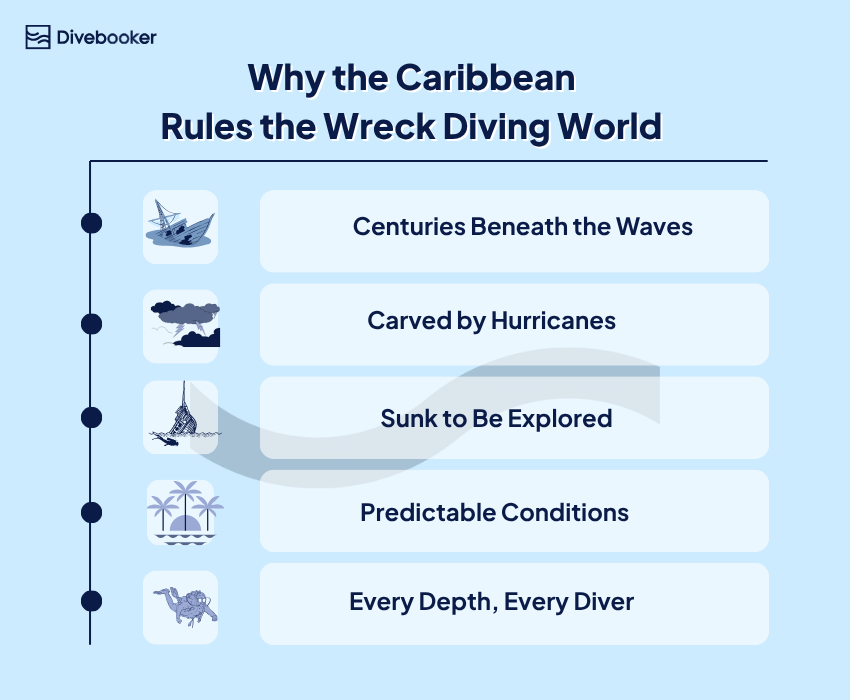
The Caribbean is one of the most wreck-dense regions on the planet. The numbers explain why….
- The shipping lanes have been running here for centuries. Spain alone has catalogued 681 colonial vessels lost between 1492 and 1898. In the Bahamas, the Lost Ships Project documented 596 wrecks in a single stretch of the Greater Abaco region.
- Storms sank most of them. Among those Spanish losses, 91.2 percent went down because of hurricanes and tropical weather. The same storm paths that claimed 18th-century galleons still shape the wreck landscape today. The RMS Rhone and the MV River Taw are two well-known examples of hurricane casualties.
- Ships are still being sunk, on purpose. Across the Greater Caribbean, 212 artificial reef structures were catalogued in a 2021 study; 44 percent were shipwrecks, and the primary stated goal for 41 percent of all deployments was to create new dive attractions. The USS Kittiwake and the Halliburton Wreck are direct results of programs that deliberately place clean, accessible wrecks for divers.
- Conditions are predictable. Water temperatures hold between 25 and 29 degrees Celsius year-round, and visibility commonly runs 15 to 30 metres. National Geographic describes the region as “a haven for divers of all experience levels, offering diverse marine life, mysterious submerged wrecks, teeming coral reefs, year-round warm temperatures and excellent visibility.”
- Every skill level gets a wreck. Shallow hulls like the Astron in Punta Cana are snorkel-friendly. Mid-depth vessels like the Kittiwake suit everyone from newly certified divers and up. Deep cargo holds like those on the St. George challenge technical divers. This range puts the Caribbean ahead of destinations where wrecks cluster at one depth band.
If you are fascinated by the intersection of maritime history and scuba, see our broader list of the best destinations for wreck diving globally.
Wreck Diving by Travel Style
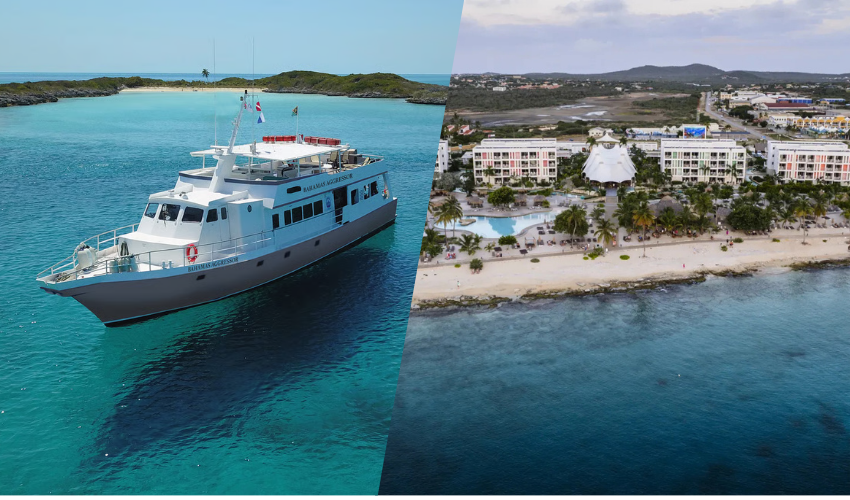
Some wrecks sit a short swim from shore, and others demand a multi-day liveaboard to reach. Knowing the difference helps you book the right trip.
Wrecks reachable within liveaboard trips. In the Bahamas and British Virgin Islands, liveaboards string together remote sites that day boats rarely touch. The Austin Smith wreck in the Exumas and the RMS Rhone in the BVI are staples on liveaboard itineraries.
Wrecks available from a land-based accommodation. Grand Cayman and the Dominican Republic offer excellent wreck diving minutes from shore. The USS Kittiwake, Halliburton Wreck, MV River Taw, and every Dominican Republic wreck listed in this guide are all reachable on a standard morning boat dive or from the beach.
The Best Caribbean Wrecks
Each destination we cover brings a different kind of wreck experience. The wrecks below are the ones that earn repeat visits and are bookable through Divebooker.
USS Kittiwake, Cayman Islands
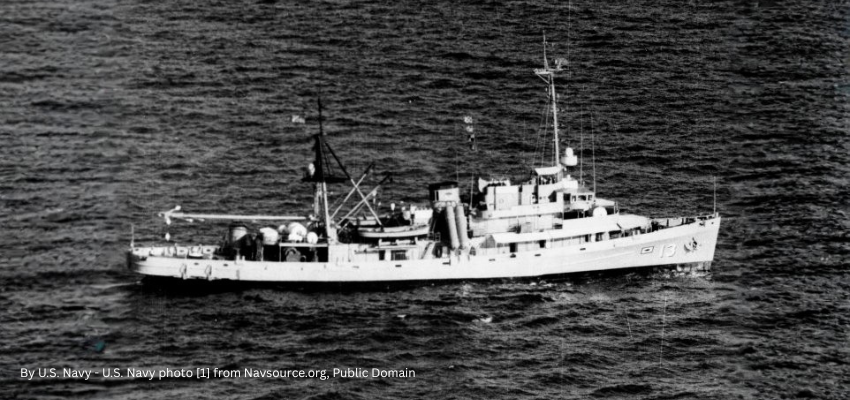
Grand Cayman runs on easy diving, and the USS Kittiwake delivers exactly that. A 251-foot former submarine rescue ship, cleaned and sunk in 2011, she sits upright between 5 and 20 metres. There are five decks, no current to fight, and enough ambient light to photograph every room without a strobe. Newly certified divers explore the upper decks. Experienced divers drop to the wheelhouse and propellers. The site works across all certification levels and has enough internal space that repeat dives still turn up something new.
RMS Rhone, British Virgin Islands
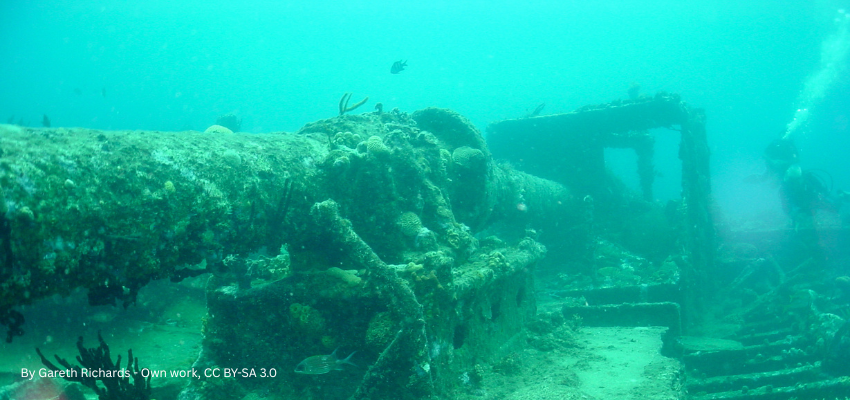
The RMS Rhone has been a bucket-list dive since appearing alongside Jacqueline Bisset in the 1977 movie, The Deep. A Royal Mail steamer, she was caught by an 1867 hurricane and broken in two off Salt Island. The bow section, still largely intact, lies at 24 metres. The massive propeller is a dive in itself, encrusted in orange cup corals and surrounded by swirling schools of grunts and snapper. This is liveaboard territory, and the site is protected as a national marine park.
Wreck of the Austin Smith, Bahamas
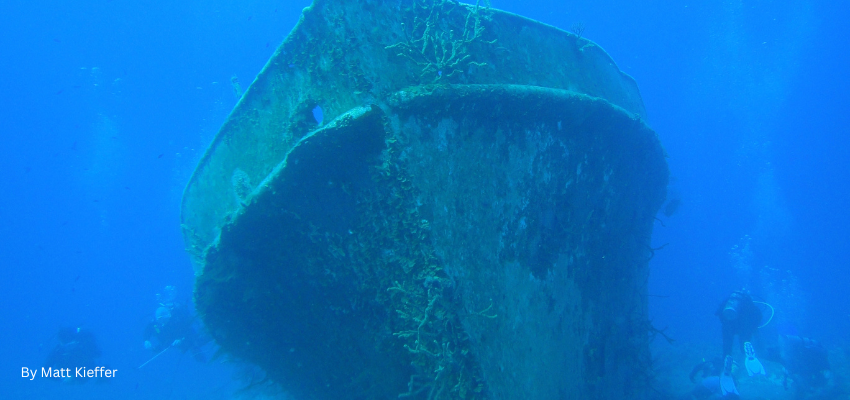
The Wreck of the Austin Smith sits upright in the Exuma Cays at 18 metres. A former Bahamian Defence Force cutter (previously HMBS Flamingo), she was being towed to San Salvador to be sunk as an artificial reef when she accidentally sank en route in 1995. The accident worked out well. Liveaboards include this wreck on their Exuma itineraries, often alongside reef and wall dives. Caribbean reef sharks frequent the site, and a resident Goliath grouper has taken up station inside the wheelhouse. Austin Smith is a magnet for predators; for more on the locals, check out the top shark species you can’t miss in the Bahamas.
MV River Taw, Saba, St. Kitts & St. Maarten
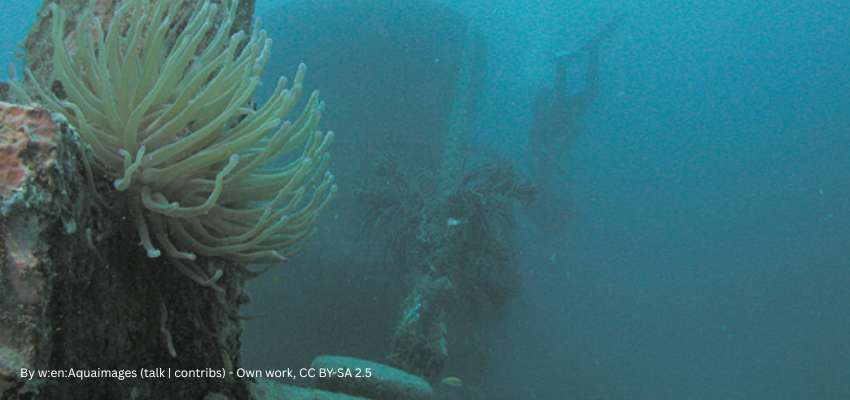
The MV River Taw is a 144-foot freighter that sank in 1981 and was later split in two by Hurricane Hugo. She now rests in two sections at 13 to 18 metres near Basseterre. Shallow, sheltered, and encrusted in sponges and hard corals. Seahorses, frogfish, and nudibranchs turn up regularly, so be sure to bring your macro lens. Night dives here are consistently rated among the best on the island.
Halliburton Wreck, Honduras
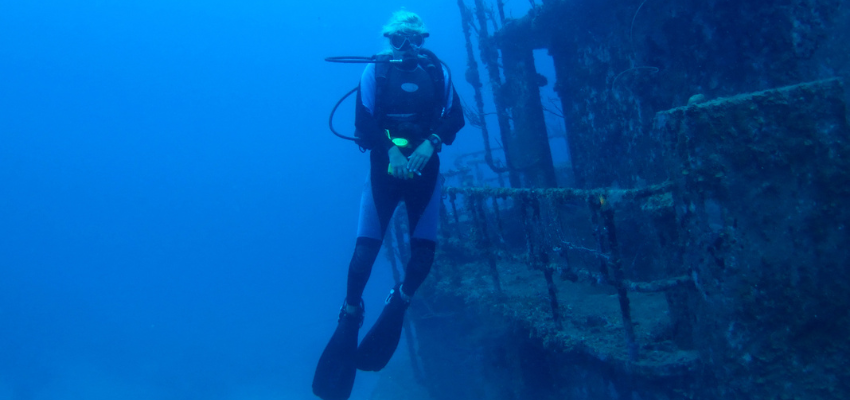
The Halliburton Wreck was a 100-foot cargo ship deliberately sunk off Utila’s south coast in 1998. She now rests at around 30 metres, fully encrusted and packed with schooling fish, moray eels, and tiny macro critters in every crevice. The site is five minutes from the dive shops and dock in Utila and features on many Roatán liveaboard itineraries. The surface around the wreck is generally calm year-round, and a favourite for photography students working on their strobe technique.
Wrecks of the Dominican Republic
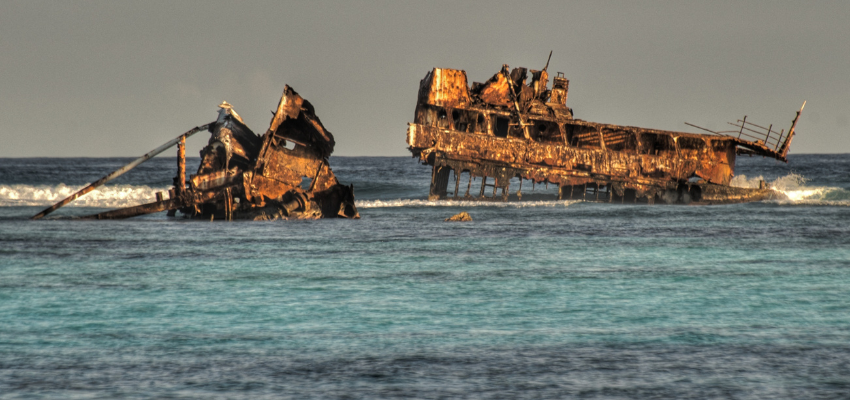
No other Caribbean wreck destination packs this many accessible points into a single coastline as the Dominican Republic. Bayahibe, Punta Cana, and Santo Domingo each offer a different flavour of wreck diving, all bookable through resort-based dive centres and day-boat operators.
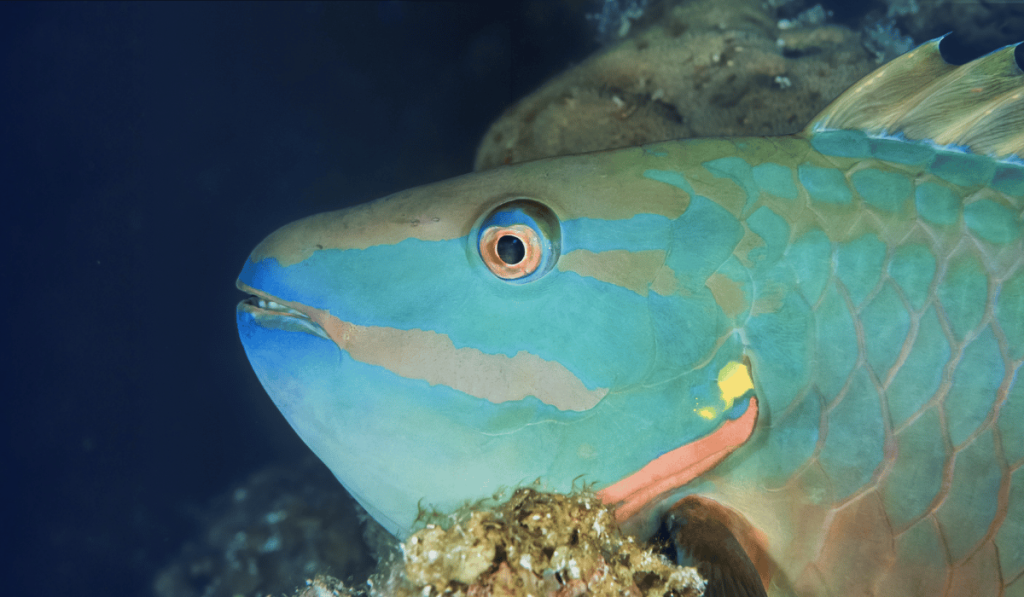
- Atlantic Princess (Bayahibe) – 12 metres. A former small cruise ship that ran aground in 2008 before slipping beneath the waves in May 2009. The boat is standing upright, draped in sergeant majors and parrotfish. Ideal as a first wreck dive.
- St. George (Bayahibe) – 12 to 44 metres. The Dominican Republic’s premier site. Cargo holds, nurse sharks, eagle rays. The shallower upper sections suit intermediate divers; the deep full penetration requires technical certifications.
- Hickory (Santo Domingo) – 18 metres. Scuttled in 1984, now a thriving artificial reef. Penetration routes exist for wreck-certified divers.
- Astron (Punta Cana) – 15 metres. Ran aground in 1978. Broken in two, visible from the surface, and snorkel-friendly on calm days.
- Guaraguao Reef (La Romana) – Variable depth. Not a ship but a reef that has a collection of 18th-century cannons, olive jar fragments, and galley bricks. They are said to be from a Spanish galleon, but wherever they came from, they are a living museum for divers who prefer history to penetration.
Quick-Reference Caribbean Wreck Comparison
| Wreck | Destination | Depth | Level | Highlight |
|---|---|---|---|---|
| USS Kittiwake | Cayman Islands | 5–20 m | All levels | Five decks of easy exploration, no current |
| RMS Rhone | British Virgin Islands | 9–24 m | Intermediate/Advanced | Massive propeller, 1867 hurricane wreck |
| Austin Smith | Bahamas | 18 m | Intermediate | Resident Goliath grouper, reef sharks |
| MV River Taw | Saba, St. Kitts & St. Maarten | 13–18 m | Beginner/Intermediate | Night dives, macro critters |
| Halliburton | Honduras | 18–20 m | Intermediate | Artificial reef, photographer’s favourite |
| Atlantic Princess | Bayahibe, Dominican Republic | 12 m | All levels | Perfect first wreck, massive fish schools |
| St. George | Bayahibe, Dominican Republic | 12–44 m | Advanced | Nurse sharks, cargo hold penetration |
| Hickory | Santo Domingo, Dominican Republic | 18 m | Intermediate | Penetration routes for certified divers |
| Astron | Punta Cana, Dominican Republic | 15 m | All levels (incl. snorkel) | Wreck visible from the surface |
| Guaraguao Reef | La Romana, Dominican Republic | Variable | All levels | 18th-century cannons and artefacts |
Get Closer to the Caribbean’s Best Wrecks
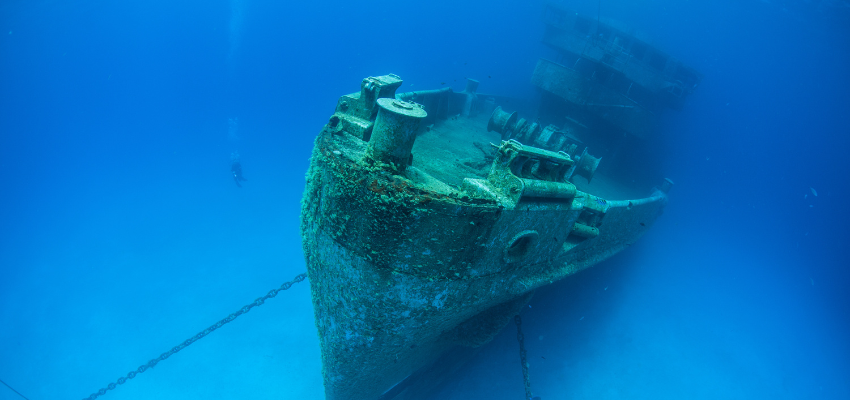
Ten wrecks across six destinations, and with water warm enough to dive any month of the year.
The USS Kittiwake, the RMS Rhone, the Austin Smith Wreck, and the Halliburton Wreck all sit on regular liveaboard itineraries you can book through Divebooker.
The Dominican Republic works differently. The liveaboards that operate in Dominican waters visit Silver Bank for humpback whale snorkelling, not coastal wreck sites. For the Atlantic Princess, St. George, Hickory, Astron, and Guaraguao Reef, you need a resort-based dive centre or a day boat operator in Bayahibe, Punta Cana, or Santo Domingo.
Browse the liveaboard itineraries on Divebooker for the wrecks you want. Check with local dive centres for the rest.
Frequently Asked Questions about Caribbean Wrecks
The Atlantic Princess draws enormous schools of sergeant majors and parrotfish. The Austin Smith is known for reef sharks and a resident Goliath grouper. The St. George attracts nurse sharks and eagle rays. Each wreck offers a different kind of encounter.
Yes, for the RMS Rhone in the British Virgin Islands and the Austin Smith in the Bahamas. Liveaboards include both wrecks on regular itineraries. The other wrecks in this guide are reached by day boat or from shore, perfect for resort-based dive trips.
Not for exterior dives. Any certified diver can explore the outside of a wreck within recreational depths. If you want to penetrate interior compartments, you need a PADI Wreck Diver certification or equivalent training. The Hickory and the deep section of the St. George require penetration credentials.
The Atlantic Princess in Bayahibe, Dominican Republic, sits upright in just 12 metres of calm water. The USS Kittiwake in Grand Cayman and the MV River Taw in St. Kitts are also excellent choices for newly certified divers.