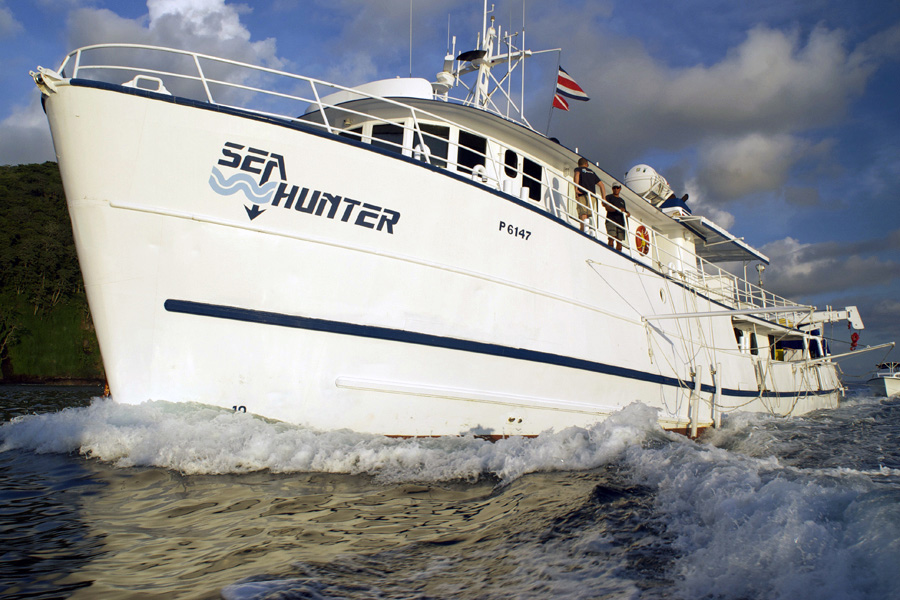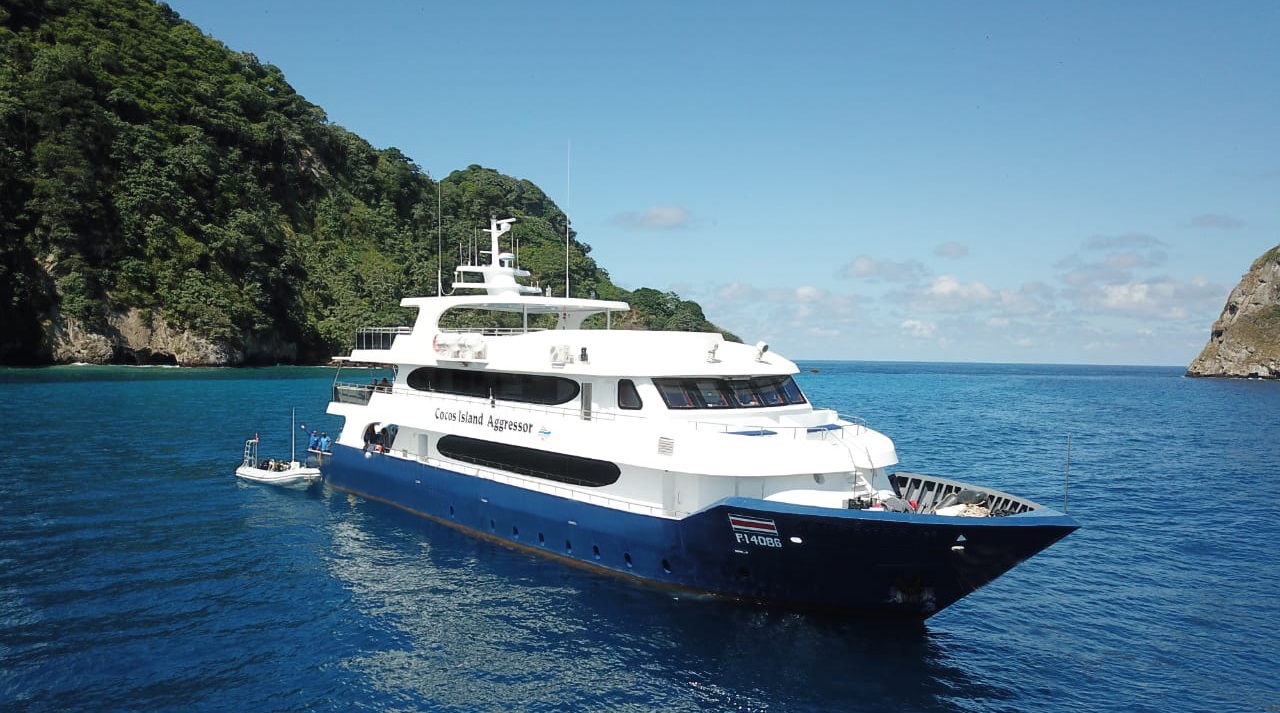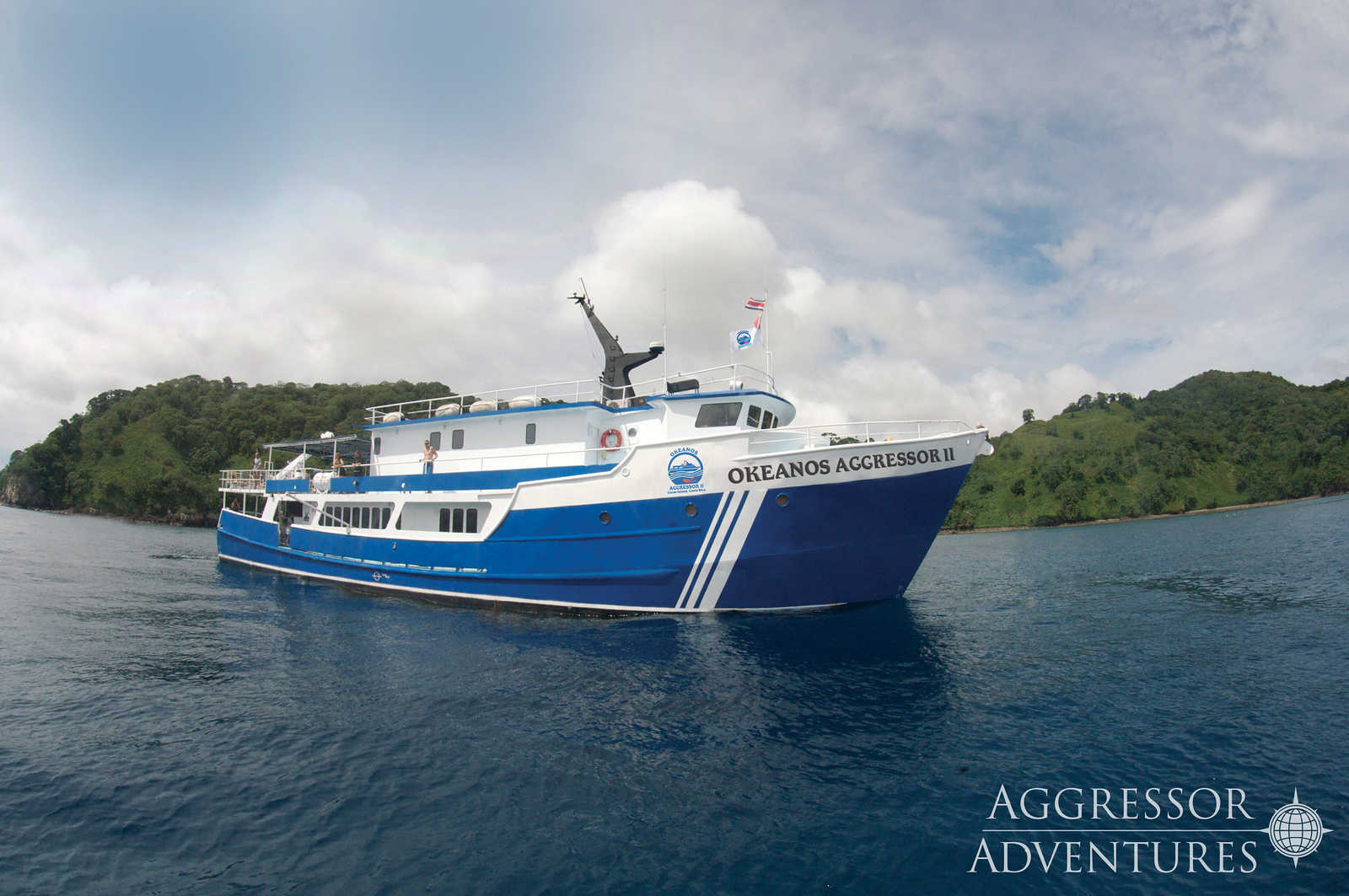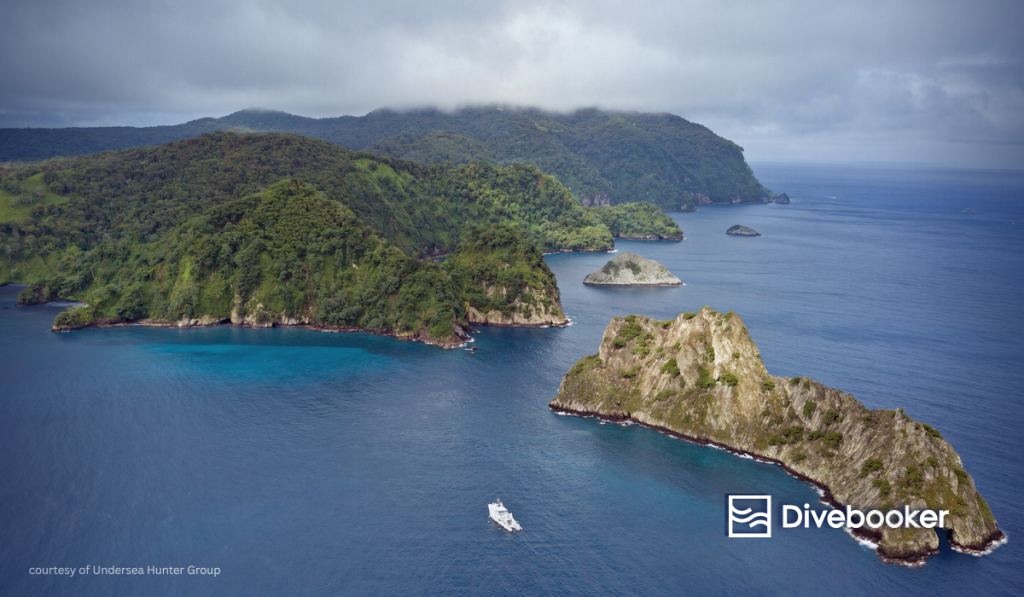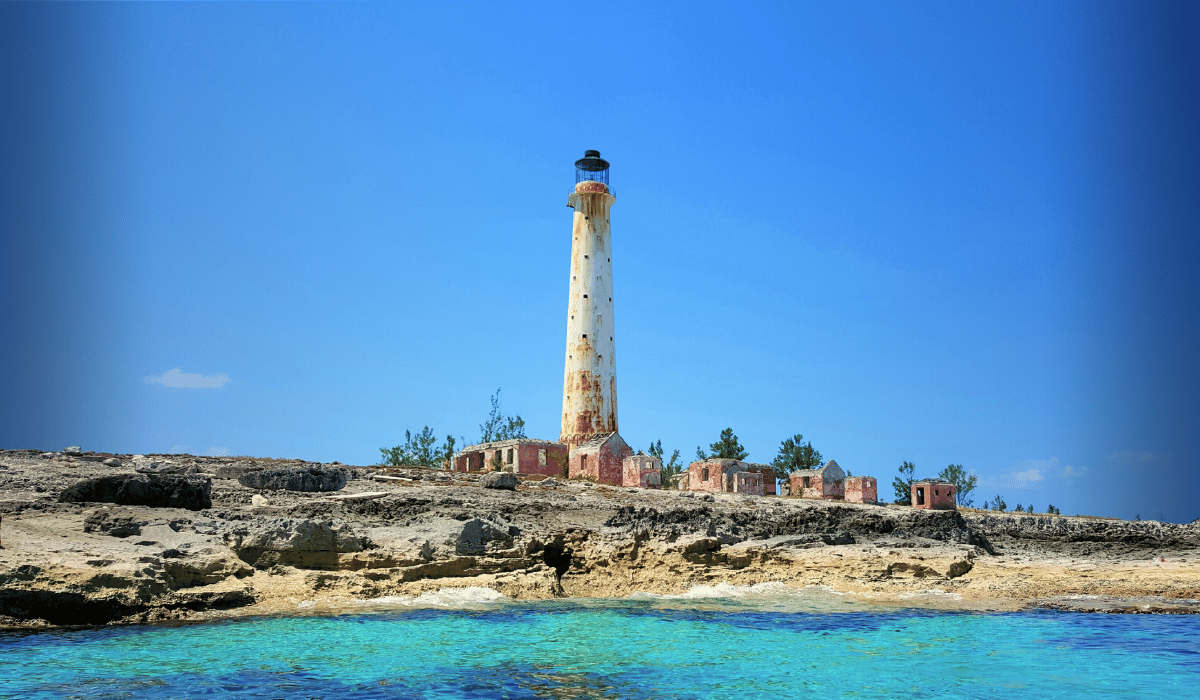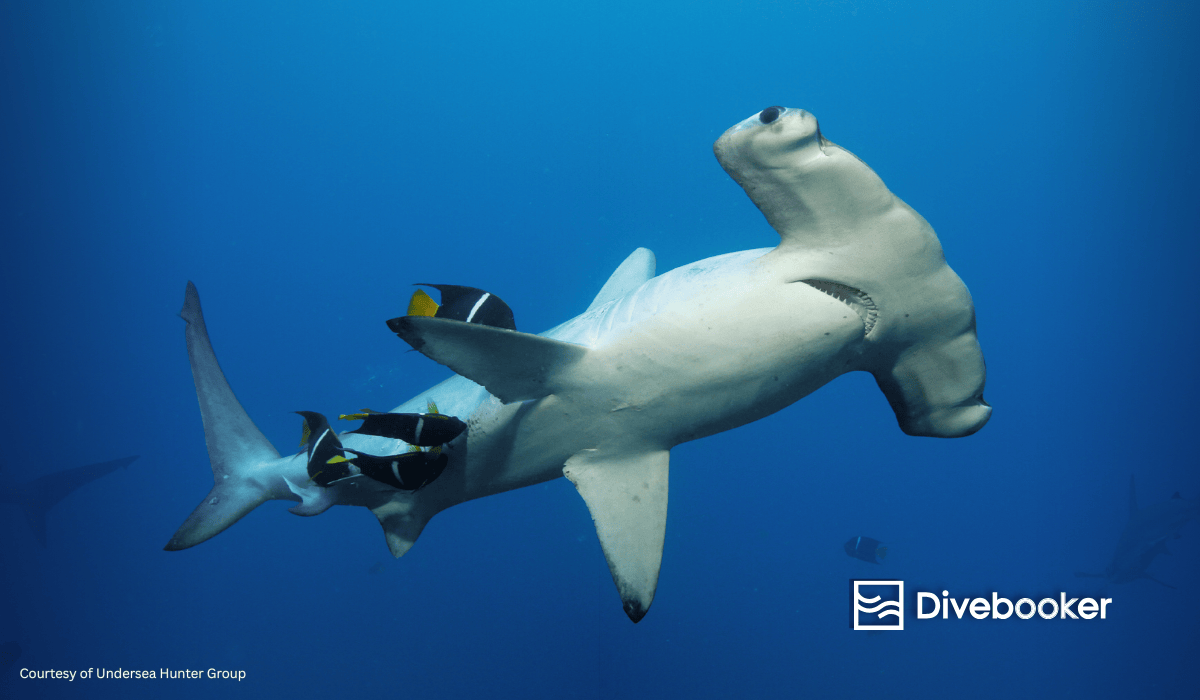
A trip to dive in Cocos Island begins with a thirty-six-hour transit across the Pacific. This isolated Costa Rican outpost is the only landmark for hundreds of kilometres, acting as a vital cleaning station and hunting ground for massive schools of scalloped hammerheads. It is a destination built for experienced divers who prioritize raw, prehistoric encounters over calm reefs. As a strictly offshore location, all visits are conducted via liveaboard, focusing entirely on the basalt walls and deep seamounts that define this protected marine wilderness.
This article breaks down the reasons experienced divers make this crossing. From the cleaning stations at Bajo Alcyone to the volcanic topography that creates this abundance, here is why Cocos Island belongs on your list.
Cocos Island, Costa Rica
- Typical Diving Depth: 20 to 30 metres (60 to 100 feet).
- Best Sites: Bajo Alcyone, Dirty Rock, and Punta Maria.
- Visibility: Ranges from 15 to 30 metres, depending on plankton density.
- Shark Count: Frequent sightings of 100+ individuals around a single cleaning station.
Reason 1: Cocos Island Hammerheads
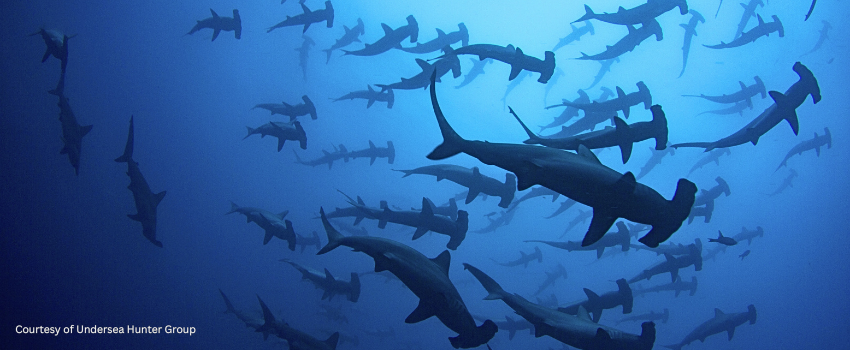
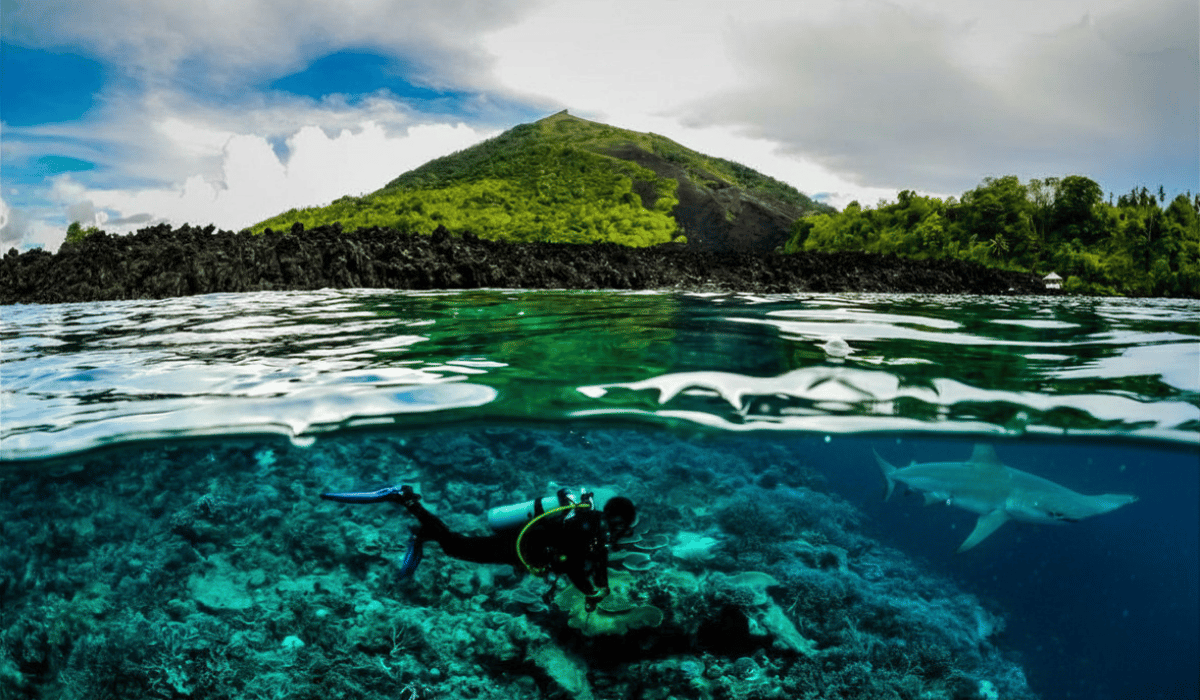
You do not dive in Cocos Island for coral gardens or shallow reefs. You come for the scalloped hammerheads. Not singles or pairs, but schools of one hundred, two hundred, sometimes three hundred scalloped hammerheads cruising the seamounts like they own the place. Because, out here, they do.
When you go diving at Cocos Island, hammerheads congregate at specific cleaning stations, most famously at Bajo Alcyone and Dirty Rock. At depths between 18 and 35 metres, king angelfish and barberfish pick parasites from their skin. The hammerheads hover motionless in the current, hanging in the blue like grey walls of muscle. You do not chase them, you just hold your position and wait.
Scientists estimate that the waters around Cocos Island hold one of the largest shark biomass concentrations in the world. Seeing hammerheads at Cocos Island at this scale explains why divers endure the 36-hour crossing. No other place delivers schooling hammerheads with this consistency.
Reason 2: Big Animal Encounters Beyond Hammerheads
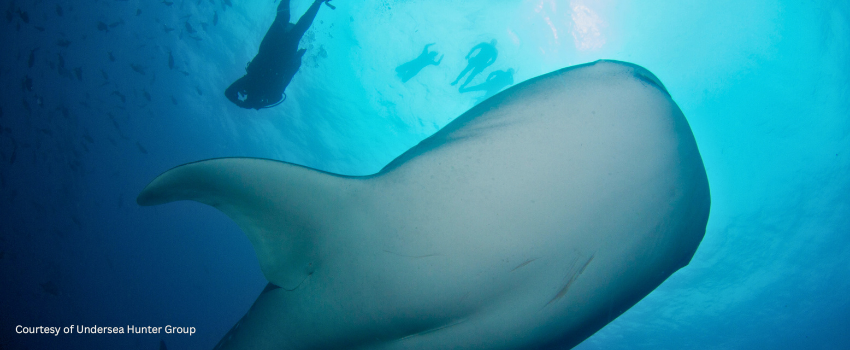
While hammerheads draw the crowds, Cocos Island diving has a cast of predators that most reefs cannot match. On a single dive, you may share the water with Galapagos sharks, silky sharks, and whitetip reef sharks stacked in crevices like driftwood. Marble rays cruise the seafloor in groups of five to twenty, their wingspans often exceeding two metres. At the cleaning stations, giant Pacific mantas glide through the thermal layers while eagle rays patrol the reef edges.
Scientists from National Geographic and the Waitt Institute documented 7.8 tonnes of fish per hectare in the nearshore waters of Isla del Coco National Park during a 2009 expedition. That is one of the highest concentrations in the tropics. Whale sharks pass through from June to August, their spotted bodies materialising out of the blue. Tiger sharks also show up more frequently now, first being reported in 2012 and spotted on nearly every expedition since.
Tuna streak past while schools of jacks turn in perfect unison. Galapagos sharks patrol the drop-offs with the confidence of animals in a protected sanctuary.
This is a fully functioning ocean ecosystem, a rarity in modern diving.
Reason 3: The Volcanic Foundation That Feeds Everything
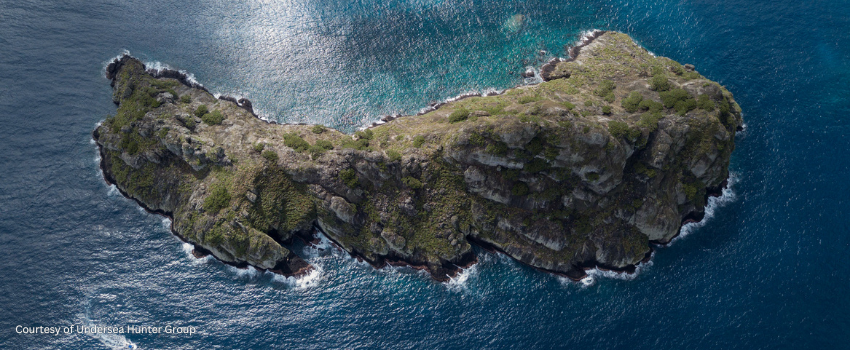
None of this happens by accident. Cocos Island is the only visible peak of the Cocos Ridge, a submarine mountain range stretching nearly 1000 kilometres from another Pacific hotspot, the Galápagos Islands. The island emerged from the ocean floor over two million years ago, born from volcanic activity that created the seamounts and pinnacles you dive today.
Bajo Alcyone, Dirty Rock, Dos Amigos. These are not coral reefs. They are volcanic rock formations draped in life, rising from the abyss like underwater skyscrapers. The currents hit these structures and deflect upward, funnelling nutrients and the plankton blooms that start the food chain. This upwelling is why you find cleaning stations at specific depths and why the predators stack in layers above the rock.
The North Equatorial Countercurrent pushes past the island year-round, carrying cold, nutrient-rich water from the depths. When that current hits the seamounts, it creates the conditions for mass aggregations. Divers feel it as thermoclines that drop the temperature from 27°C to 22°C in seconds, but the sharks feel it as a conveyor belt of food.
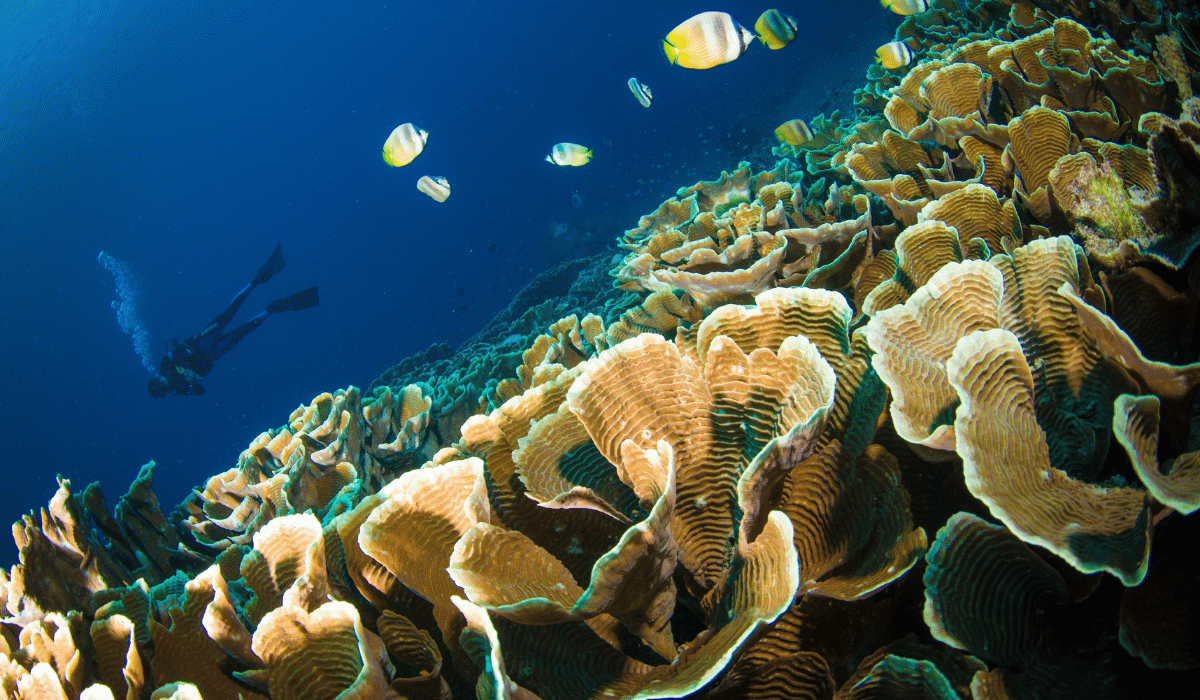
You do not need to be a marine biologist to read this landscape. Drop onto any Cocos Island dive site and look down. The rock is not bare. It is covered in coral, sea fans, and small fish that attract cleaners that, in turn, attract the sharks. The geology made this place, and effective protection keeps it intact.
Reason 4: Endemic Species You Find Only Here
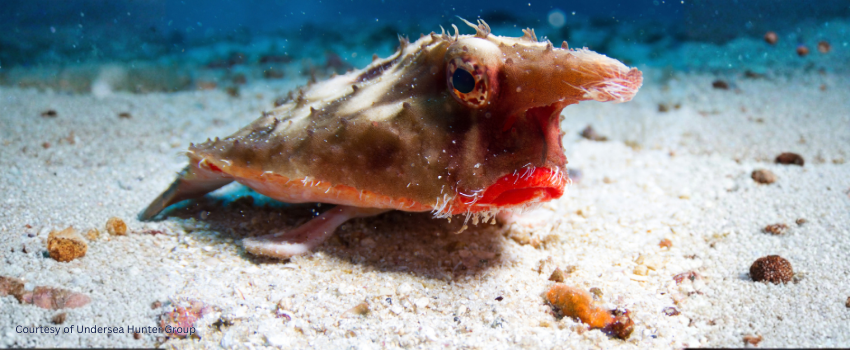
Diving Cocos Island means entering waters where 45 species of endemic marine life exist nowhere else on earth. The isolation that makes this place hard to reach also created conditions for life to evolve on its own timeline.
The rosy-lipped batfish is the one divers remember especially. It walks on its pectoral fins across the sand, its red mouth looking like a five year old who has found their mum’s lipstick for the first time. You see them near Dirty Rock and along the deeper slopes, usually perched motionless while currents push past. They are not why you cross 550 kilometres of open ocean, but they are proof that this ecosystem functions differently.
The island sits at a confluence of currents that carry larvae from the Galápagos, the eastern Pacific, and mainland Central America. Some species stayed, while others arrived and adapted to their new conditions. The result is a mix you cannot replicate anywhere else. Scientists have documented more than 70 endemic species of plants on land and 45 marine species. Even the freshwater fish, of which there are five, two of them exist only here.
When you surface from a dive at Bajo Alcyone, knowing you spent forty minutes surrounded by species that evolved in isolation for millennia adds something. Diving Cocos Island means swimming through waters that look like they did before humans figured out how to fish on an industrial scale.
Reason 5: A Platinum-Level Sanctuary
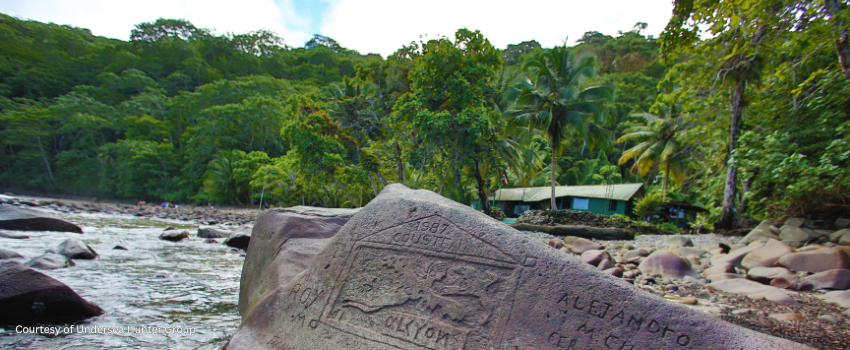
Cocos Island is not just another dive destination. It is one of the most protected marine environments on earth. In 2025, Cocos Island National Park received a Platinum-level Blue Park Award from the Marine Conservation Institute, the highest recognition for marine protected areas. Only the best-managed, most biodiverse sanctuaries earn this.
The numbers tell the story. The park spans 2011 square kilometres, including a 12 nautical mile no-take zone where fishing is strictly prohibited. Outside this buffer, the 9640-square-kilometre Marine Seamounts Management Area extends protection, allowing only artisanal fishing by Costa Rican vessels. Together, they safeguard 41.2 percent of the country’s marine endemic species.
This protection matters because Cocos sits at the intersection of major currents, a point of confluence that funnels nutrients and migratory species from across the Pacific. The island is part of the Eastern Tropical Pacific Marine Corridor, a conservation network connecting Cocos with Galápagos, Malpelo, and Coiba. Hammerheads, whale sharks, and sea turtles move along this submarine highway, and protecting one link protects them all.
Conclusion
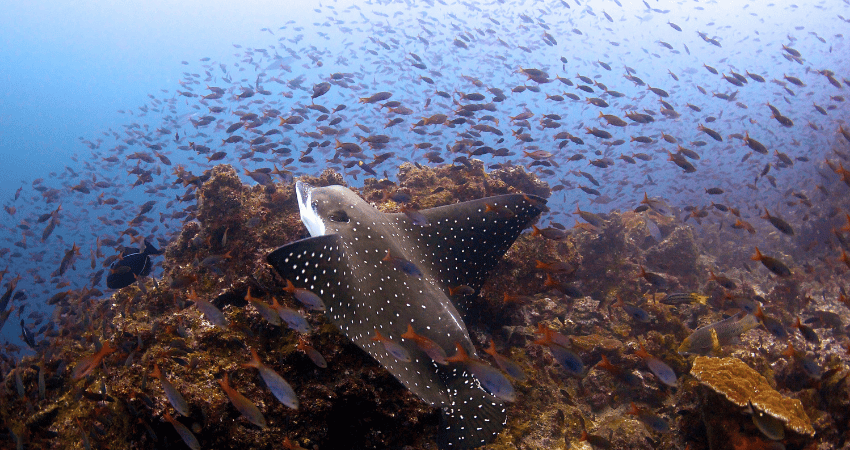
You cross 36 hours of open ocean to dive in Cocos Island, one of the best places to dive in Costa Rica. The boat rocks, the currents push hard, and the water drops in temperature without warning. You do it because the alternative is to be left wondering what it’s really like to drop onto a seamount surrounded by hundreds of hammerheads, or to watch marble rays cruise past in formation. You do it to spend a week inside an ecosystem that still functions the way it naturally evolved to.
Cocos Island is not for every diver. Beginners should go elsewhere. But for those with the experience and the patience, this is the reward. A UNESCO World Heritage site that delivers on every promise. A protected sanctuary where the biomass is dense enough to feel prehistoric. Cocos is a place that reminds you why you started diving in the first place.
-
 from$720 /day
Frequently Asked Questions About Dive in Cocos Island
Can I dive with whale sharks at Cocos Island?Divebooker Team2026-03-09T15:21:06+00:00Yes, from June to August, you can meet these huge creatures. Whale sharks pass through the area during the green season, often appearing at cleaning stations or cruising along the seamounts while divers watch from the rocks.
How do currents affect diving conditions at different Cocos sites?Divebooker Team2026-03-09T15:20:30+00:00At Bajo Alcyone, currents funnel over the seamount, requiring reef hooks to hold position. At Dirty Rock, the current pushes past vertical walls, creating a conveyor belt of sharks. Your dive guides brief each site based on the day’s flow.
Is there any way to see the island itself above water?Divebooker Team2026-03-09T15:20:03+00:00Short excursions to shore are sometimes offered at Chatham Bay or Wafer Bay, but landings are restricted and tightly controlled by park rangers. You are there for what is underneath, not what is above.
Do you need to carry a surface marker buoy on every dive?Divebooker Team2026-03-09T15:19:32+00:00Yes. While you dive in Cocos Island, currents can push you far from the boat during ascent. An SMB and reel are mandatory for blue-water safety. Most liveaboards check before every dive.
How many hammerheads can you actually see on a single dive?Divebooker Team2026-03-09T15:19:12+00:00Schools of 100 to 300 scalloped hammerheads are regularly reported at cleaning stations like Bajo Alcyone. The key is patience. Erratic divers spook them, whereas calm divers can be circled for the full bottom time.
Why is a dive in Cocos Island considered only for experienced divers?Divebooker Team2026-03-09T15:18:38+00:00Cocos Island is only suitable for advanced divers because it has strong currents, deep negative entries, often to 30 metres, and potential downcurrents that demand perfect buoyancy and comfort in the open ocean. Operators enforce minimum requirements of Advanced Open Water.