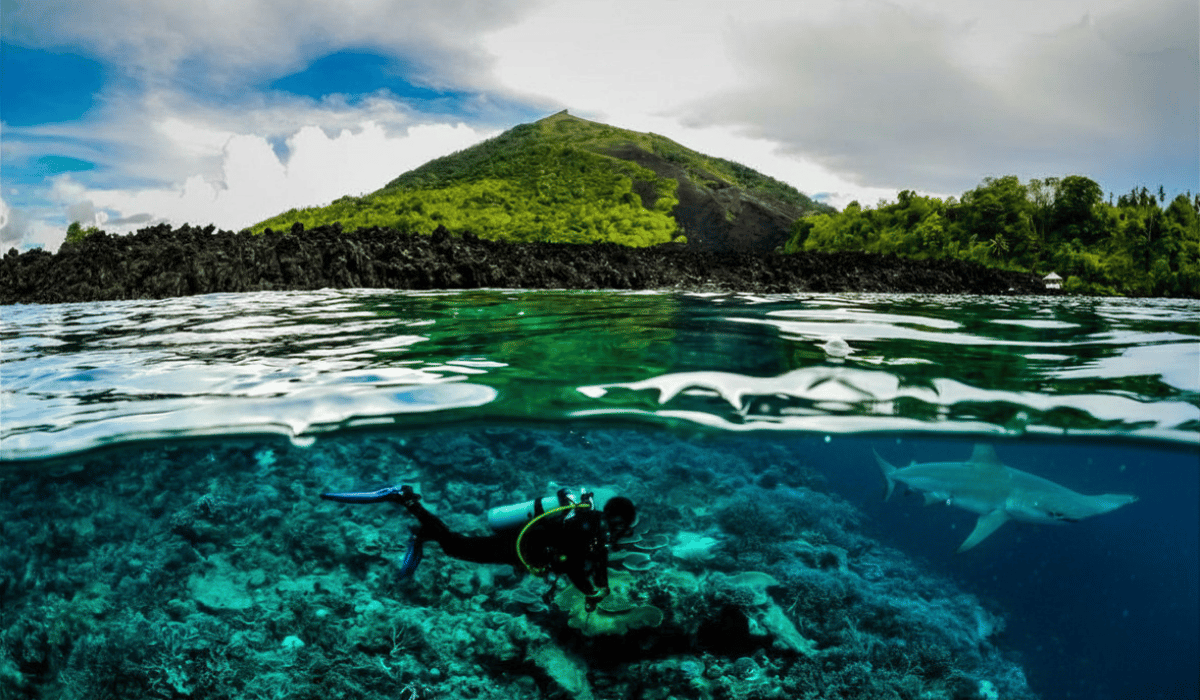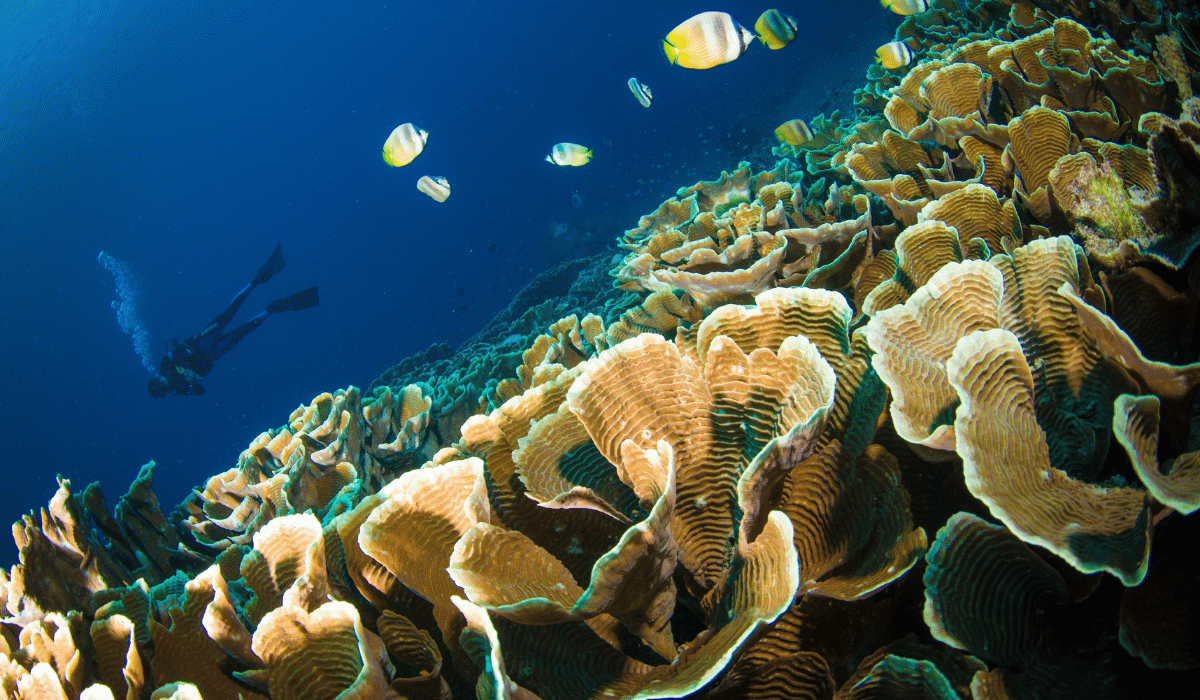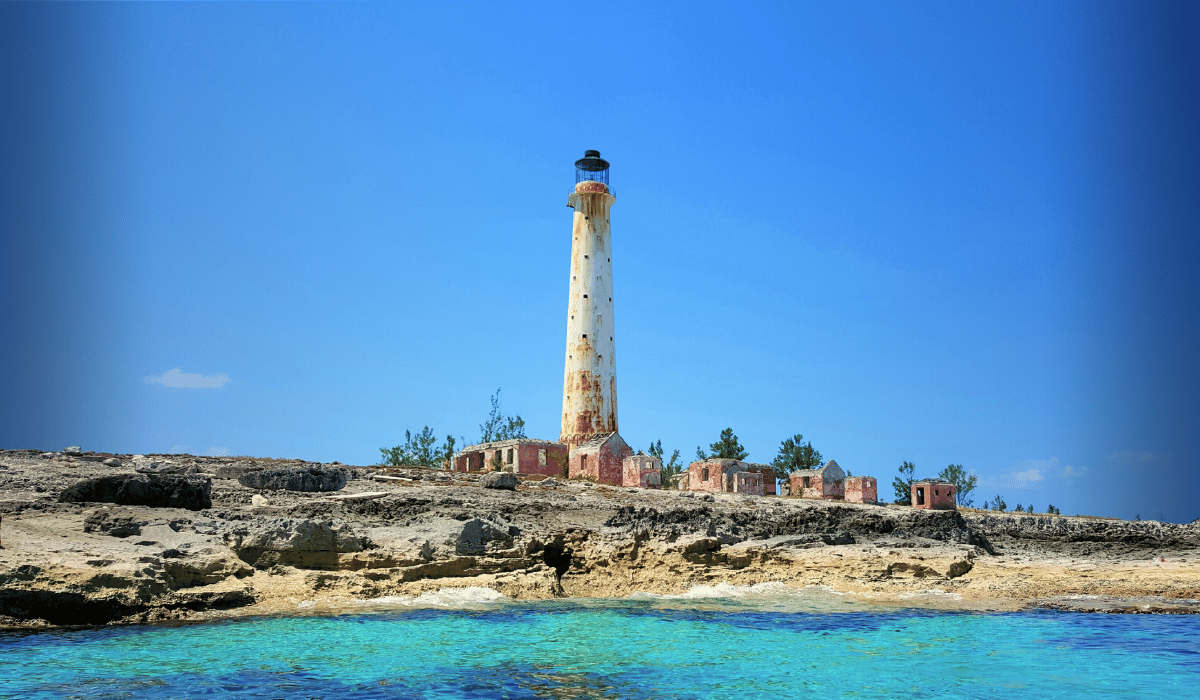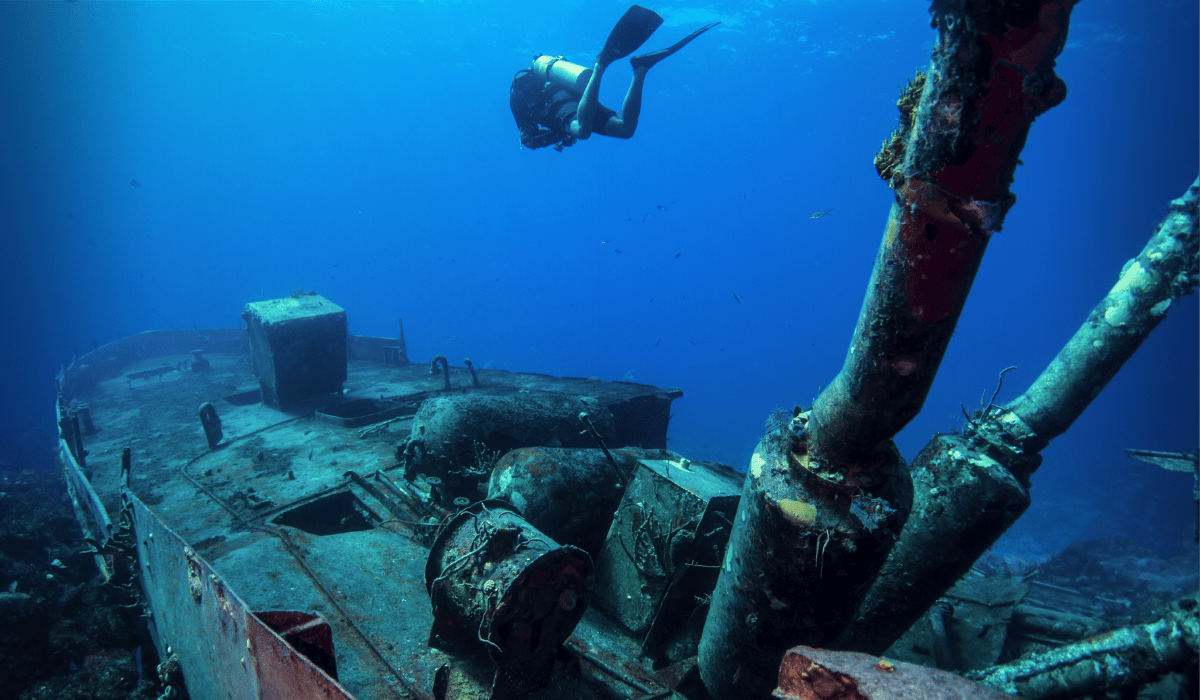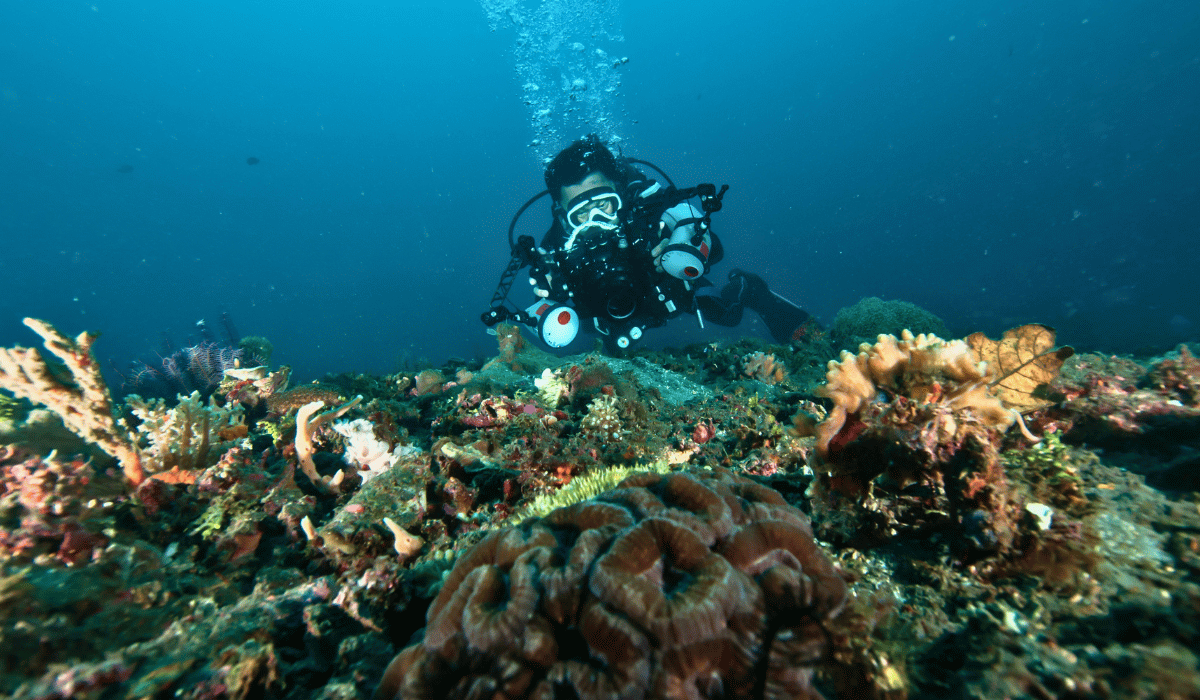
Indonesia has it all: colourful reefs, spectacular current-driven reefs, pelagics in the blue, and a whole lot more. But muck diving in Lembeh Strait is all about slowing down over volcanic sand, rubble, scattered debris, small coral patches, and wrecks until the bottom starts to move. A “leaf” becomes a scorpionfish, a sponge reveals a frogfish, and a patch of sand hides an octopus, shrimp, or nudibranch small enough to miss on any ordinary dive.
Often called one of the best places for muck diving in Indonesia, Lembeh rewards patient divers and underwater photographers who enjoy the strange, rare, and well-camouflaged side of marine life.
This guide explains what makes Lembeh so special, the best time to dive Lembeh, which dive sites to know, what kind of critters to look for, and how to choose the right trip style for a macro-focused Indonesia diving adventure.
Lembeh at a Glance
Administratively part of the Bitung area in North Sulawesi, Lembeh Strait is widely known for macro underwater photography and small, photogenic critters.
Lembeh is a destination for divers who enjoy slow, detail-focused dives. Instead of wide coral gardens or constant blue-water action, the strait is best known for shallow black-sand slopes, rubble patches, scattered debris, small wrecks, and sheltered sites where unusual Lembeh marine life hides in plain sight.
| Category | What to Expect |
|---|---|
| Best for | Muck diving, macro photography, rare critters, slow observation dives |
| Skill level | Best for intermediate to advanced divers with good buoyancy control |
| Best season | Generally, from April to November, though Lembeh can be dived year-round |
| Water temperature | Usually around 26–30°C / 79–86°F, depending on season and site |
| Typical depth | Mostly shallow macro dives; many subjects are found above 12 m / 40 ft |
| Typical subjects | Frogfish, nudibranchs, seahorses, octopus, cuttlefish, shrimp, pipefish, scorpionfish |
| Recommended training | Advanced Open Water and Nitrox |
| Main access point | Manado, with transfers toward Bitung and the Lembeh Strait area |
What makes Lembeh different is the pace. Many dives happen over seemingly plain sand or broken bottom, but that is exactly where the best finds appear. A good guide may stop the group over a patch of rubble that looks empty at first, then point out a frogfish, a tiny shrimp, or a perfectly camouflaged octopus within seconds.
For photographers, this is the appeal. In Lembeh, staying still usually produces more than covering lots of ground. Control your buoyancy, and give each subject time. The slower you dive, the more the Strait reveals.
What Is Muck Diving?
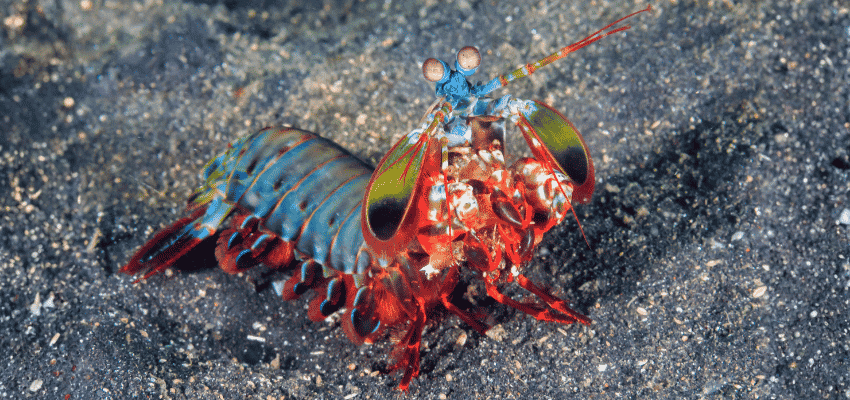
Muck diving means searching for marine life over sand, silt, rubble, seagrass, or volcanic slopes rather than classic coral reefs. It may not look impressive at first glance, but this kind of bottom is exactly where many of the ocean’s strangest small creatures live.
In Lembeh, muck diving usually means slow, shallow dives over black volcanic sand, rubble, discarded objects, small debris, and sheltered slopes. Look carefully. A patch of rubble that looks bare often holds something: a frogfish, a shrimp, a camouflaged octopus. These things can be almost invisible until a guide points them out.
Some Lembeh sites can look exactly like the word “muck” suggests. Bitung is a working port area, and over the years debris such as bottles, cans, tyres, and other discarded objects has ended up in the strait. It is not the polished image of tropical reef diving, but these messy habitats are often where the most unusual finds appear. A bottle, shell, tyre, or old container may already be home to an octopus, shrimp, goby, or other small animal.
Lembeh combines an environment built for camouflage with a culture of slow, patient, guide-led diving. Few places in Indonesia, or even the world, do it as well.
-
 from$390 /day
from$412 /day
from$315 /day
from$390 /day
from$412 /day
from$315 /day
Why Lembeh Strait Is So Good for Muck Diving
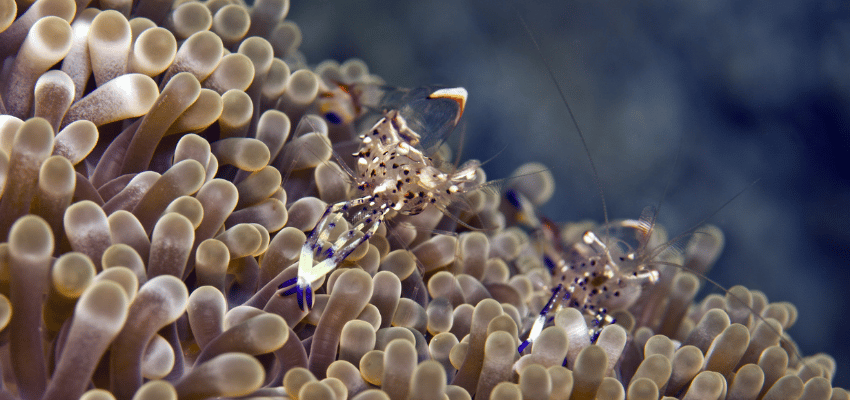
Lembeh’s muck-diving reputation comes from its unusual underwater landscape. The strait is shaped by volcanic black sand, sheltered bays, shallow rubble slopes, discarded objects, small coral patches, and wrecks. It is not always pretty in the classic tropical-reef sense, and that is part of the point: the plain, messy-looking bottom is exactly where Lembeh’s best macro life hides. For many divers, that may sound less attractive than a coral wall. For macro life, it is perfect.
The dark sand makes small colourful critters easier to spot, while the quiet slopes give them places to hide, hunt, and camouflage. This is why Lembeh is known for frogfish, nudibranchs, seahorses, octopus, cuttlefish, pipefish, shrimp, crabs, and other strange, well-camouflaged creatures.
The other advantage is the style of diving. Lembeh guides are used to slow, careful critter hunting. Instead of covering a long reef, dives often focus on a small area where the details matter. For underwater photographers, that patience is exactly what makes the Strait special.
Best Time to Dive Lembeh
Lembeh can be dived year-round, and the macro life is present in every season. The main difference is not what you can see, but how comfortable the conditions feel: surface weather, water temperature, visibility, and how warm you want to be between repetitive dives.
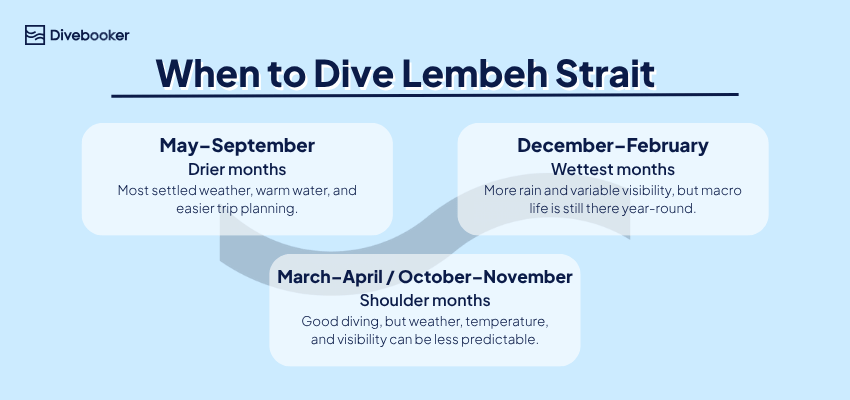
Dry Season: May to September
This is usually the most straightforward window for first-time Lembeh visitors. Conditions are generally more settled, rain is lower, and dive planning is usually easier. Visibility is still “muck diving visibility,” not open-ocean clarity, but it is normally enough for macro photography and relaxed critter hunting.
- Water temperature: around 26–29°C / 79–84°F
- Visibility: often 5–15 m / 16–50 ft
- Best for: first-time Lembeh visitors, macro photographers, liveaboard routes, and divers who want more stable weather
Shoulder Months: March–April and October–November
The shoulder months sit between the main dry and wet patterns, so conditions can be less predictable. They can still be excellent for Lembeh, but divers should expect more variation in rain, visibility, and temperature than in the driest months. For many macro photographers, this is still a strong choice because the critters are there year-round and there are fewer divers.
- Water temperature: around 25–28°C / 77–82°F
- Visibility: usually moderate, often 5–15 m / 16–50 ft
- Best for: flexible divers, photographers, and repeat visitors who do not mind changing conditions
Wet Season: December to February
The wettest months can bring more rain and reduced visibility, especially after heavy showers. That does not mean the diving stops. Lembeh’s shallow muck sites do not depend on perfect blue water, and many of the best subjects are found close to the bottom. For flexible divers, the wet season can still deliver excellent macro dives.
- Water temperature: around 27–30°C / 81–86°F
- Visibility: variable; can be reduced after rain
- Best for: flexible divers, repeat visitors, and photographers who care more about subjects than visibility
For the best trip, choose the season based on weather comfort, visibility expectations, and how many repetitive dives you want to do each day. The critters don`t disappear in one month and return in another.
If you are comparing seasonal options across destinations, see Divebooker’s guide to the best places to scuba dive each month.
Where to Dive in Lembeh Strait
Lembeh’s dive sites are close together, but the strait itself is the real attraction. You can drop into many shallow areas of black sand, rubble, and debris and still find excellent macro life with the right guide. Some sites are known for classic muck slopes, while others add wrecks, small coral patches, or night-dive potential.
Dive Site Best For Hairball Classic black-sand muck diving, frogfish, seahorses, cuttlefish, and night-dive surprises Jahir Slow critter hunting on a classic Lembeh muck site Nudi Falls Macro subjects with a more mixed reef-and-slope feel Police Pier Night diving and nocturnal creatures Mawali Wreck WWII wreck structure with nudibranchs, frogfish, scorpionfish, leaf fish, and other macro life Critter Hunt Patient guide-led searching for small, well-camouflaged animals Tanjung Kusu Pipefish, seahorses, and small macro subjects. If the Mawali Wreck is what catches your attention, you may also enjoy our guide about the best destinations for wreck diving.
Other Lembeh sites that may appear on routes include TK / TK3, Aer Bajo, Angel’s Window, Nudi Retreat, Retak Larry, Aer Perang, and Makawide. Exact sites can change depending on weather, currents, diver experience, and liveaboard routing.
Pro Tips for Muck Diving in Lembeh
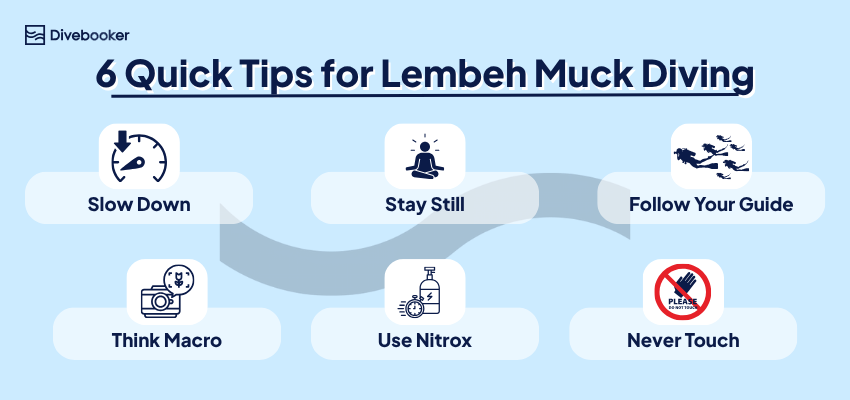
It’s worth repeating, Lembeh is best when you slow down. Many of the most interesting subjects are tiny, still, or perfectly camouflaged, so covering less ground usually leads to better encounters.
Work on buoyancy before the trip. Good trim keeps you off the sand and prevents silt from ruining visibility for you, your guide, and other photographers.
Follow your guide’s pace. Lembeh guides are used to spotting animals that most divers would swim past, and that requires a little more time and patience.
Use Nitrox if available. It is useful on repetitive dive days, especially when doing three or four dives.
Bring a dive light. Even during the day, a focused light helps reveal colour and detail on small subjects.
For photographers, think macro first. A macro lens, stable position, patient approach, and careful lighting are more important than chasing every subject.
Do not touch or move animals, and do not automatically remove debris. In Lembeh, bottles, cans, tyres, shells, and other objects may already be home to octopus, shrimp, gobies, or other small animals. Avoid touching marine life, keep your fins off the bottom, and never move a subject or its shelter for a photo.
The best Lembeh dives often happen when you stop looking for everything at once and focus on one small patch of sand, sponge, or rubble.
Practical Information for Planning a Lembeh Trip
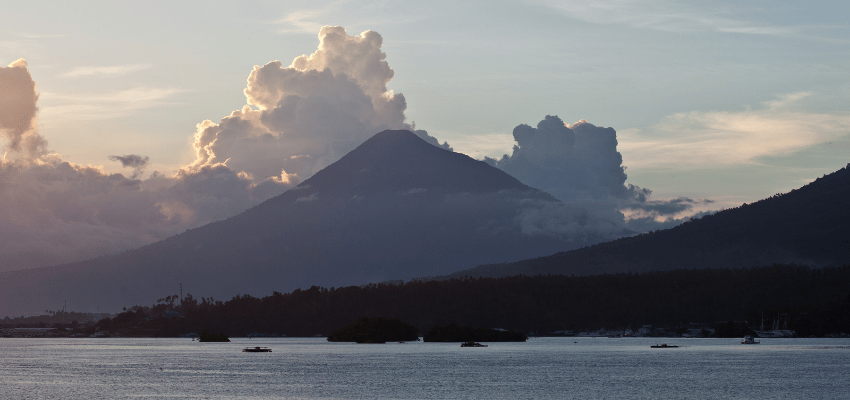
Most Lembeh trips begin with a flight to Manado, followed by a transfer to Bitung and the Lembeh Strait area. Some liveaboards start or end directly around Bitung or Manado, while longer Indonesia routes may combine Lembeh with Halmahera or Raja Ampat.
If Lembeh is part of a wider route, read more about diving on the liveaboard in Indonesia before choosing your itinerary.
If macro sightings are at the top of your list, choose an itinerary with enough time in Lembeh itself. One or two check dives can give you a taste, but several days allow more chances for unusual critters, night dives, and better photography conditions.
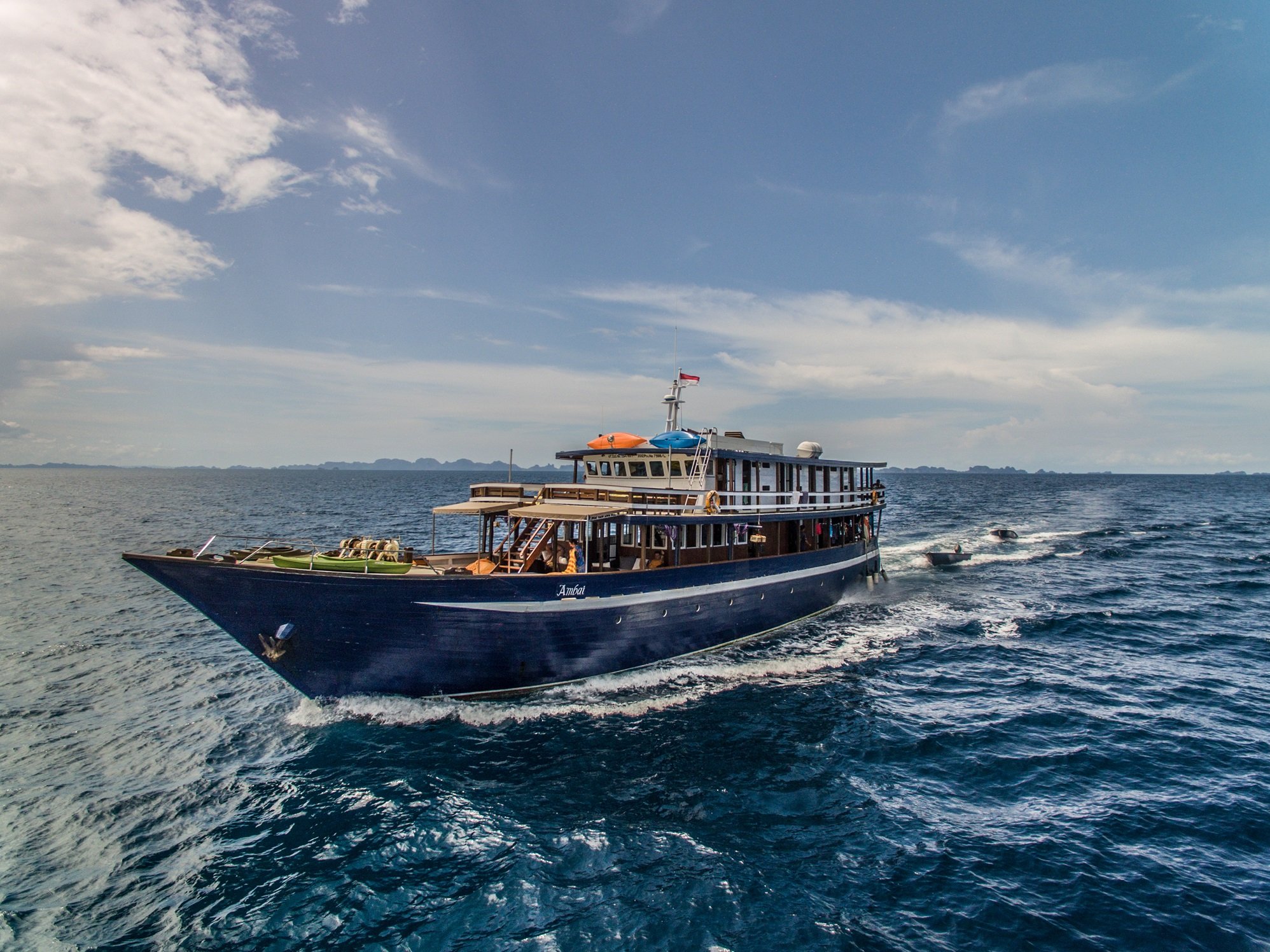
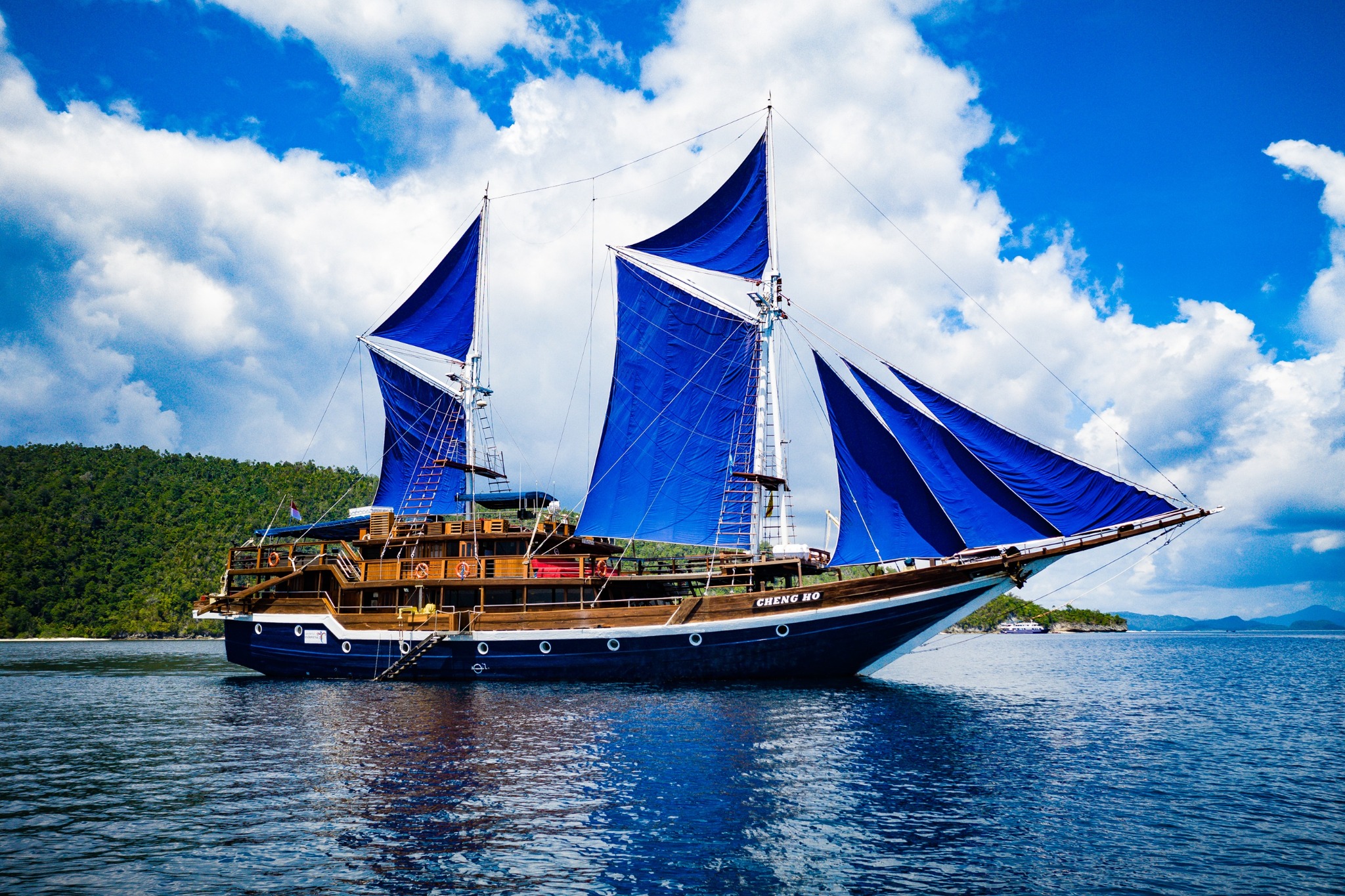
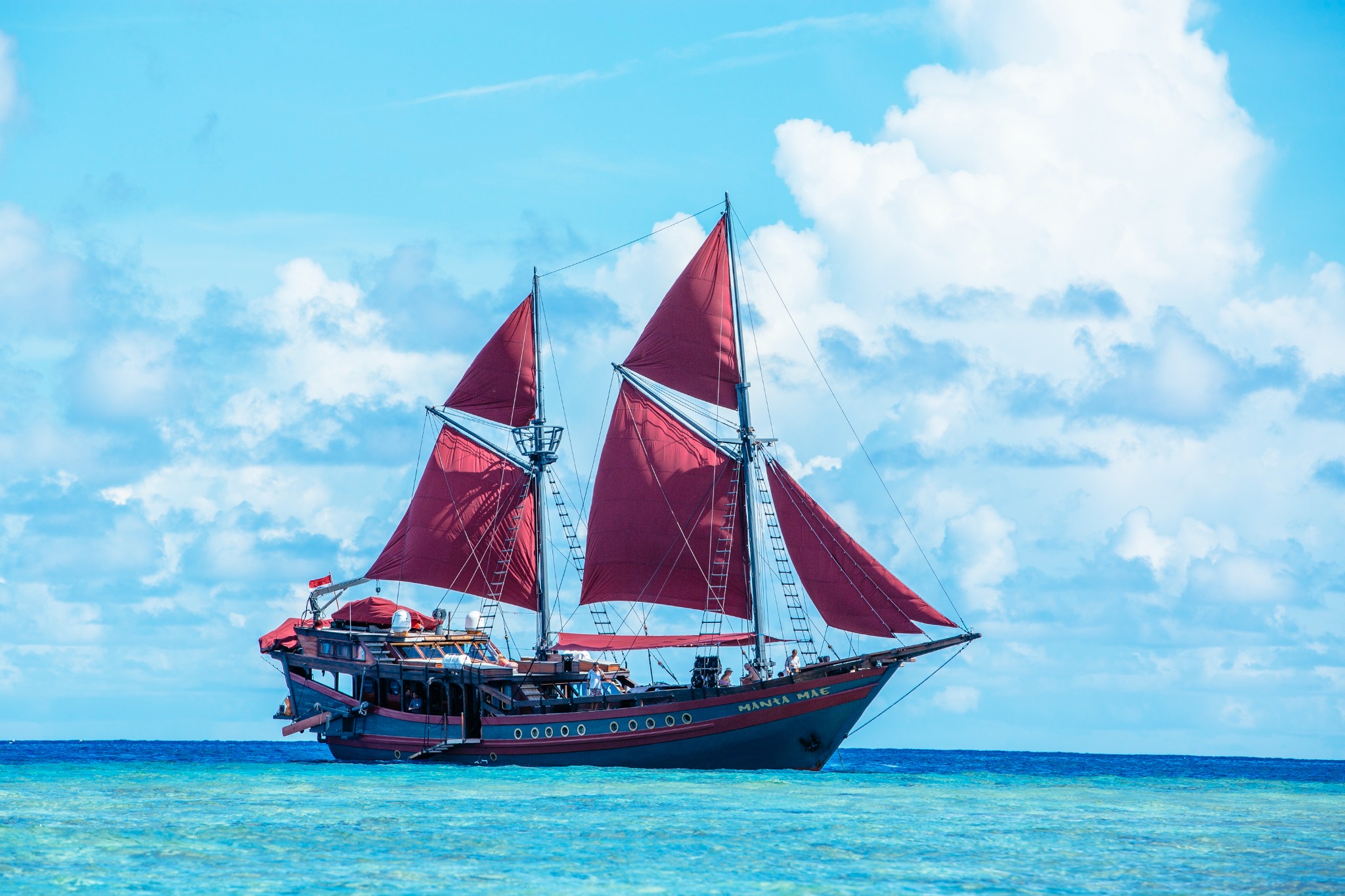
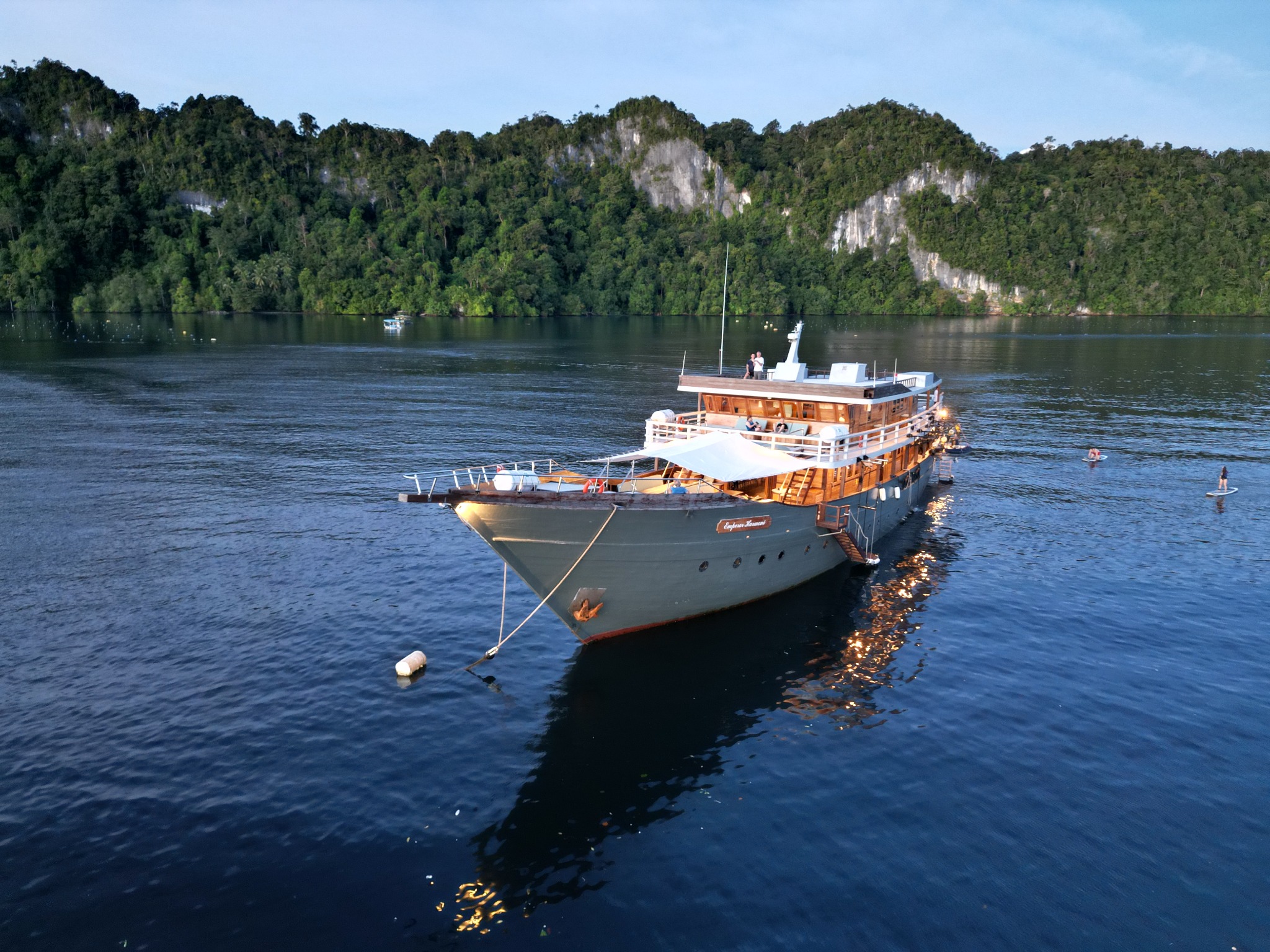
Several Indonesia liveaboards include Lembeh or North Sulawesi in wider routes. Depending on the season and itinerary, options may include Carpe Diem Phinisi, White Manta, Indo Master, Mermaid I, Wellenreng, or Ambai. Always check how many dives are planned in Lembeh itself, as some routes use the strait as a macro highlight within a broader itinerary.
Before booking, check:
- how many dives are planned in Lembeh itself;
- whether night dives are offered;
- if Nitrox is available;
- whether the route starts or ends in Manado, Bitung, Sorong, Ternate, or another port;
- what certification and experience level the operator recommends.
Conclusion
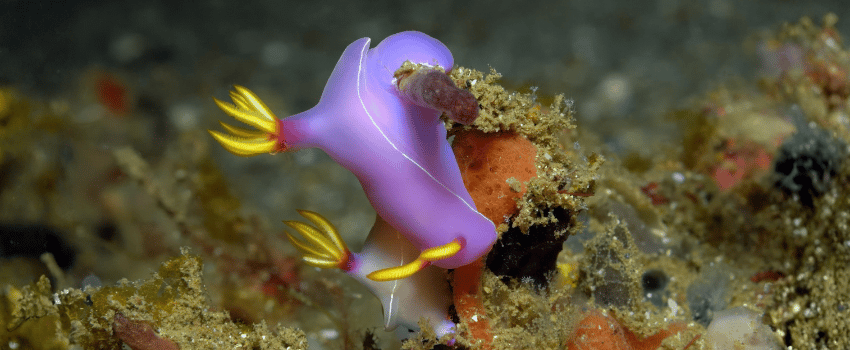
Muck diving in Lembeh is all about patience, sharp eyes, and time spent close to the bottom. The strait may look quiet and sometimes messy at first, but its black sand, rubble slopes, reef patches, and wrecks hide some of Indonesia’s most unusual marine life. For divers who enjoy frogfish, octopus, nudibranchs, seahorses, shrimp, and other small subjects, Lembeh is one of the most rewarding places to slow down and look closer.
Whether you choose a dedicated Lembeh trip or a wider North Sulawesi liveaboard route, give yourself enough dives to settle into the pace. The longer you spend here, the more the Strait reveals.
Frequently Asked Questions about Lembeh Muck Diving
Are critter sightings guaranteed in Lembeh?Divebooker Team2026-06-15T13:11:34+00:00No. Lembeh has a strong reputation for rare macro life, but all wildlife encounters depend on conditions, season, recent local sightings, and guide experience. The best approach is to bring a wish list, stay flexible, and enjoy whatever the Strait reveals
Can I combine Lembeh with other dive areas?Divebooker Team2026-06-15T13:11:16+00:00Yes. Some Indonesia liveaboards include Lembeh as part of wider itineraries, often combining the strait with areas such as Halmahera or Raja Ampat.
What marine life can I see in Lembeh?Divebooker Team2026-06-15T13:10:50+00:00Common targets include frogfish, nudibranchs, seahorses, flamboyant cuttlefish, mimic octopus, shrimp, crabs, pipefish, scorpionfish, leaf fish, and other camouflaged critters. Sightings are never guaranteed, but Lembeh is known for an exceptional variety of unusual macro life.
Do I need Nitrox for diving in Lembeh?Divebooker Team2026-06-15T13:10:05+00:00Nitrox is not always required, but it is useful. Lembeh trips often include several dives per day, and Nitrox can help manage repetitive dive profiles, especially for divers planning long macro dives or multiple photography dives.
Is Lembeh suitable for beginner divers?Divebooker Team2026-06-15T13:09:43+00:00Lembeh is better for intermediate and experienced divers because good buoyancy control is important. Many dives take place over sand or silt, where poor finning can reduce visibility and disturb marine life. Confident newer divers can still enjoy Lembeh with a careful guide and relaxed conditions.
When is the best time to dive Lembeh?Divebooker Team2026-06-15T13:09:12+00:00Lembeh can be dived year-round, and the macro life is present in every season. The main difference is weather comfort: rain, visibility, water temperature, and how warm you feel between repetitive dives. The drier months are usually easier for first-time visitors, while shoulder and wet-season trips can still be excellent for flexible divers.
What is muck diving in Lembeh Strait?Divebooker Team2026-06-15T13:08:42+00:00Muck diving in Lembeh Strait means searching for small and unusual marine life over black volcanic sand, rubble, reef patches, and sheltered slopes. It is slower than typical reef diving and focuses on macro subjects such as frogfish, nudibranchs, octopus, seahorses, shrimp, crabs, and pipefish.