- Ways to Explore the Galápagos Underwater
- Galápagos Liveaboard Diving: The Ultimate Expedition
- Land-Based Diving in the Galápagos: Flexibility & Island Immersion
- Side-by-Side: Choosing Your Galápagos Diving Style
- Conclusion
- Frequently Asked Questions about Galápagos Liveaboard Diving and Galápagos Land-Based Diving
The dream of Galápagos diving tours presents every diving enthusiast with a fundamental choice. Will you journey by liveaboard to the remote, shark-rich frontiers of Darwin and Wolf, or explore from shore, blending world-class dives with the archipelago’s iconic terrestrial wonders?
This isn’t just an “either/or” decision; it’s a choice between two fundamentally different philosophies of adventure.
This guide isn’t about convincing you which is better, that will always come down to preference.. It’s about providing a clear, accurate comparison between the two main paths: the immersive expedition of Galápagos liveaboard diving and the flexible adventure of land-based diving in the Galápagos.
We’ll cut through the hype to compare wildlife, cost, skill requirements, and daily routines, helping you choose the Galápagos dive adventure that aligns best with your skills and dreams.
Ways to Explore the Galápagos Underwater
Before we dive into the details, it’s essential to understand the three distinct paths that bring you on your Galápagos diving tour. Your choice among them fundamentally shapes your trip’s rhythm, style, and overall experience.
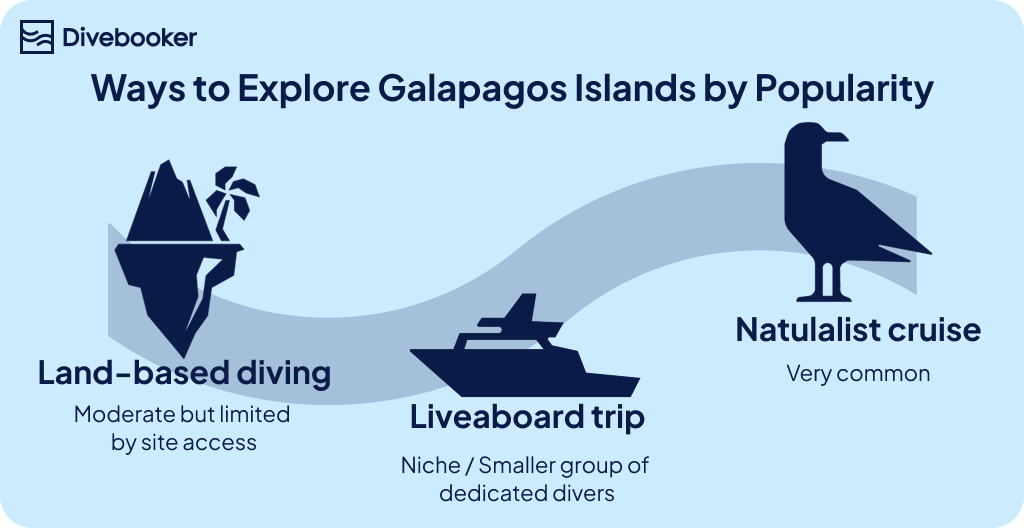
- The Diving Liveaboard: This is a dedicated expedition vessel for scuba divers. Your home for several days and nights is a moving basecamp designed to access the archipelago’s most remote and wildlife-rich sites, including the famed Darwin and Wolf Islands. It’s a trip defined by pelagic action and total immersion in diving.
- Land-Based Daily Diving: Centered from towns like Puerto Ayora on Santa Cruz, basing yourself on land requires day boats to reach spectacular local sites. this allows you to do Galápagos diving without cruise and offers a balance of world-class scuba diving Galápagos reefs and pinnacles with the freedom to explore the islands’ terrestrial wonders at your own pace.
- The Naturalist Cruise (with Snorkeling): These multi-day cruises focus on comprehensive Galápagos exploration via guided island hikes, panga rides, and snorkeling. While not focused on scuba, they offer incredible underwater access for snorkelers and are ideal for mixed groups or those prioritizing topside wildlife viewing.
In the following sections, we’ll dissect the options in detail, giving you the clarity to choose the best Galápagos diving tour for you.
To better understand the dive sites, conditions, and marine life you can expect in each area, our Ultimate Guide to Galapagos Islands Diving offers essential background.
Galápagos Liveaboard Diving: The Ultimate Expedition
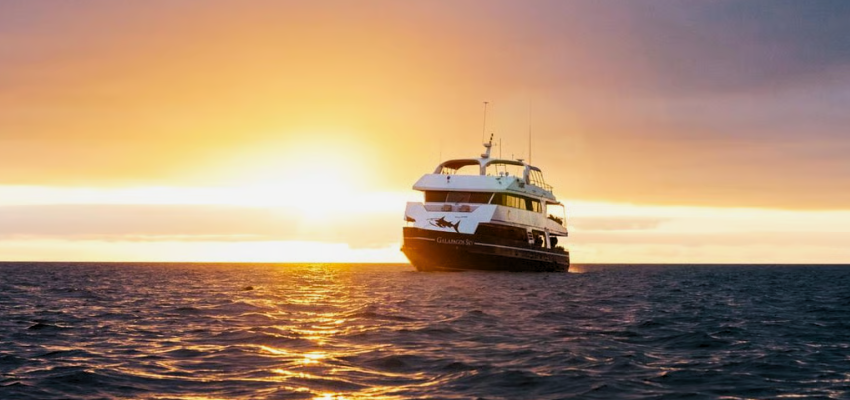
Choosing a Galápagos liveaboard is the definitive choice for divers seeking the archipelago’s raw, pelagic heart. It transforms a diving trip into a continuous blue-water odyssey. On a boat, your world is the dive deck and the horizon, dedicated to accessing the most remote and prolific underwater theaters on the planet, far beyond the reach of day boats.
A Day in the Life on a Galápagos Dive Liveaboard
The routine of a Galápagos Liveaboard Diving day moves constantly between anticipation, action, and awe, all the while maximizing your time beneath the surface. Be aware, each day begins before dawn, with the soft aroma of coffee wafting through the salon as you gather for the first briefing.
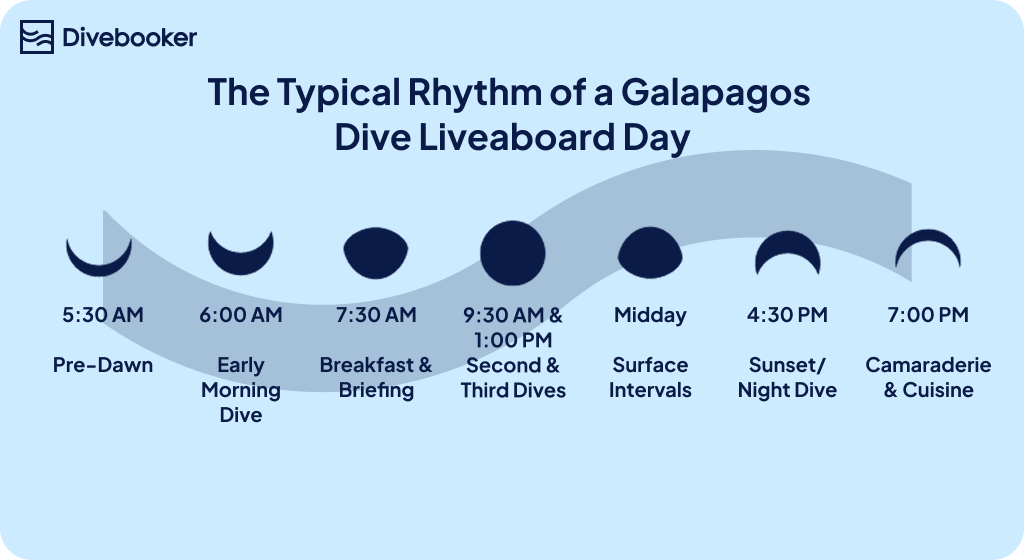
A typical day unfolds in a rewarding, familiar pattern:
- Briefing and Early Morning Dive: A sunrise descent, often at a current-swept pinnacle when the feeding action is at its peak.
- Breakfast & Briefing: A hearty meal followed by a detailed briefing from your expert dive guide, covering topography, expected currents, and target species for the rest of your day.
- Second & Third Dives: The heart of the day—exploring deep walls, turbulent channels, and vibrant reefs.
- Surface Intervals: This is the time to recharge on deck, share stories, and watch for soaring frigate birds.
- Sunset or Night Dive: Depending on your itinerary, an optional fourth dive reveals nocturnal creatures on calmer days.
- Camaraderie & Cuisine: Meals and presentations reliving the day’s encounters and previewing tomorrow’s sites.
The liveaboard is a self-contained universe focused on diving. It removes all logistical friction; your gear is set up, tanks are always filled, and the next adventure is literally on the horizon.
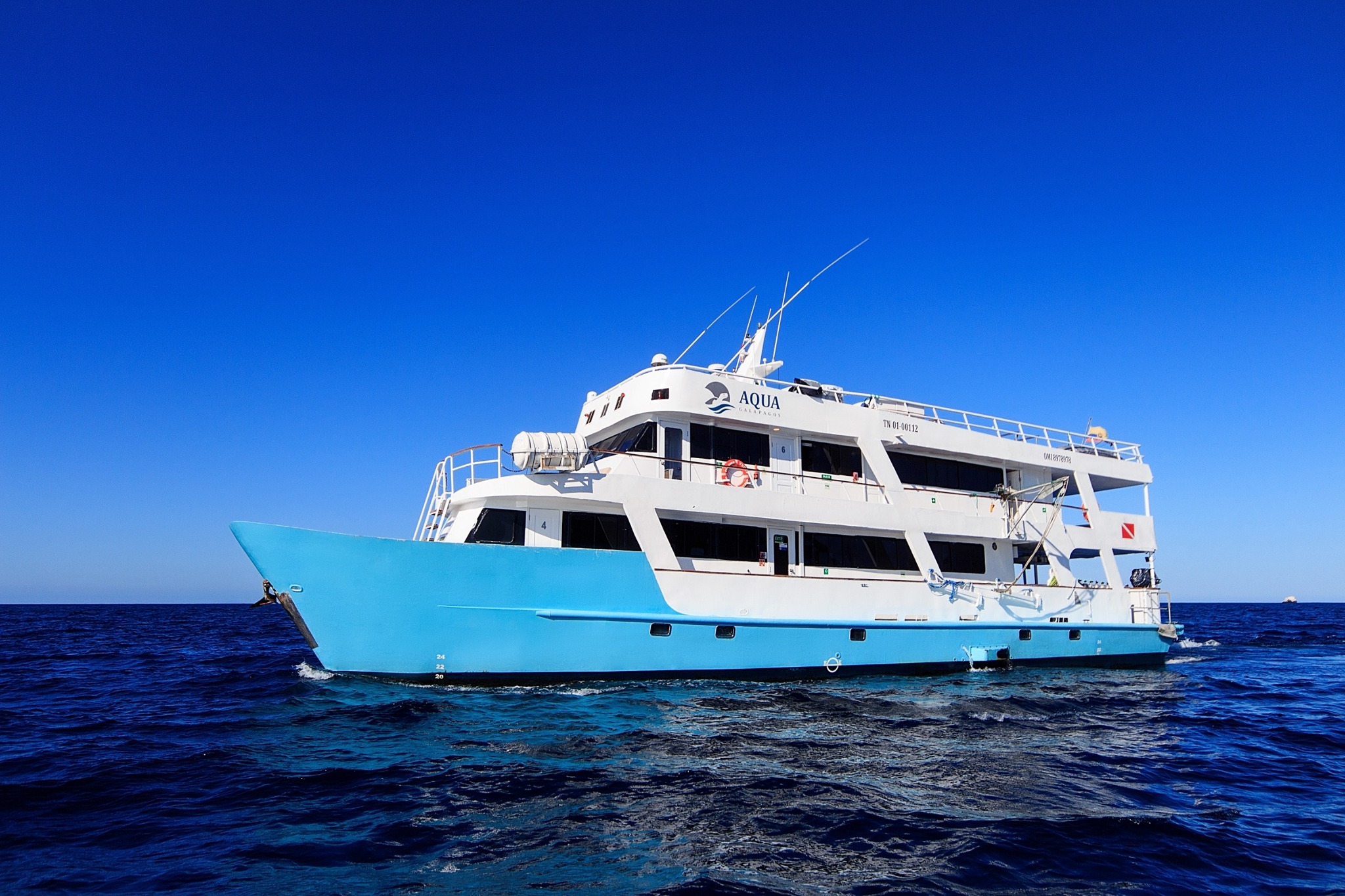
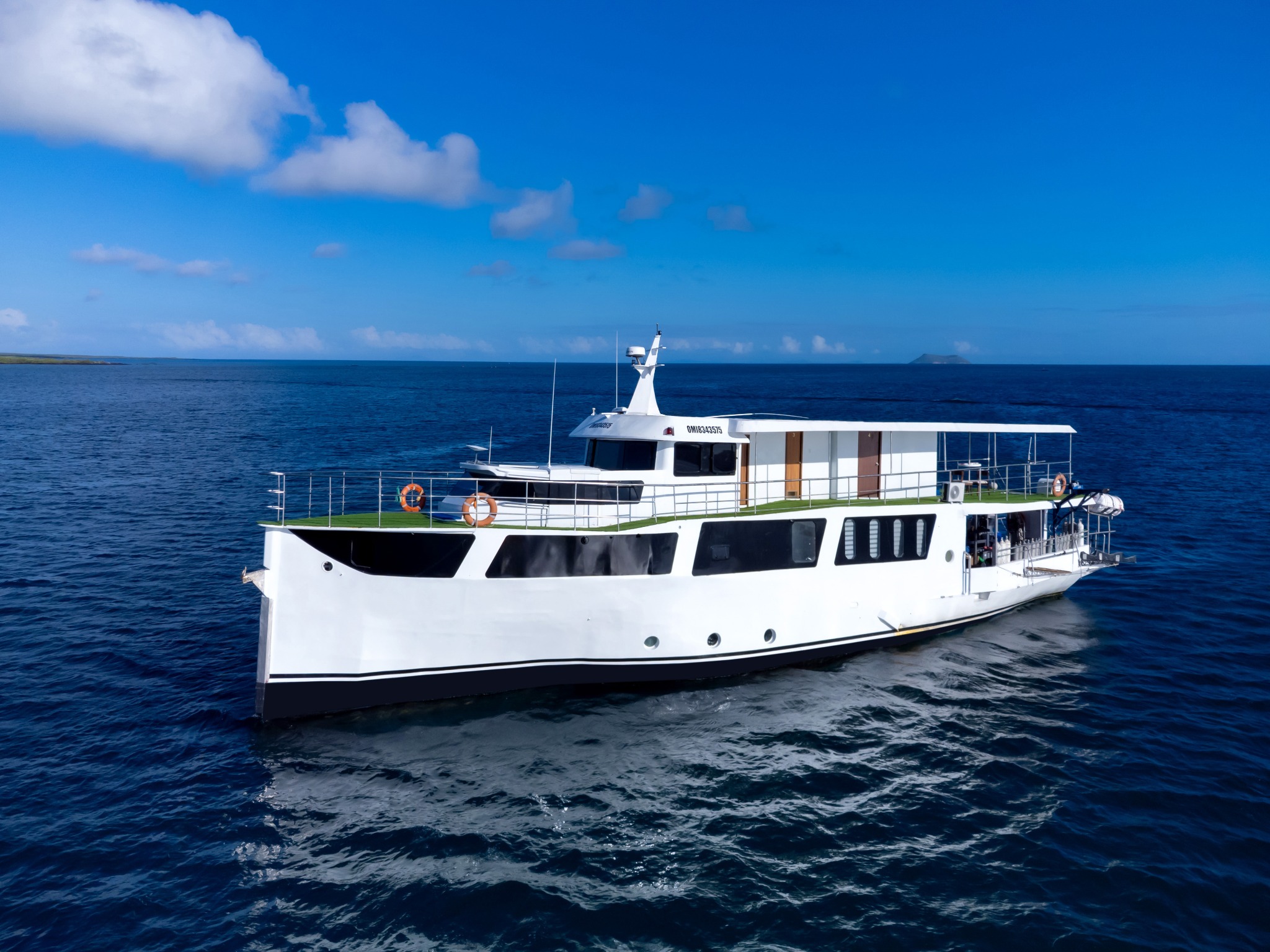
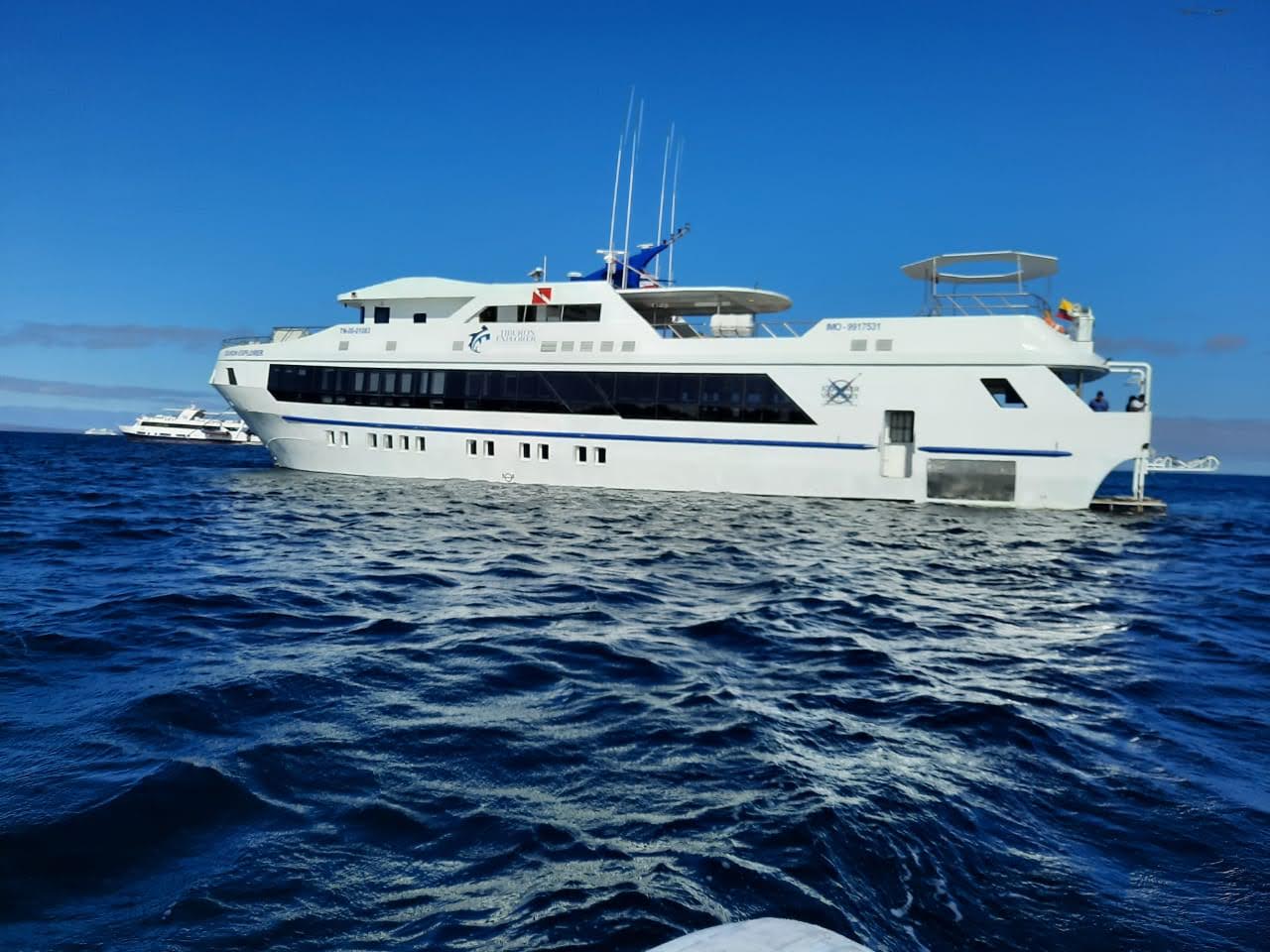
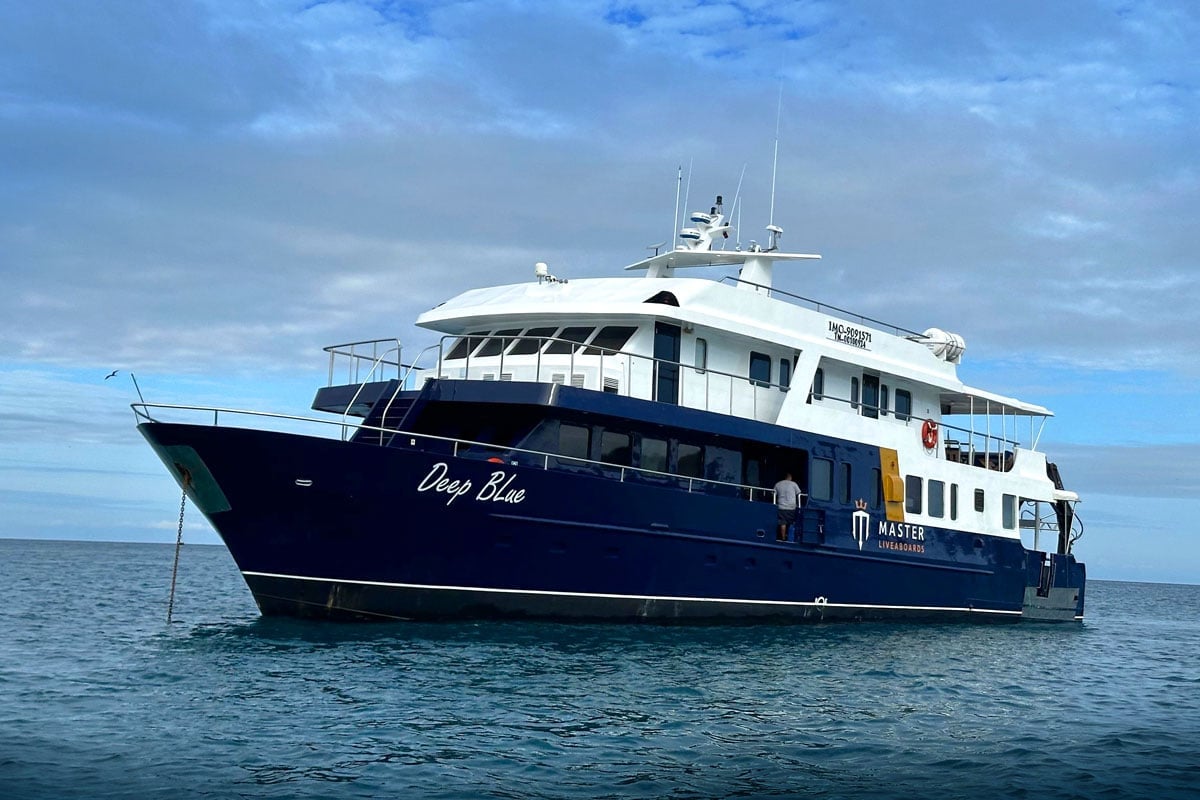
Galápagos dive boats like the Galápagos Master, Galápagos Sky, and Humboldt Explorer are built for this mission, offering stable platforms, dedicated dive decks, and crews specializing in advanced diving logistics.
The Routes of Legend: Darwin, Wolf & the Remote West
The true magic of the Galápagos liveaboard diving experience is geographic reach. Land-based boats simply cannot access the far northern islands, which are the crown jewels of the Pacific.
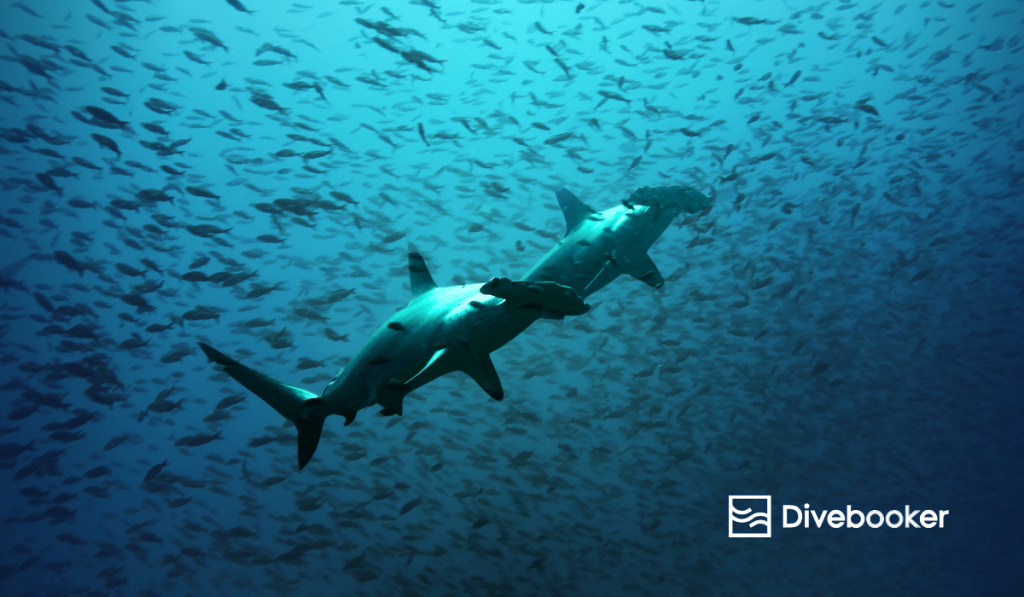
- Darwin Island: The undisputed pinnacle of Galápagos shark diving. Beneath the iconic Darwin’s Arch (now a pair of pillars), currents sweep nutrient-rich waters over rocky plateaus, attracting vast schools of scalloped hammerheads, silky sharks, and jacks. From June to November, this is also one of the planet’s most reliable spots for encountering gentle whale sharks in Galápagos, gliding through the deep blue.
- Wolf Island: Darwin’s dramatic partner. While less vertical, Wolf’s waters are densely packed with life. You’ll find Galápagos sharks, hammerheads, and massive schools of barracuda and tuna. Eagle rays and turtles glide past, and surfacing intervals are often punctuated by pods of dolphins approaching the boat.
- The Western & Central Circuit: Itineraries also feature world-class sites within the main archipelago, such as Cabo Douglas for unique marine iguana feeding behavior and Punta Vicente Roca for incredible macro life and mola mola.
This expedition style is best suited for advanced divers (with 50+ logged dives recommended) comfortable with variable diving conditions, including strong currents, cooler water (requiring a 7mm wetsuit or thicker), and occasional surge. It is the ultimate bucket-list trip for those seeking the most intense, pelagic-focused scuba diving Galápagos has to offer.
Activities on a Dive Liveaboard: More Than Just Tanks
The experience extends beyond the dive deck. Quality vessels enhance the journey with curated topside activities that showcase the islands’ full splendor.
- Snorkeling: Guided snorkeling sessions in sheltered bays offer close encounters with sea lions, penguins, and turtles.
- Kayaking & Panga Rides: Explore rugged coastlines and observe birdlife from a unique, silent perspective.
- Island Landings and Hiking: Guided walks on designated trails reveal the iconic terrestrial wildlife, from giant tortoises to flightless cormorants.
Choosing a Galápagos boat means investing in an all-inclusive safari where the focus is non-stop, world-class diving, complemented by the unique landscapes that make the archipelago a UNESCO treasure.
Land-Based Diving in the Galápagos: Flexibility & Island Immersion
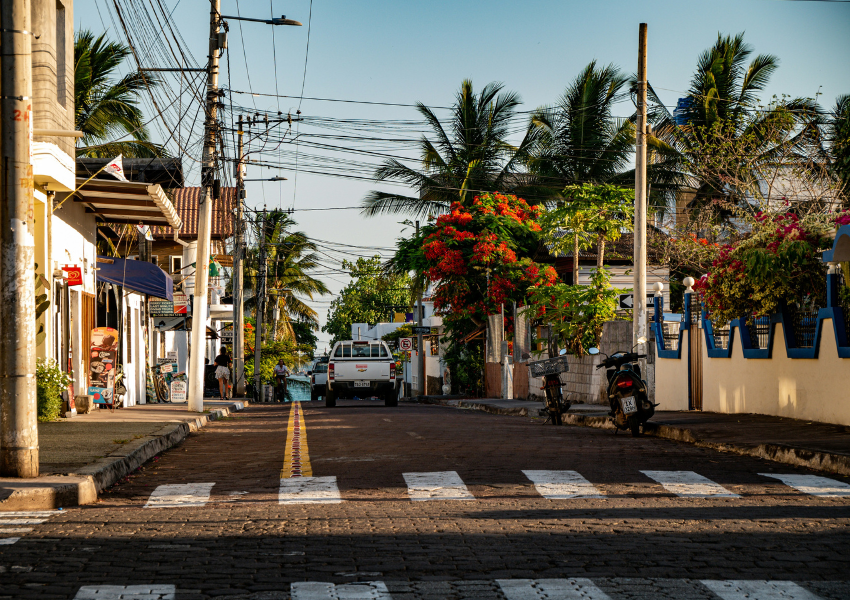
Land-based diving in the Galápagos roots your adventure in the islands themselves, using towns like Puerto Ayora on Santa Cruz or Puerto Baquerizo Moreno on San Cristóbal as your home base. Your diving becomes one vibrant thread in a richer tapestry that includes highland cloud forests, tortoise reserves, and lively local communities.
This style of trip is defined by freedom and balance. You trade the relentless blue-water for the ability to craft your own daily adventure: a thrilling two-tank dive in the morning followed by an afternoon hiking among giant tortoises or savoring local ceviche on the waterfront.
How Daily Dive Tours Work in Galápagos?
The rhythm of land-based diving is one of delightful daily excursions. After breakfast at your hotel, you’ll take a short taxi ride or walk to the local dive center to meet your guide and small group for the day.
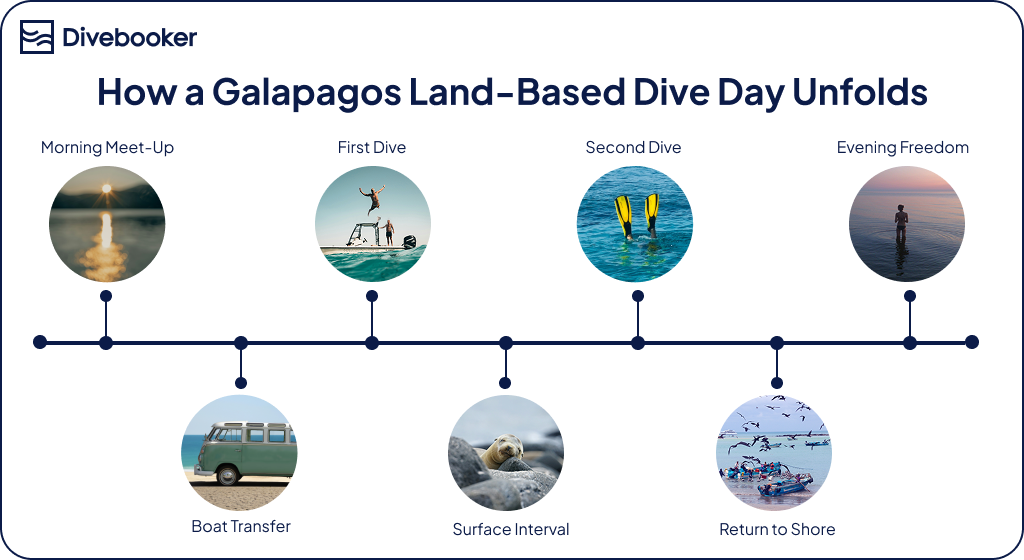
Here’s what to expect:
- Morning Preparation: You’ll meet around 8 AM for a briefing, gear up, and load onto a sturdy, fast panga (dive skiff) or mid-sized dive boat. The journey to sites can range from a quick 20-minute hop to a more adventurous 1.5-hour crossing.
- Two (or Three) Tank Dives: Most day trips include two dives at a single location or two different sites, with a surface interval on board where snacks and drinks are provided. Some operators offer three-tank trips to specific areas.
- The Return & Flexibility: You’re typically back on shore by mid-to-late afternoon. This leaves your evening free to explore, relax, or add on another activity. The schedule is yours to command, allowing for rest days, island-hopping tours, or simply enjoying the unique atmosphere of the Galápagos.
This model provides plenty of flexibility and is less physically taxing than a diving vessel’s intense schedule, making it an excellent option for divers who prefer a balance between underwater exploration and topside discovery.
Signature Galápagos Shore-Accessible Sites: Gordon Rocks & More
While you won’t reach Darwin and Wolf, the dive sites accessible from Santa Cruz and San Cristóbal are still nothing short of spectacular. These locations offer a concentrated dose of the Galápagos’ iconic marine life and dramatic topography.
- Punta Carrion: Located near Santa Cruz, this sheltered site showcases the archipelago’s incredible biodiversity. It’s a macro paradise where you can find frogfish, colorful nudibranchs, and blennies tucked into coral formations, offering a wonderful contrast to the pelagic-focused sites.
- Gordon Rocks: This submerged volcanic crater is often called “the mini Darwin.” Its deep channels are famous for strong currents that attract schooling hammerhead sharks, Galápagos sharks, and eagle rays, delivering an advanced dive experience closer to shore.
- Cousin’s Rock: A pinnacle renowned as a macro photography paradise, bursting with critters like seahorses, frogfish, and octopus, often with Galápagos sharks, penguins and sea lions zooming past in the blue.
- Seymour Channel: A vibrant drift dive along a wall where you might find resting white-tip reef sharks, large schools of fish, and playful sea lions.
- Bartolomé Island: The dive site at Pinnacle Rock offers unique encounters with Galápagos penguins darting among colorful reef fish.
Land-based diving is ideal for confident intermediate to advanced divers comfortable with boat diving. It`s better suited to those with less time, divers traveling with non-diving partners, or anyone who wants to experience the full wonder of the Galápagos Islands, both above and below the surface.
Side-by-Side: Choosing Your Galápagos Diving Style
Alright, let’s break this down. You’re staring at two incredible but very different paths. One is the deep-blue, all-in marathon. The other is the choose-your-own-adventure sampler. To figure out which one feels right, you need to see them clearly, side-by-side.
Here’s the no-fluff comparison that strips it back to what actually matters on the water.
| Feature | The Liveaboard Expedition | The Land-Based Adventure |
|---|---|---|
| Diving Focus | Pelagic pursuit & remote access. Designed to reach the legendary, shark-filled currents of Darwin and Wolf Islands, unreachable by day boats. | Iconic sites & island flexibility. Focuses on the best dive sites within a ~2-hour range of Santa Cruz, blending diving with terrestrial exploration. |
| Wildlife Encounter | High-density pelagics. The goal is massive schools of hammerheads, whale sharks (seasonal), and mantas. | Incredible biodiversity. You’ll see sharks, rays, turtles, penguins, and amazing macro life in more scattered groups. |
| Skill & Conditions | Advanced. Expect stronger currents, cooler temps (18-24°C/64-75°F), and surge. Requires a minimum of 50 dives, expert buoyancy, and resilience. | Intermediate to Advanced. Sites like Gordon Rocks have current, but conditions are generally milder. You can often choose easier sites if conditions are rough. |
| Daily Rhythm | 3-4 dives/day. Dive, eat, sleep, repeat. A moving basecamp with limited land time. | 2-3 dives/day. Morning boat trips return you to shore by afternoon for free time. You control the schedule. |
| The Non-Diving Experience | Camaraderie with fellow divers, sunset briefings, and stargazing from the sundeck. Limited land time, usually brief guided island visits. | Full immersion in Galápagos island life. Visit tortoise reserves, hike volcanoes, explore towns, and dine locally. Perfect for mixed groups. |
| Investment (Approx.) | Premium. $$$$ per person for a week, typically all-inclusive (dives, food and drink). | More modular. $$$ per day for diving + hotel + meals & activities. Easier to budget in stages. |
That “Skill & Conditions” box is the real gatekeeper. If you’re not an advanced diver, diving at Darwin and Wolf isn’t just tough; it’s genuinely potentially hazardous. Dives cut short and skipped are of very poor value. Operators are strict for a reason. The currents there are no joke.
Conversely, if your dream is to photograph a red-lipped batfish and stand next to a giant tortoise the same day, only the land-based model makes that possible. It’s about access.
In the end, your priorities will decide. Is it maximizing time with pelagic giants?
That’s a Galápagos liveaboards.
Is it balancing world-class dives with iconic island exploration?
That’s land-based.
There’s no wrong answer, only the right one for your logbook and travel style.
Conclusion
Your decision on Galápagos diving tours will define your adventure.
Choosing a Galápagos Liveaboard Diving expedition means a dedicated journey to the remote, shark-filled realms of Darwin and Wolf.
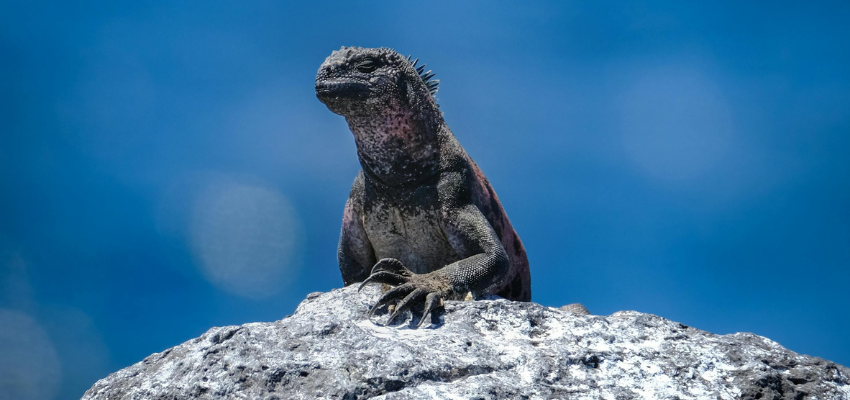
Opting for shore-based exploration unlocks a flexible blend of world-class dives and immersive encounters with the iconic animals from Galápagos, from marine iguanas to highland tortoises.
There is no wrong answer. Whether your priority is pelagic intensity or holistic discovery, you’re choosing one of the planet’s most profound underwater experiences. With your path now clear, the legendary waters await.
Your ultimate Galápagos diving adventure begins now!
-
 from$649 /day
from$598 /day
from$924 /day
from$649 /day
from$598 /day
from$924 /day
Frequently Asked Questions about Galápagos Liveaboard Diving and Galápagos Land-Based Diving
What’s the internet and connectivity like?Divebooker Team2026-01-20T13:32:44+00:00Manage your expectations. On liveaboards, satellite internet is often slow, expensive, and may only work in certain areas. A growing number of vessels now offer Starlink, but service can still be inconsistent—always confirm directly with your operator. It’s truly a chance to disconnect. In towns like Puerto Ayora on a land-based trip, you can get decent WiFi at hotels and cafes to check email, but don’t rely on high-speed streaming.
How do I handle tipping on a liveaboard vs. a land-based trip?Divebooker Team2026-01-20T13:32:21+00:00Tipping is customary. For a liveaboard cruise, a common guideline is 5-10% of the cruise price, given in USD cash at the end to be pooled for the entire crew. For land-based or day trips, tips are less and given individually. Ultimately, it comes down to your comfort level and the service provided.
What are the top non-diving activities in the Galápagos?Divebooker Team2026-01-20T13:31:30+00:00Beyond scuba diving Galápagos, the islands are a UNESCO site for their terrestrial wonders. Top activities include visiting the Giant Tortoise reserves in the Santa Cruz highlands, hiking the Sierra Negra volcano on Isabela, and seeing iconic marine iguanas and blue-footed boobies up close. Naturalist cruises are a popular way for non-divers or mixed groups to experience this, focusing on guided island walks, panga rides, and snorkeling in sheltered bays rich with sea lions and turtles.
I’m a solo traveler. Is a Galápagos liveaboard or land-based trip better for me?Divebooker Team2026-01-20T13:31:55+00:00Both are excellent, but for different reasons. Galápagos liveaboards are fantastic for solo travelers because you’re instantly part of a close-knit group sharing the same intense experience. Meals and dive decks are built for socializing. For land-based diving, you’ll meet people on daily boats, but evenings are more independent. Many operators offer single cabins for a supplement, or can pair you with a same-gender roommate to avoid the extra cost.