Entering the waters of the Galápagos is more than just diving; it’s a bucket-list experience that feels like stepping back in time.
Galápagos Islands diving is a pilgrimage to the origin of species, where marine iguanas graze algae like aquatic dinosaurs and schools of hundreds of hammerhead sharks move as one. Here, the rules of ordinary scuba diving dissolve into encounters of profound wildness, from the gentle drift past sea lions to the sudden, awe-inspiring silhouette of a whale shark, best experienced on a dedicated Galápagos liveaboard diving expedition.
This guide covers everything you need to know about navigating the iconic dive sites, seasonal rhythms, and practical mastery required to transform the dream of diving the Galápagos Islands into reality.
Why Dive the Galápagos Islands?
To scuba dive the Galápagos Islands is to answer a call to the raw, untamed heart of the ocean. This is not a curated aquarium experience; it is an immersion into a realm where the rules are written by currents and time. The question isn’t really “why”, but “why else would you go anywhere?” It offers a convergence of elements found nowhere else, creating a diving experience that is equal parts thrill, education, and profound reverence.
Unmatched Pelagic Theatre
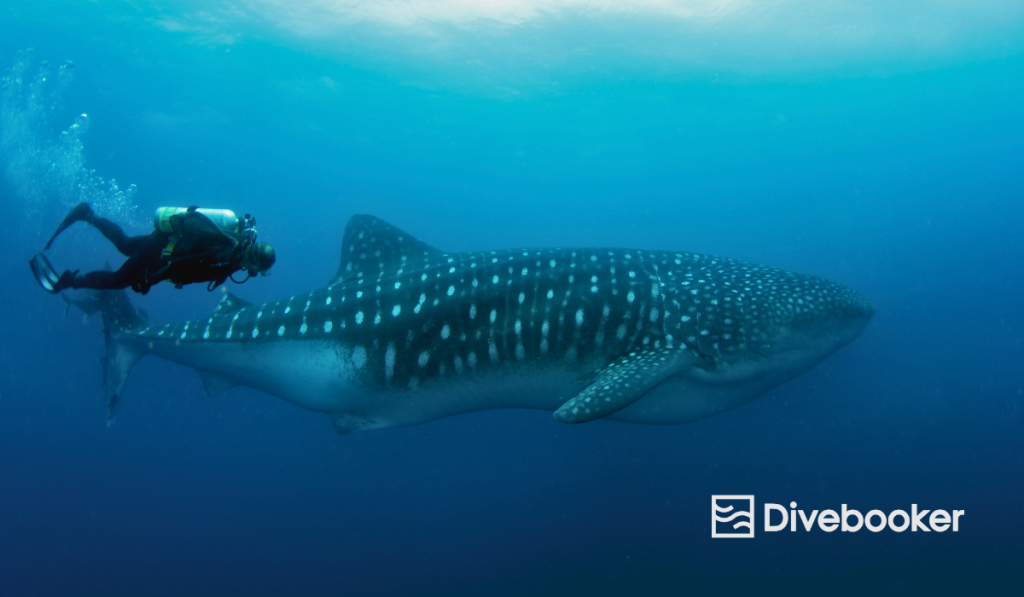
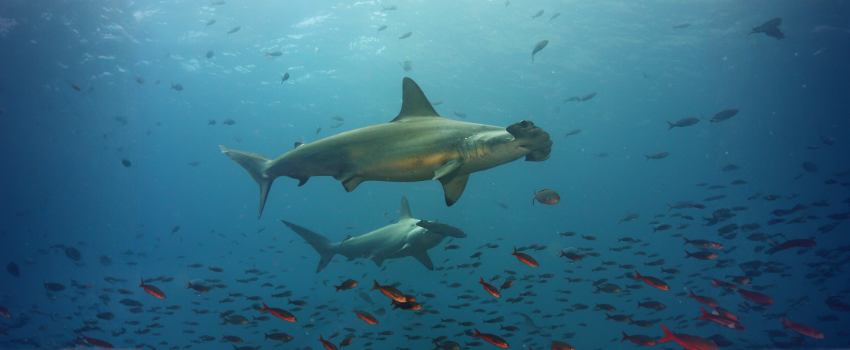
Forget singular sightings. Here, the pelagic action unfolds on an oceanic scale. Imagine the moment your gaze adjusts at Gordon Rocks and a spiraling vortex of hundreds of scalloped hammerhead sharks materializes from the indigo void. You don’t just see a whale shark; you drift alongside a seasonal giant at the strongholds of Wolf and Darwin Islands. The drama is relentless—mobula rays somersaulting in formation, tuna hunting in silver flashes, and dolphins etching trails across the surface. This is a big animal ballet, a spectacle for those who seek the ocean’s most powerful experiences.
A Living Laboratory of Evolution
The magic of Galápagos diving lies equally in its bizarre and beautiful details as it does in its giants. Nowhere else can you watch a marine iguana, unique to these islands, gracefully forage on underwater algae. You’ll play with endlessly curious Galápagos sea lions, the underwater acrobats of the archipelago, and photograph the improbable Galápagos penguin darting past coral formations. Each dive will surpass the last, with multiple unique species queuing for your attention.
Pristine & Protected Wilderness
The sense of place is paramount. As a UNESCO World Heritage Site and a fiercely protected marine reserve, the Galápagos Islands operate under a strict conservation ethos. Diving here means entering waters where ecosystems thrive with a balance rarely seen. You are a guest in a wilderness that is actively preserved, from the abundant reef fish to the healthy corals. Responsibility is woven into the experience, making every encounter feel more significant and sustainable.
When to Dive the Galápagos?
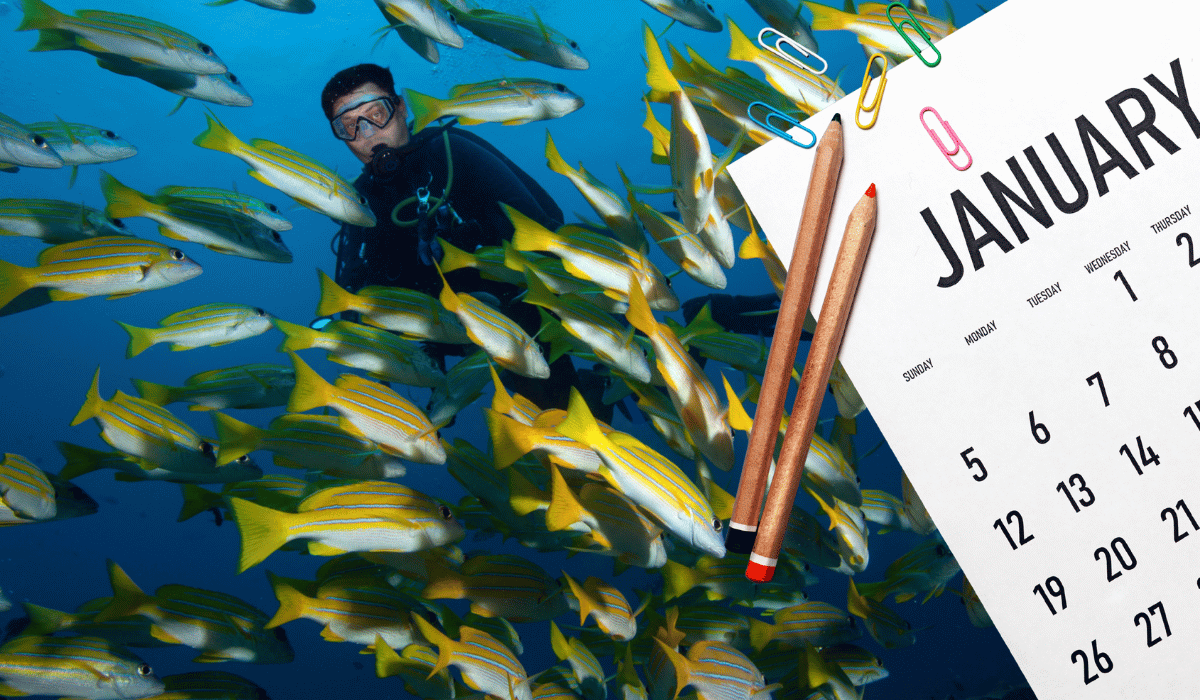
Choosing when to embark on your Galápagos Islands diving adventure is your first strategic decision. The archipelago operates on two distinct seasons, each transforming the diving conditions and marine encounters. There is no “bad” time, only different versions of extraordinary, tailored to what you want to see.
| Season | Period | Avg. Water Temp | Visibility | Seas & Currents | Wildlife Highlight |
|---|---|---|---|---|---|
| Warm/Wet | Dec – May | 21°C – 27°C (70°F – 80°F) | 15m – 30m+ (50–100ft+) | Generally calm, milder currents | Sea lion pups, more marine iguana activity, breeding rituals |
| Cool/Dry | Jun – Nov | 16°C – 23°C (60°F – 74°F) | 10m – 20m (30–65ft) | More swell, stronger currents | Peak hammerhead & whale shark action, mantas, boobies and frigate birds breeding and feeding |
The Warm Season (December-May): Sun, Calm & Clarity
This is the Galápagos scuba diving season of abundance and accessibility. Strengthened by the Panama Current, the waters warm, visibility often exceeds 30 meters, and the ocean settles into a period of calm. It’s a time for vibrant reef life, playful sea lion pups, and the fascinating courtship rituals of many marine species. The conditions are more forgiving, making it ideal for building confidence across a wide range of Galapagos dive sites. For underwater photographers, the clear, sun-drenched water provides the perfect canvas.
The Cool Season (June-November): The Wild, Pelagic Season
The ocean stirs, and the true spectacle arrives. Upwelling from the deep, nutrient-rich Humboldt Current lowers water temperatures and reduces visibility, but this planktonic soup is the big draw for the giants. This is the legendary season for scuba diving, with vast schools of hammerheads at Darwin and Wolf Islands and for encounters with migrating whale sharks. The currents are stronger, the seas more dynamic, and the diving demands sharper skills. In return, you are granted front-row access to the most intense pelagic action on the planet; a raw, powerful experience that defines bucket-list diving in the Galápagos.
Choosing Your Dive Style
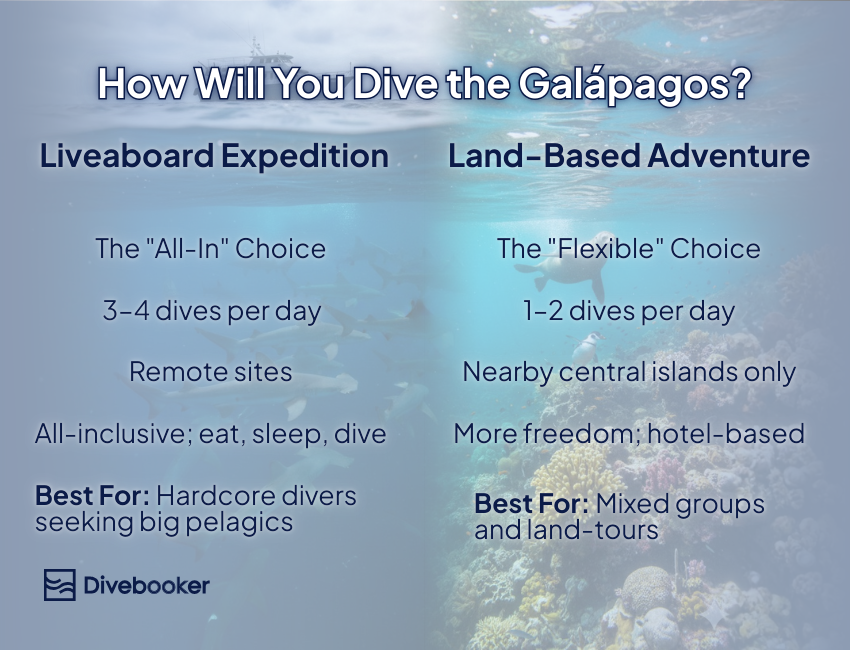
Your approach to Galápagos scuba diving defines the adventure. You must choose between total oceanic immersion and flexible island-based exploration.
Your preferred style of adventure, budget, and diving ambitions will guide you to the right path.
Pros and Cons of The Liveaboard Expedition
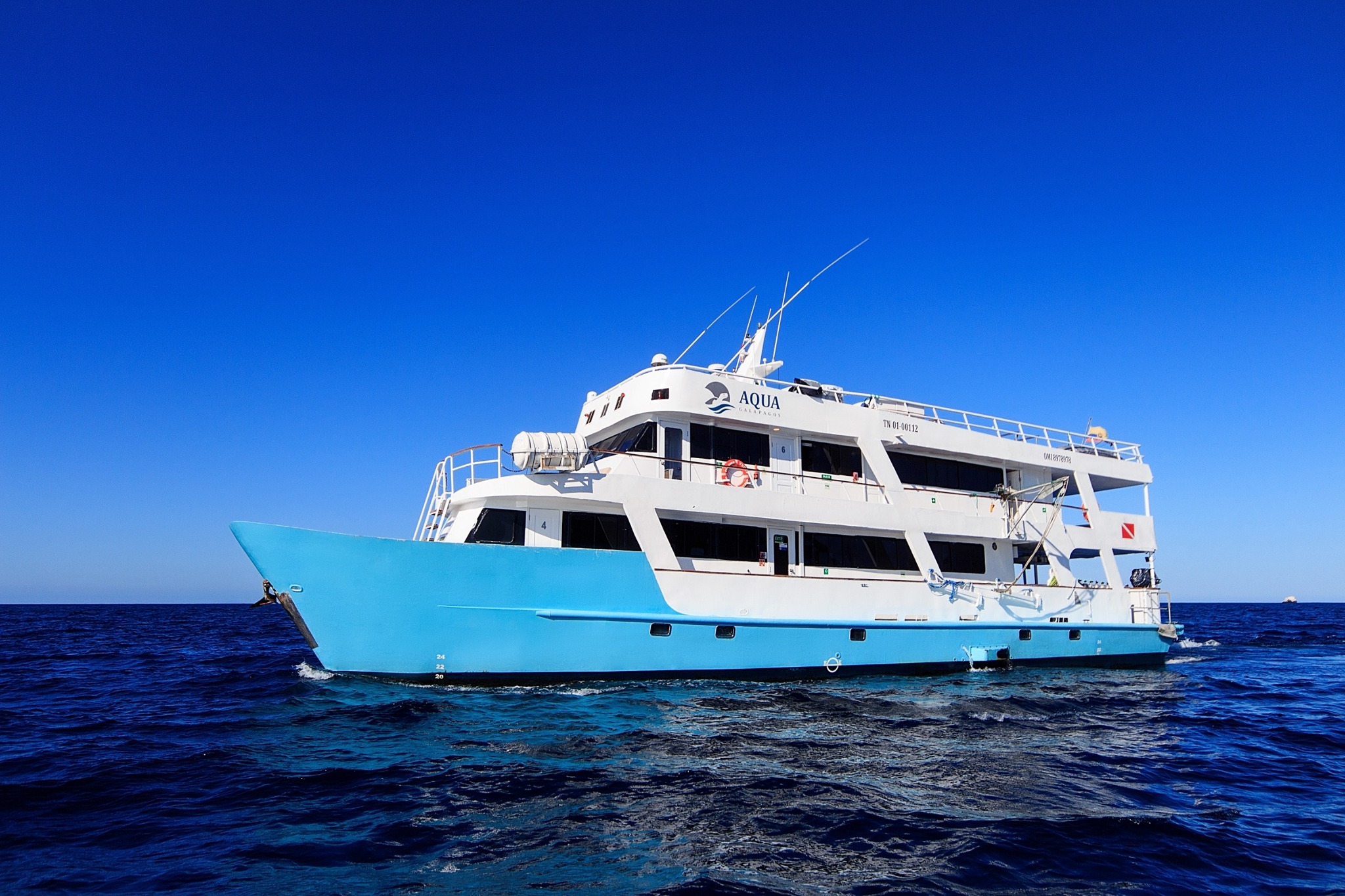
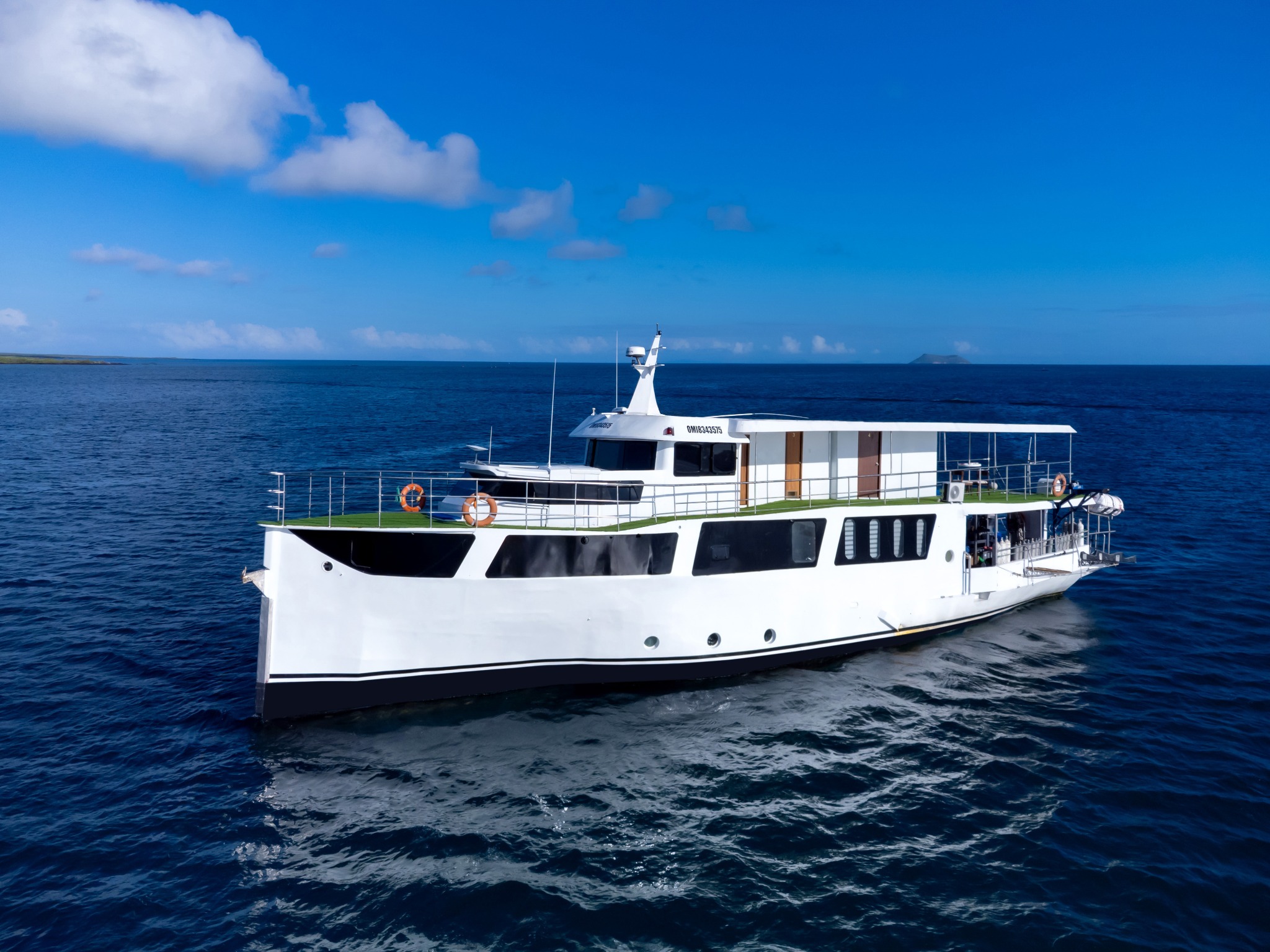
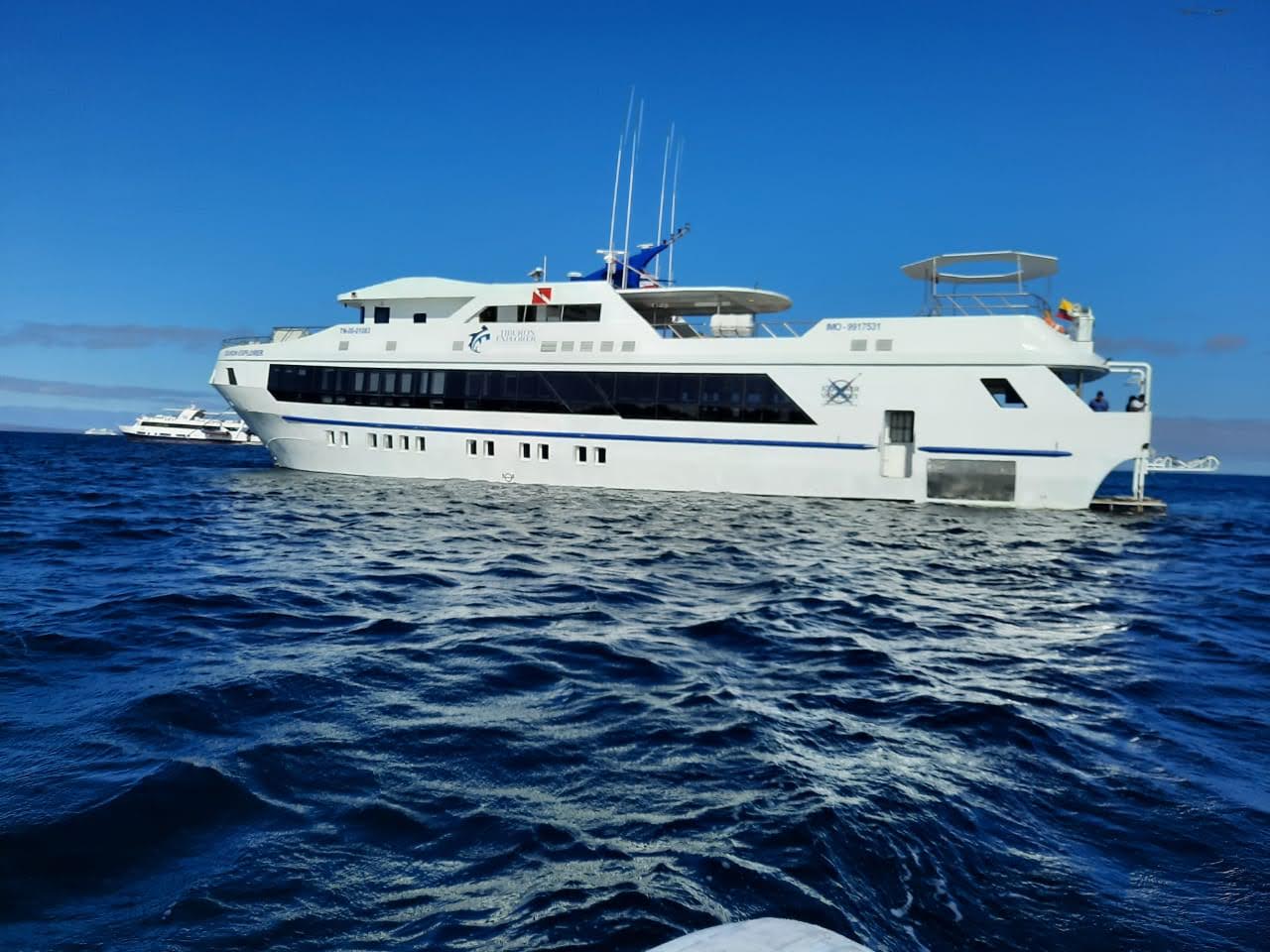
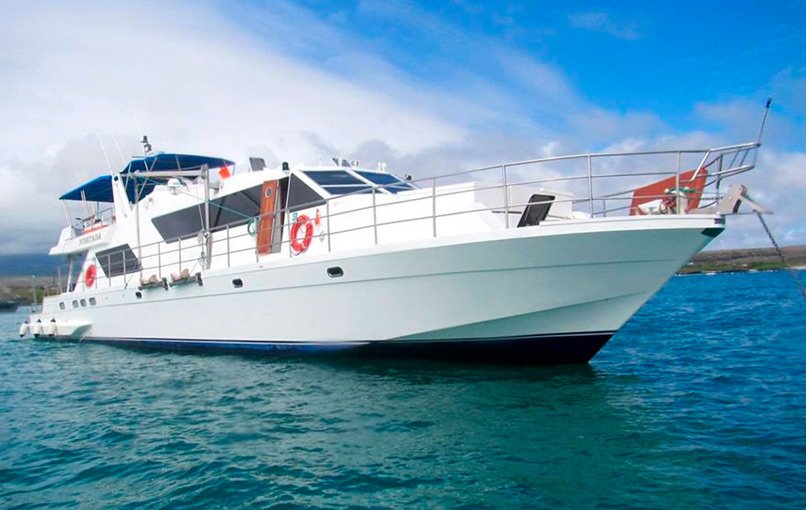
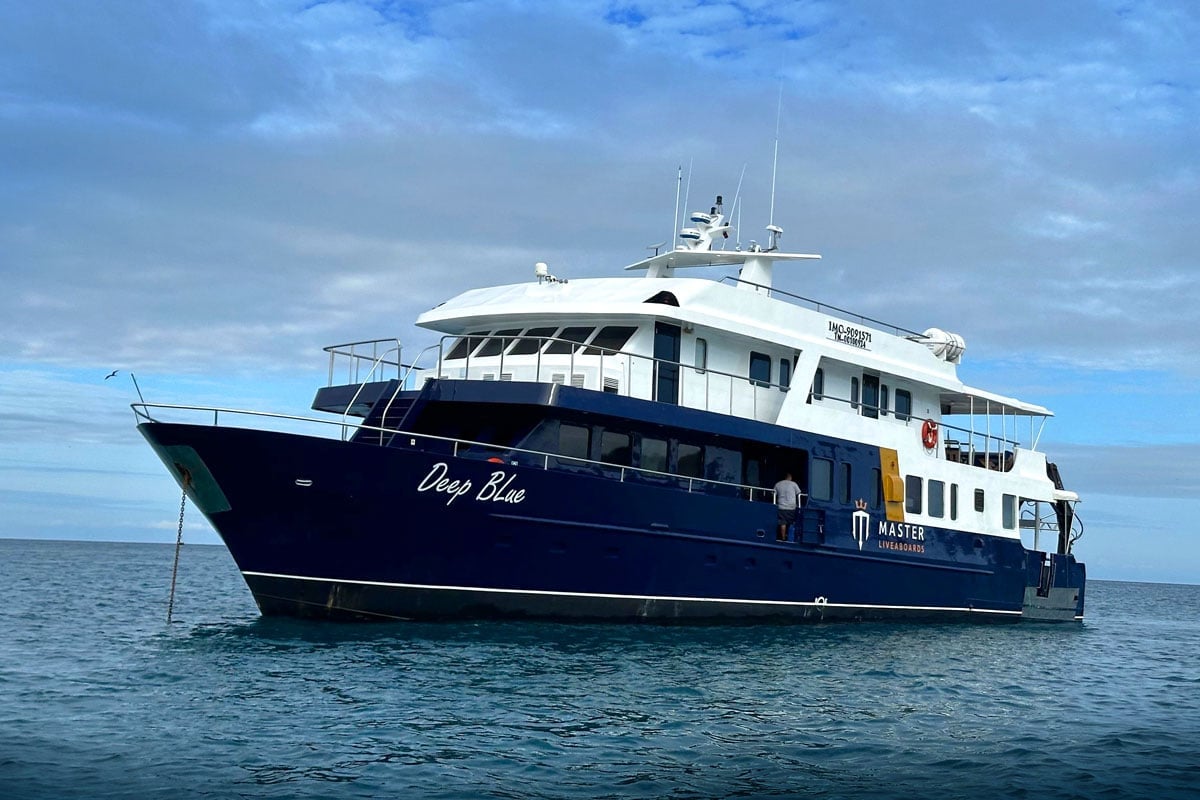
A Galápagos liveaboard diving safari is the definitive way to access the archipelago’s remote northern jewels: Darwin and Wolf Islands. This is a purpose-built journey for the serious diver.
- The Pros: It offers 3-4 dives per day with exclusive access to the legendary pelagic sites. You live and breathe the diving rhythm, surrounded by like-minded enthusiasts, with all logistics handled. It’s a seamless, all-inclusive deep dive into the blue.
- The Cons: This commitment comes at a higher financial cost and follows a fixed, rigorous schedule. The remote locations mean challenging conditions; strong currents and cooler water, which demand advanced buoyancy control and comfort in dynamic environments.
The Land-Based Adventure
Based on Islands like Santa Cruz or San Cristóbal, a land-based scuba diving Galápagos trip centers around daily boat trips to nearby sites, returning to shore each evening.
- The Pros: It provides greater schedule flexibility, often at a lower entry cost. It’s ideal for mixed groups where not everyone dives, allowing you to seamlessly combine underwater exploration with land-based wildlife tours.
- The Cons: The reach is geographically limited; the northern pelagic sites of Darwin and Wolf are inaccessible. You’re typically limited to 1 or 2 dives per day, with more time spent in transit. The experience, while still exceptional, samples rather than saturates.
Iconic Galápagos Dive Sites You Must Experience
The magic of Galápagos Islands diving is etched into its legendary seascapes. From submerged volcanic craters to sheer-walled islets, each site offers a distinct chapter in this aquatic epic. Your access, and thus, your experience, is defined by your chosen dive style, splitting these underwater wonders into two distinct realms: the remote pelagic sanctuaries and the accessible island gems.
Land-based divers are typically limited to sites within a day’s reach of Santa Cruz or San Cristóbal, whereas liveaboards provide the only means of reaching the high-action sites of Darwin and Wolf.
| Dive Site | Access Type | Primary Highlights |
|---|---|---|
| Darwin Island & Darwin’s Arch | Liveaboard Only | Massive schools of hammerheads and seasonal whale shark encounters. |
| Wolf Island | Liveaboard Only | High-octane pelagic action including Galápagos, silky, and hammerhead sharks. |
| Cape Marshall | Liveaboard Only | A specialized site often included in extended itineraries for its unique marine life. |
| Punta Vicente Roca | Liveaboard Only | The archipelago’s premier site to reliably encounter the enigmatic oceanic sunfish (mola mola). |
| Cape Douglas | Liveaboard Only | The only dive site in the world where you can consistently observe marine iguanas feeding on underwater algae. |
| Cousins Rock | Land-Based & Liveaboard | Excellent macro diving featuring sea horses and eagle rays. |
| Gordon Rock | Land-Based & Liveaboard | A “hammerhead washing machine” with strong currents and swirling shark vortices. |
| Seymour North | Land-Based & Liveaboard | Rich biodiversity including white-tip reef sharks and schools of fish. |
| Punta Carrion | Land-Based | Reliable sightings of rays and diverse reef life. |
| Kicker Rock | Land-Based | Iconic volcanic formation known for shark sightings and steep wall dives. |
| Bartolome | Land-Based | Stunning underwater landscapes and the chance to spot Galápagos penguins. |
Important Note on Itineraries: Under the Galápagos National Park regulations, the specific dive sites visited and the order of the itinerary can vary by vessel and season.
While the sites listed above are among the most famous, there are many more dive sites available throughout the archipelago that offer unique underwater experiences.
Galápagos Marine Life: Your Underwater Checklist
To dive here is to step into a living documentary of evolution, where the cast of characters is as unique as it is magnificent. Beyond the sheer thrill of the encounter, each animal tells a story of adaptation and ecological niche. While we can’t promise you’ll see them all, part of the magic is the chance that you just might. Use this checklist not as a guarantee, but as a celebration of the incredible biodiversity that makes Galápagos marine life truly unparalleled.
Your Galápagos Wildlife Bingo Card:
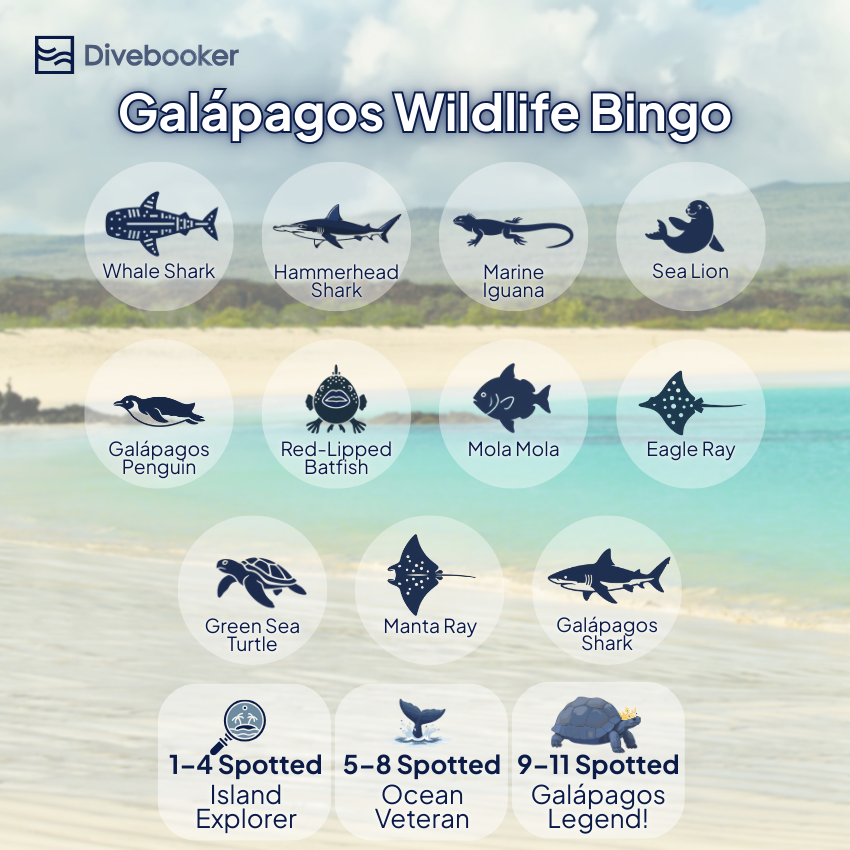
Remember, your card fills up based on the strategic choices outlined in When to Go. The playful sea lion pup is a year-round guarantee, while checking off the whale shark is a high-probability event only during the cool season up north. The marine iguana requires a specific rocky shoreline dive, and the mola mola is a rare, delightful wild card.
The true joy of diving Galápagos Islands often lives in the subtler scenes: a flounder perfectly camouflaged on the sand, a seahorse clinging to a black coral branch, or the mesmerizing tornado of barracuda.
Keep your eyes wide open; every glance holds a discovery.
Skill Requirements & How to Prepare
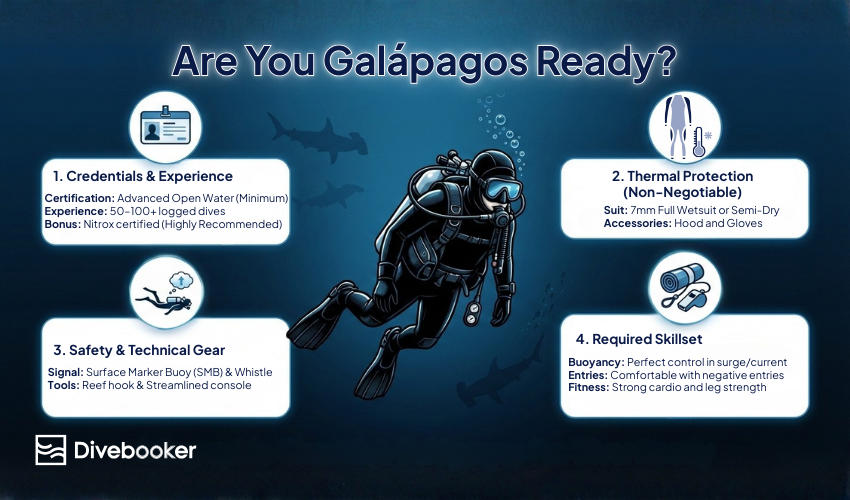
Galápagos Islands diving demands respect. This is not a beginner’s destination. The combination of strong currents, cooler water, variable visibility, and often challenging surface conditions requires divers to be comfortable, confident, and self-reliant in dynamic environments.
Certification & Prerequisites:
- Minimum: Advanced Open Water (or equivalent) is an absolute baseline requirement for most reputable operators.
- Strongly Recommended: 50+ logged dives. For liveaboard itineraries to Darwin & Wolf, operators often enforce a minimum of 50-100 dives, with proven experience in strong currents.
- Highly Valuable: Nitrox certification is strongly advised. The benefits are twofold: it increases your bottom time on repetitive dives and significantly enhances your safety margin by reducing fatigue, a critical factor in demanding conditions.
Essential Gear & Preparation:
- Thermal Protection: A full 7mm wetsuit, hood, and gloves are non-negotiable year-round. Consider a semi-dry suit (or even a full dry suit if you feel the cold) for the cool season.
- Equipment Security: Ensure your setup is streamlined. Use a snorkel keeper, secure console/computer, and consider gloves not just for warmth but for handling descent/ascent lines in currents.
- Safety & Signaling: A surface marker buoy (SMB) and reef hook (often provided, but familiarization is key) are essential pieces of personal equipment. A compact audible surface alarm (whistle) is recommended.
- Pre-Trip Fitness & Skills: Honest self-assessment is crucial. Build your air consumption efficiency and practice buoyancy control in similar conditions if possible. Ensure you are comfortable with negative entries, drift dive procedures, and deploying your SMB under mild current. Leg strength and cardiovascular fitness will dramatically improve your experience and safety.
Planning Your Galápagos Dive Trip
Logistical mastery is what transforms this dream into a seamless reality. A Galápagos dive trip requires meticulous planning well in advance. Follow this essential timeline to ensure every detail, from securing your spot to navigating entry requirements, is perfectly handled.
Your Pre-Dive Countdown: A 5-Step Logistical Guide
| Step | Timeline | Key Action & Details |
|---|---|---|
| 1. Book Your Trip | 6-12+ months ahead | While 6 months is the optimal timeframe to secure your preferred cabin, peak weeks (like whale shark season) often require booking up to 12 months in advance. It is possible to find space 3–4 months out, but choices will be limited. Browse and compare voyages: Available Galápagos liveaboards. |
| 2. Secure Flights | 3-6 months ahead | Book international flights to Quito (UIO) or Guayaquil (GYE), then a domestic flight to Galápagos (Baltra/GPS or San Cristóbal/SCY). Only Avianca and LATAM offer direct domestic routes. |
| 3. Finalize Fees & Documents | Before departure | Prepare cash (USD) for the $200 National Park fee and $20 Transit Control Card (TCT) paid upon arrival. Most tourists from the U.S., Canada, the EU, and other major nations do not need a visa for Ecuador for stays under 90 days. It is every traveler’s responsibility to verify their specific requirements. For the official list of countries whose citizens do require a visa, consult the Ecuadorian Ministry of Foreign Affairs. |
| 4. Pack Strategically | 1 month ahead | Go beyond standard gear. Essentials include a 7mm wetsuit, hood, binoculars, gloves, reef-safe toiletries, motion sickness remedies, and a quality dry bag. |
| 5. Final Preparation | 1 week ahead | Confirm travel and dive insurance (DAN is often required), download offline maps, and carry photocopies of your passport, dive certification, and trip details. |
By methodically working through these steps, you can focus entirely on the adventure that awaits, rather than last-minute logistical hurdles.
Diving with a Purpose: Conservation in the Galápagos
Diving in the Galápagos is a privilege, allowing you access to one of the planet’s most fragile and strictly protected marine ecosystems. Your presence here comes with a responsibility to act as a guardian, not just a visitor. This begins with impeccable buoyancy control to avoid accidental contact with the reef and extends to every interaction. Always maintain a respectful distance of at least two meters from all wildlife, letting animals dictate the encounter. Touching or chasing is strictly prohibited, and many conscientious photographers forgo gloves to physically remind themselves not to touch. On the surface, protect the waters by using only certified reef-safe, “marine-friendly” sunscreen and biodegradable products.
The most significant choice you make is selecting an operator deeply committed to sustainability. Reputable companies integrate conservation into their core mission. They enforce park rules rigorously, hire and train local guides as environmental stewards, and often facilitate citizen science, turning your dive into a direct contribution to preservation. By choosing wisely, you ensure your adventure supports the long-term protection of this unparalleled underwater world.
Your Unforgettable Galápagos Diving Adventure Awaits
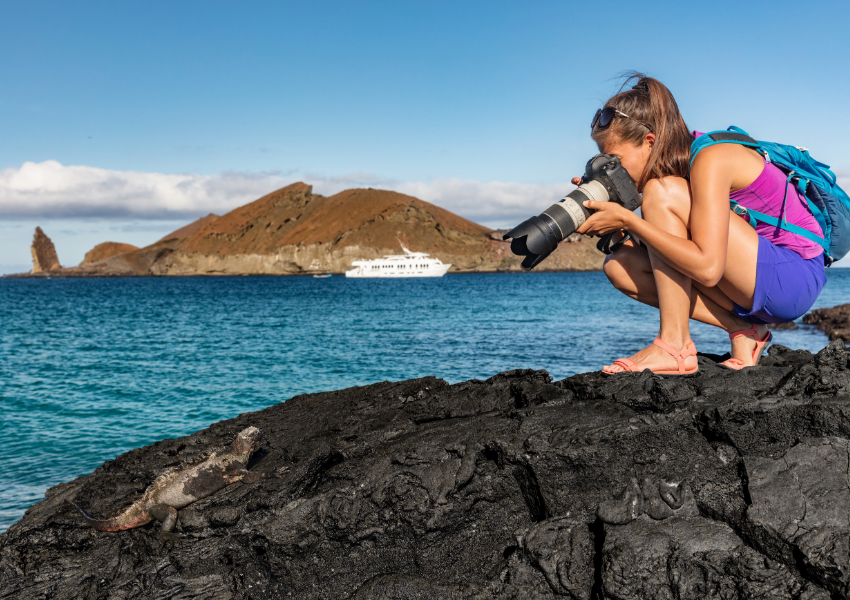
This guide will help you chart the course from dream to reality. You now understand the strategic choice of seasons, the philosophical divide between a liveaboard expedition and a land-based adventure, and the skill required to thrive in these dynamic waters. Galápagos Islands diving is more than a checklist of sites and species; it is an invitation to participate in a living, breathing ecosystem where every dive is a chapter in the greatest story ever told, the story of life itself.
The legendary sites, from the volcanic amphitheater of Gordon Rocks to the pelagic cathedral of Darwin’s Arch, await your bubbles. The decision is no longer if, but when and how.
To step directly onto the deck of your expedition, explore the meticulously planned itineraries aboard the Galápagos Liveaboard Diving vessel. To compare your options and find the perfect match for your timeline and ambition, begin your search through the fleet of Available Galápagos liveaboards.
Your transformative encounter with the planet’s most iconic underwater wilderness begins now!
FAQ
Because of the varying currents, water temperatures can fluctuate wildly—from 18°C to 27°C (64°F to 80°F). We recommend a 5mm to 7mm wetsuit with a hood and gloves, regardless of the season. Layering is the secret to staying comfortable through multiple dives a day.
While wildlife is never 100% “guaranteed,” the Galápagos is one of the most reliable places on Earth to see them. Sites like Gordon Rock and the northern islands are world-renowned for their resident schools. Your chances are highest between January and May when the waters are warmer and visibility is at its peak.
Generally, no. The Galápagos Islands is famous for its “high-voltage” diving, characterized by strong currents, surge, and cooler thermoclines. Most liveaboards require a minimum of 50 logged dives and an Advanced Open Water certification. If you are a newer diver, we recommend gaining experience in drift diving and cold water before booking your trip to ensure you can safely enjoy the more iconic sites like Darwin and Wolf.
-
 from$649 /day
from$598 /day
from$649 /day
from$598 /day